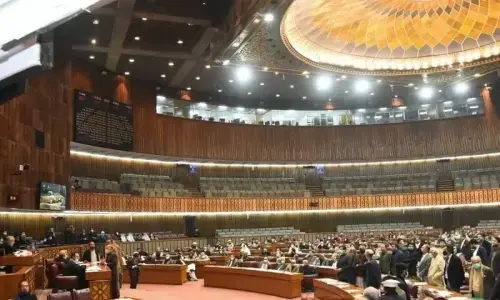
ANOTHER budget cycle is behind us. The government has had no difficulty in securing parliamentary approval for the new budget. Sadly, few parliamentarians are known to scrutinise the document; even fewer have something to say about the merits and demerits of its contents.
The IMF is happy because the document is within the limits of the boundaries it has set under its stabilisation programme.
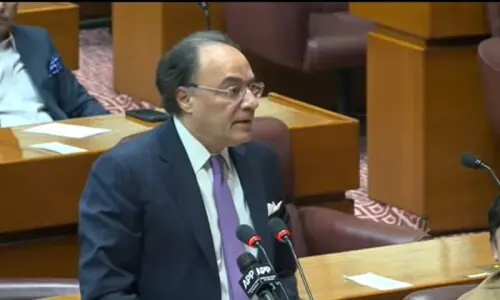
As stated by Finance Minister Muhammad Aurangzeb, the budget will hopefully deliver growth, no matter how modest, without destabilising the Fund programme or the economy. If regional uncertainty ends and energy supplies and prices become steady, growth may even slightly exceed expectations, which would give the government something to flaunt ahead of the next elections. Whether it would impress the electorate is another matter.
Though not a bad document per se, the budget for FY27 is a familiar one, and familiarity in our economic history is rarely cause for comfort.
The next financial year will begin with the same structural problem that has haunted an economy overly dependent on consumption, remittances and, once again, real estate.
Mr Aurangzeb’s claims of introducing ‘structural reforms’ notwithstanding, the document actually offers ‘structural continuity’. His signature focus — sustainable and export-led growth — for instance, reminds one of what the budget lacks instead of what it contains.
No government has delivered sustainable growth driven by exports because of policy failure. Export-led growth demands productivity gains, value-chain advancement and competitive manufacturing. It cannot be achieved through subsidised loans or reduced taxes alone.
Likewise, the budget hardly does anything to correct the tax system, which continues to charge presumed liability before it determines income on which to charge it. Small wonder the tax-to-GDP ratio remains among the lowest in the world.
The government knows about all these issues. It has said as much. And yet the budget it has produced offers little to deliver on the promise of reforms.
What, then, should we expect in the new fiscal year? As stated, the year will deliver faster growth than we have experienced in recent times. If energy prices level out, the country will successfully pull off most IMF-mandated fiscal stabilisation targets.
But the next financial year will also bring the government towards its final stretch. Election cycles in Pakistan have their own challenges: spending pressures intensify, fiscal discipline softens and populist gestures multiply. The new budget carries the seeds of such measures.
Growth next year is probable. Sustainable growth remains a promise deferred. The difference between the two is the question the next budget will answer — and going by existing evidence, it is a question the government has chosen not to ask.
Published in Dawn, June 26th, 2026