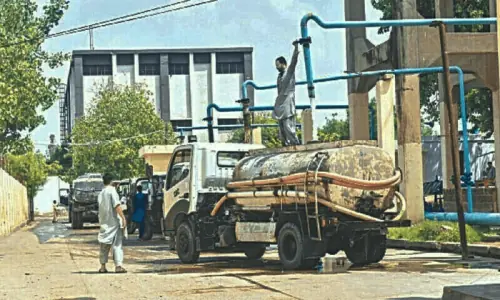
Karachiites in for price shock as KWSC set to hike bowser charges
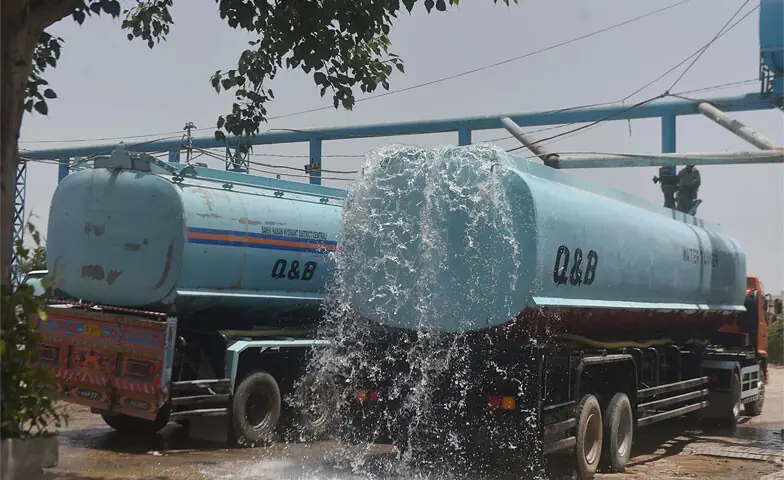

• While huge gap already exists between officially notified and actual rates of bowsers, water utility forms committee to propose new prices in view of rising fuel cost
• Tanker operators claim KWSC owes over Rs4.14bn in unpaid service charges
KARACHI: For millions of Karachiites who are compelled to purchase water tankers to meet their daily needs, the cost of water may be headed for another increase as the Karachi Water and Sewerage Corporation (KWSC) has formed a committee to review tanker rates amid rising diesel cost, officials and sources said.
The decision has been taken at a time when many residents are already paying several times the officially notified tanker rates to obtain water.
Senior officials confirmed that a committee has been constituted to review the existing tanker tariff structure and recommend revised rates before the next round of hydrant contracts are awarded.
The tanker operators claim that due to increase in diesel prices the current tariff structure has become commercially unviable, the sources added.
Confirming the development, Hydrants Cell In-charge and Superintending Engineer Ayaz Tunio said: “The rates approved previously no longer correspond to current diesel prices. Tanker operators are unwilling to supply water at those rates and their position is justified under the prevailing cost structure,” he said.
“A committee has been formed to prepare recommendations on revised rates and submit them to the high ups for final approval.”
Sources said the committee is expected to examine the impact of fuel costs and transportation expenses on tanker operations before finalising recommendations.
The officials indicated that tanker charges may witness a substantial increase once the review process is completed.
Current tariff structure
Under the current tariff structure, a 1,000-gallon General Public Supply (GPS) tanker is priced at Rs1,560, while a commercial tanker of the same capacity costs Rs3,120.
Similarly, under the existing tariff structure, a 2,000-gallon GPS tanker is priced at Rs2,184, while the corresponding commercial tanker rate is Rs3,900. A 3,000-gallon GPS tanker costs Rs2,808 compared to Rs5,460 for commercial consumers. Similarly, the rate for a 5,000-gallon GPS tanker stands at Rs3,900, while the commercial tariff is Rs6,240.
The notified rates provide that no transportation charges are applicable if the delivery location is within a 10-kilometre radius of the hydrant.
For distances exceeding 10 kilometres, an additional service charge of Rs67.28 per kilometre is added to the bill for GPS tanker bookings. Rates for larger tankers also continue to be governed by the schedule approved during the previous auction cycle.
The hydrant contractors currently pay KWSC Rs600 on every 1,000-gallon tanker sold under the GPS category. According to official estimates, this arrangement generates around Rs360 million in monthly revenue for the corporation while total collections from consumers run into billions of rupees each month.
DC quota
While preparations for the tariff revision move forward, another issue has emerged that could significantly influence the process.
A letter sent by hydrant contractors to the KWSC management claims, the corporation owes contractors more than Rs4.14 billion in unpaid service charges accumulated through the supply of water tankers under the so-called “DC quota” scheme.
The contractors maintain that although their contracts expired nearly a year ago, they have yet to receive payments for millions of gallons of water supplied free of charge under official directives.
Hydrant sources said the outstanding amount relates to water tanker services provided under instructions issued through the district administration and commissionerate.
Under the arrangement, water supplied through the DC quota was distributed without payment from beneficiaries in poor income neighbourhoods while contractors were expected to receive service charges through the KWSC after reimbursement by the relevant government authorities. According to records cited by hydrant sources, the cumulative service charges associated with those supplies have now exceeded Rs4.147 billion.
“The contractors are waiting for payments despite repeatedly raising the matter with the authorities. These are not disputed claims. The supplies were made under official instructions and the records exist with the corporation,” a hydrant source said.
Published in Dawn, July 1st, 2026