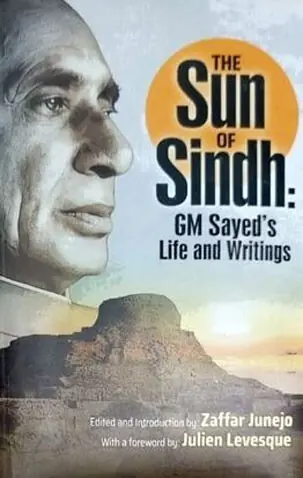
The Sun of Sindh: G.M. Sayed’s Life and Writings
Edited by Zaffar Junejo
G.M. Syed Memorial Committee, USA and Peacock Publishers
ISBN: 978-627-506-060-4
560pp.
Pakistan’s history, as recounted by the champions of Pakistani nationalism, has a line-up of heroes and villains. G.M. Sayed (1904-1995) squarely falls in the latter category.
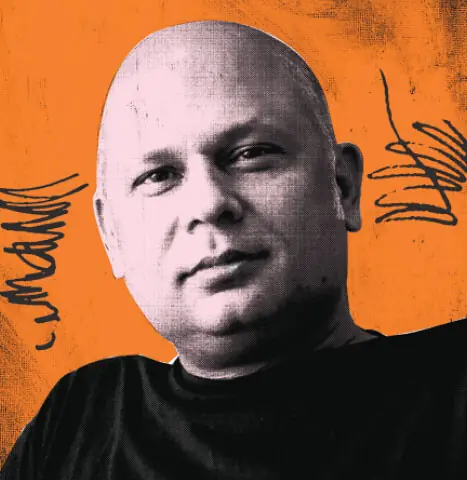
Portrayed as a man hell-bent on breaking up Pakistan, he was often considered a stooge of India, and his opposition to an over-centralised and authoritarian state was portrayed as his disdain for Islam. Like all caricatures, this one too tells us little about the nuanced personality and politics of G.M. Sayed. For his supporters, he was the saviour of modern Sindh. That too is a caricature that treats G.M. Sayed as a saintly politician.
In fact, three politicians have had a lasting impact on the politics of post-1947 Sindh — G.M. Sayed, Z.A. Bhutto and Benazir Bhutto. The latter two were immensely popular among Sindhi masses, a feat G.M. Sayed could not achieve in seven decades of his public life. But it is G.M. Sayed who has commanded the respect of Sindhi intelligentsia of all stripes for decades, partly because he was a prolific writer who wrote in Sindhi. Secondly, in contrast to Z.A. Bhutto, G.M. Sayed was always accessible to the Sindhi literati.
Crisp copy-editing and coherence are not the hallmarks of The Sun of Sindh: G.M. Sayed’s Life and Writings, the book under review, but those weaknesses are compensated by the fact that it has put together writings about and by G.M. Sayed in one bulky volume, which will help interested readers gauge the influence of G.M. Sayed’s persona on shaping the intellectual milieu of Sindh since 1947. Zaffar Junejo’s edited volume is neither a scholarly biography nor a critical compendium to G.M. Sayed’s body of work. But it is a volume that will come in handy if anyone wants to pursue academic objectives.
Divided into four main parts, the book begins with the editor’s introductory chapter spanning over 75 pages, followed by a section containing essays and articles written by others on Sayed. The third part contains various individuals’ personal anecdotes about Sayed. The last, and most valuable section, is a selection of G.M. Sayed’s own writings, many of which were originally published in Sindhi but are made accessible here in translation.
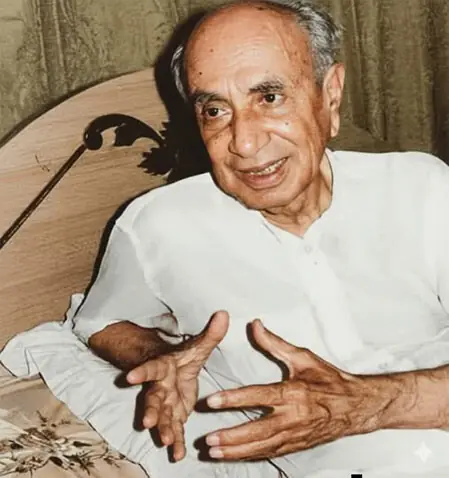
The editor’s introduction claims to be a critical overview of G.M. Sayed’s life and work, but is hagiographic in tone and assessment. The second part, a collection of writings about Sayed by his contemporaries — most of which originally appeared in the now defunct Sindh Quarterly — are eulogies and hagiographies, where Sayed is portrayed as a friendly, approachable, well-read, and sincere — to the extent of being naïve — politician who was terrible at political machinations.
Ibrahim Joyo’s write-up is, however, more thoughtful and balanced. Joyo, a leading public intellectual of Sindh during the second half of the 20th century, was an admirer of G.M. Sayed but not an uncritical follower. For him, G.M. Sayed was the longest serving political prisoner in Pakistan, who wrote more than 45 books and was an avowed upholder of non-violence.
An edited collection of G.M. Sayed’s writings, interviews and essays about him paints a more complex portrait of one of Sindh’s most controversial political thinkers
Although a devout Muslim, Sayed argued that Muslims can’t be a nation as the term ‘nation’ is commonly understood. He also believed that forging a nation in a diverse society such as Pakistan through an over-centralised authoritarian state was a venture bound to fail. These beliefs put Sayed in the crosshairs of those who view Islam as a foundation of Pakistani nationalism.
Sindhi politician and agriculturist Sayid Qamaruzzaman Shah’s article, ‘Personal Glimpses and Anecdotes of G.M. Sayed’s Life’, critically assesses G.M. Sayed’s political judgements and decisions at various junctures. Shah narrates a number of incidences where Sayed squandered potentially positive political arrangements due to his gullibility and by acting on the wrong advice of Pir Ali Muhammad Shah Rashdi. Rashdi was a close friend of G.M. Sayed but his reputation was that of an opportunist who, for personal gains, could throw friends under the bus.
The book’s section containing select interviews and writings of G.M. Sayed helps in understanding the man who, in the beginning, championed the idea of Pakistan when few did, but who ended up becoming the bête noire of the Pakistani state. In an interview with Zaffar Abbas, the current editor of Dawn, published in the now defunct monthly Herald in 1989, Sayed used the choicest of invectives for his opponents. Rasool Bux Palijo is termed a “purchasable commodity, a characterless and third rate man”... “an agent of the CIA and an agent of the Punjabi people.”
For Sayed, Z.A. Bhutto was a “total hoax… [who] always wanted to make a fool of everybody.” When asked why he didn’t make a public appeal to spare Z.A. Bhutto’s life, he says tersely that Bhutto has done “the greatest harm to the interests of Sindh.” He doesn’t even accept him as a Sindhi.
The book’s section containing select interviews and writings of G.M. Sayed helps in understanding the man who, in the beginning, championed the idea of Pakistan when few did, but who ended up becoming the bête noire of the Pakistani state.
The transcript of G.M. Sayed’s speech in the Sindh Assembly in 1943, in support of the resolution for a separate country for the Muslims of India, makes the case for Islam as the basis for the nation. But it was something he subsequently became an avowed opponent of. After distancing himself from the Muslim League, G.M. Sayed formed the lesser known Pakistan People’s Organisation in 1948, which envisaged Pakistan as a “Union of Autonomous Socialist Republics.”
Exasperated by the centralised Pakistani state structure and encouraged by the success of Bengali nationalism, G.M. Sayed, from the 1970s until his death in 1995, remained convinced that Sindh’s salvation lay in seceding from Pakistan. Although he failed to convince the Sindhi masses to subscribe to his idea of Sindh as a separate country, he made some undeniable contributions in shaping the socio-political ethos of post-1947 Sindh in the process.
These contributions include, but are not limited to, showing how the 17th century Sufi bard Shah Abdul Latif Bhitai’s poetry was relevant for our times; convincing the Sindhi intelligentsia to be proud of their language in the wake of the denigration of regional languages in Pakistan; and questioning the postulates of Pakistani nationalism. He was inept in the field of electoral politics but was a towering figure in challenging the dominant discourse of Pakistani nationalism.
The reviewer teaches at IBA, Karachi.
He can be reached at hnizamani@hotmail.com
Published in Dawn, Books & Authors, July 5th, 2026