KP govt decides to withdraw controversial clauses from law granting expanded privileges to lawmakers

PESHAWAR: The Khyber Pakhtunkhwa government on Friday decided to withdraw the controversial clauses from recently enacted legislation that expanded lawmakers’ powers and privileges after widespread backlash.
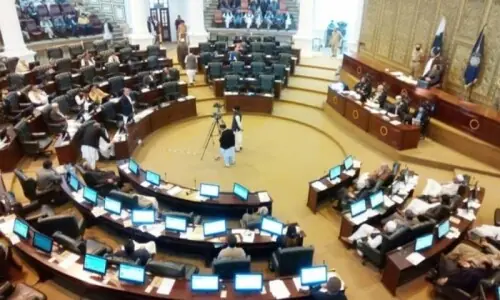
In April, the provincial assembly passed the KP Provincial Assembly (Powers, Immunities and Privileges) Act, 2026, granting blue passports to members and their spouses, arms licenses, blanket immunity from preventive detention and making the speaker’s permission necessary before arresting members on criminal charges.
The law faced harsh criticism from the media and general public, prompting KP Chief Minister Sohail Afridi to order a review of the legislation on Wednesday.
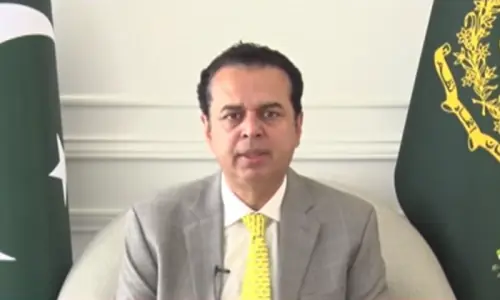
In a video message shared on X, KP Information Minister Shafi Jan said: “On the directives of Chief Minister Sohail Afridi, the provincial government has decided to withdraw all controversial provisions incorporated into the KP Provincial Assembly (Powers, Immunities and Privileges) Act, 2026.”
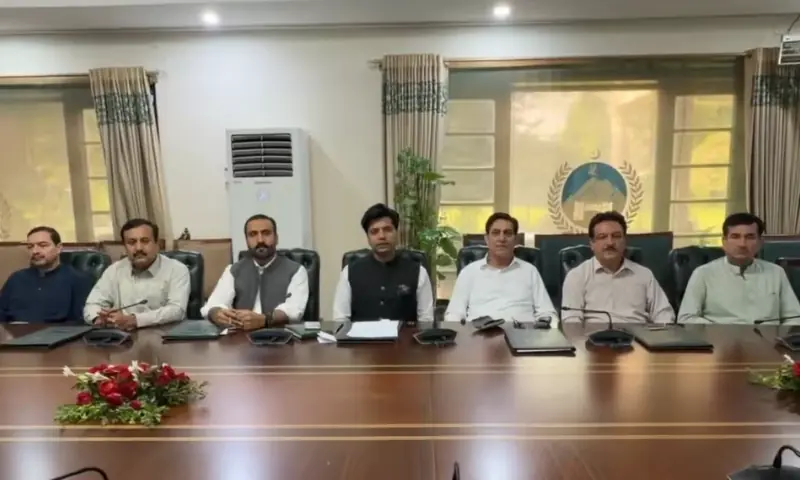
He said that cabinet members met with the chief minister earlier in the day, adding that KP Assembly Speaker Babar Saleem Swati also joined the meeting via video link.
The minister said that, following the chief minister’s directives and in consultation with the assembly speaker, it was decided to withdraw all controversial clauses of the act.
“All controversial clauses will be restored and corrected in accordance with the Khyber Pakhtunkhwa (Powers, Privileges and Immunities) Act, 1988.”
The law under discussion had repealed various provisions of the 1988 law on the same subject.
Jan also added that a meeting would be held on Monday, during which parliamentary leaders would be taken into confidence.
He said that the KP Assembly was formed on the basis of the people’s genuine mandate and, therefore, would not make any decision that ran contrary to public aspirations.
“The provincial government will listen to and address the concerns of both the journalist community and the general public,” he reiterated.
Meanwhile, KP Governor Faisal Karim Kundi, in a post on social media platform X, asked National Assembly Speaker Ayaz Sadiq and Senate Chairman Yousaf Raza Gillani to immediately convene a meeting of the speakers of all four provincial assemblies and agree on a single, harmonised bill governing the salaries, privileges and entitlements of legislators across Pakistan.
“No province should legislate extraordinary privileges for itself while expecting the people to embrace austerity. Salaries, security, official passports, allowances and every other entitlement should be uniform across the federation, ensuring one standard for all,” he stated.
Kundi further noted that a harmonised national framework was the only way to ensure “fairness, accountability and public confidence”.
In a separate post, the governor, who had himself assented to the controversial law on May 6, shared his observations on the legislation.
Kundi said that he had made it clear that no law should become a means of expanding privileges when the people of Pakistan, especially those in KP, were being asked to endure austerity and economic hardship.
The governor said that he had called for the law to be implemented in the true spirit of fiscal discipline and the prudent use of public resources.
“A government that speaks of financial constraints cannot, in the same breath, legislate greater privileges for those in power. My position was clear then, and it remains unchanged today: public money belongs to the people, not to the perks of those who govern them,” he said.
He also shared a note based on his observations regarding the legislation.
“In exercise of my constitutional authority, I hereby give my assent to the bill, recognising it constitutionally valid,” the note reads.
“However, I strongly recommended the provincial assembly finance committee implement the Prime Minister’s 14-point austerity measures — including expenditure cuts, fuel rationing and elimination of unnecessary privileges-while executing the law.
“This ensures fiscal discipline is maintained despite assent, aligning provincial legislative practices with the federal government’s economic emergency framework amid the US-Iran war and global instability. The finance committee may reconsider it to operationalise these principles in true letter and spirit,” it concluded.