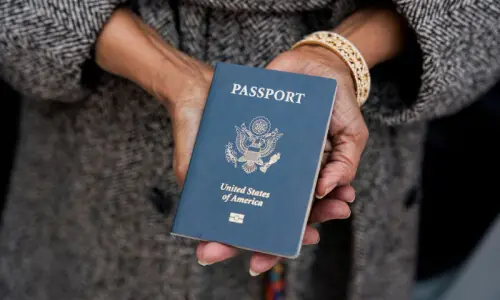
WASHINGTON: The Trump administration has finalised a sweeping overhaul of US visa rules for foreign journalists, ending the decades-old “duration of status” system and replacing it with fixed-term admissions that will require reporters to undergo periodic government review to continue working in the United States.
The Department of Homeland Security (DHS) announced the changes in a final rule published this week, saying the new policy is intended to strengthen oversight of foreign media representatives and ensure they continue to meet the requirements of their nonimmigrant status.
Under the new regulations, journalists holding I visas will generally be admitted for a maximum of 240 days, instead of being allowed to remain in the United States for the duration of their assignment, a practice that in some cases permitted stays lasting several years. Journalists from China will be limited to 90-day admissions.
The rule will take effect 60 days after its publication in the Federal Register, with a transition period beginning in September 2026.
Foreign journalists seeking to remain in the United States beyond the initial admission period will be required to apply for an extension of stay and undergo additional vetting, including reviews related to national security.
While a timely filed extension application is pending, most foreign journalists may continue working for up to 240 days, while Chinese journalists may continue working for up to 90 days.
The visa changes are part of a broader DHS regulation affecting three categories of nonimmigrant visas — F for academic students, J for exchange visitors, and I for representatives of foreign information media.
The rule replaces the long-standing “duration of status” admission with fixed periods of stay and establishes new procedures for extensions.
DHS said the changes would provide “additional protections and oversight” and enable immigration authorities to better evaluate whether foreign students, exchange visitors, and media representatives are complying with the terms of their visas while in the United States.
The regulation also formally defines what constitutes a foreign media organisation for I visa purposes, updates documentation requirements for applicants, and removes references to “duration of status” throughout the immigration regulations.
The move has drawn criticism from press freedom advocates, who argue that requiring journalists to seek repeated government approval to remain in the country could undermine independent reporting.
The Reporters Committee for Freedom of the Press warned that the new system could create opportunities for political interference in newsgathering.
“Changing the terms of foreign journalists’ visas might appear subtle, but it can have profound implications for press freedom,” said Gabe Rottman, the committee’s vice president of policy.
He argued that the policy could enable the government to deny visa renewals in retaliation for critical reporting and place officials in the position of determining who qualifies as a journalist.
The organisation noted that it had opposed a similar proposal when DHS first published it in August 2025. A coalition of 26 media organisations had urged the department to abandon the plan, arguing that it could have a chilling effect on journalism.
The final rule also affects international students and exchange visitors by replacing the “duration of status” system with fixed periods of admission and requiring them to seek extensions if they need to remain in the United States beyond their authorised stay.