Aoun takes Lebanon’s peace push to Washington

• Set to meet Trump after latest round of talks with Israel, seeks US support for ceasefire, Israeli withdrawal
• Hezbollah holds mass funeral, stages rally to reject disarmament
• Israeli strikes, border violence persist despite truce; US renews travel warning amid regional security tensions
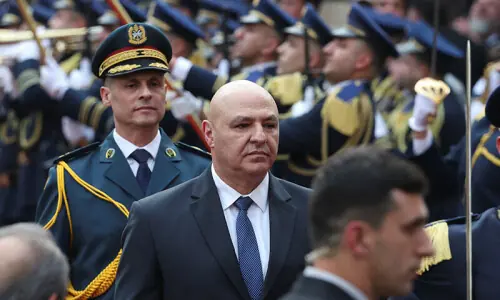
BEIRUT: Lebanese President Joseph Aoun left Beirut on Saturday for Washington, where he is expected to meet Donald Trump, his office said, after the latest round of Lebanon-Israel talks wrapped up in Italy.
Aoun will hold discussions “with several American officials on the situation in Lebanon and ways to strengthen the ceasefire”, particularly in the south, as well as on “the withdrawal of Israel from the Lebanese regions it occupies”, the presidency said.
It will be the first trip to Washington by a Lebanese head of state since Michel Sleiman was received by Barack Obama in 2009.
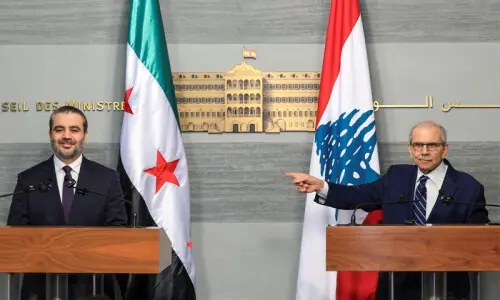
Israel and Lebanon, which do not have formal diplomatic relations, began US-sponsored negotiations in April aimed at reaching a peace deal and permanently ending the Israel-Hezbollah war.
On June 26, they reached a framework agreement under which the Israeli military is to withdraw from southern Lebanon and the Lebanese army is to deploy, starting with two “pilot zones”.
Following the latest round of talks this week in Rome, Israel and Lebanon “agreed on the structure and guidelines” for implementing the pilot zones, a US official said.
A Lebanese military source said the army had begun intensifying patrols in several villages adjacent to areas occupied by Israeli forces, including Froun in the Bint Jbeil district, in preparation for implementing the pilot zones.
Meanwhile, Hezbollah held a mass funeral for dozens of people, most of them fighters killed in the most recent fighting with Israel, in southern Lebanon’s Majdal Selm on Saturday.
In the heavily damaged village, Hezbollah buried 44 people, including 39 fighters, four civilians said to have been killed in Israeli operations, and one man who died of natural causes.
Trucks carrying the coffins travelled to the burial site as weeping women held portraits of the dead and of Iran’s late supreme leader, Ali Khamenei, who was assassinated in US-Israeli strikes on Tehran in February.
Many Lebanese have been unable to bury their loved ones in their hometowns while the fighting was still raging. Shia rites provide for temporary burial when circumstances prevent a proper funeral or the deceased cannot be buried where they wished.
Hebzollah organised the funeral during the current lull in fighting, which followed the June 17 signing of a US-Iran memorandum of understanding.
The Israel-Lebanon agreement is contingent on the disarmament of Hezbollah, which has flatly rejected both the deal and the negotiations. The group held a rally in the coastal city of Tyre on Saturday to reiterate its rejection of the plan.
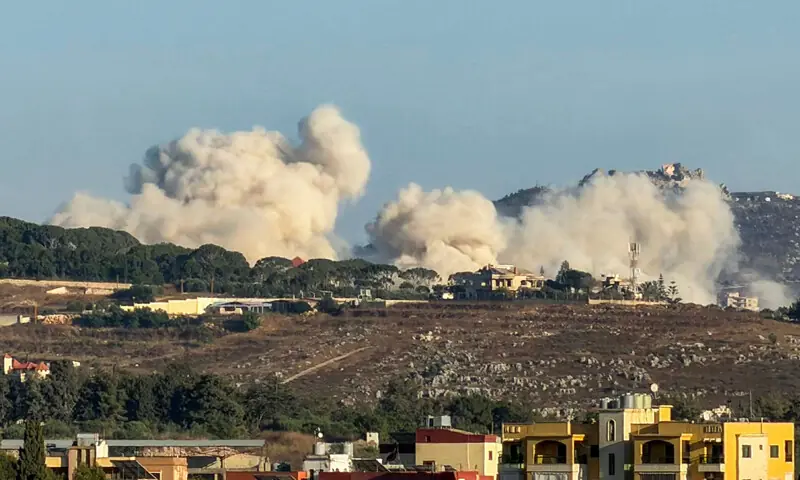
Despite the ceasefire, sporadic attacks continue. The Israeli military said it struck a Hezbollah cell near Tebnit in southern Lebanon on Saturday after soldiers identified a Hezbollah drone.
The air force located fighters who had been operating drones and taking cover near Israeli troops, which the military said violated ceasefire understandings.
Separately, a Lebanese soldier was killed and an officer and another soldier were wounded Saturday when a suspicious object exploded in an army vehicle in Mansouri, the Lebanese army said. Mansouri was also subjected to several Israeli strikes.
Lebanon’s state-run National News Agency reported fresh airstrikes against two towns located on the edge of the so-called security zone, in the Tyre and Nabatieh regions, and a large detonation near Zawtar al-Sharqiyah.
On March 2, Hezbollah launched a retaliation following the assassination of Khamenei. In response, Israel attacked Lebanon, initiating airstrikes and a ground invasion.
The US Embassy renewed its call for Americans not to travel to Lebanon, citing “high tensions in the Middle East”.
Published in Dawn, July 19th, 2026