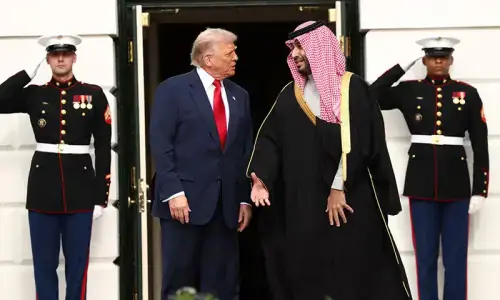
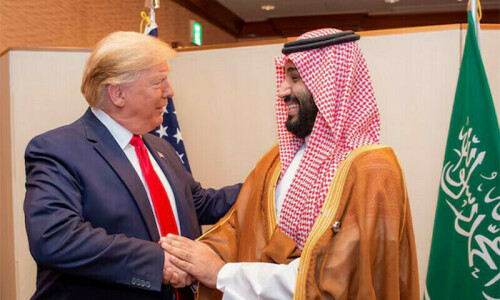
Trump says US-Saudi nuclear deal subject to Riyadh joining Abraham Accords
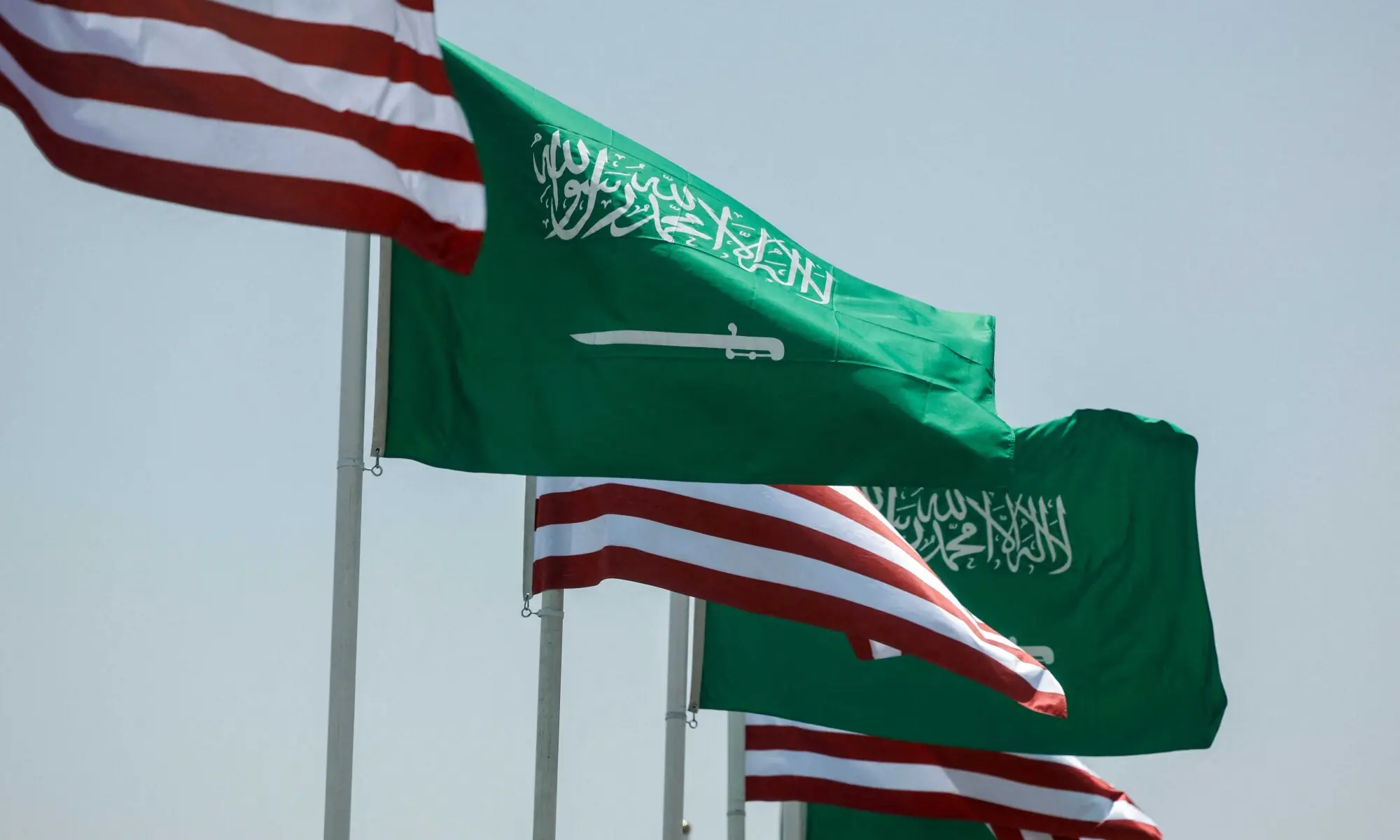

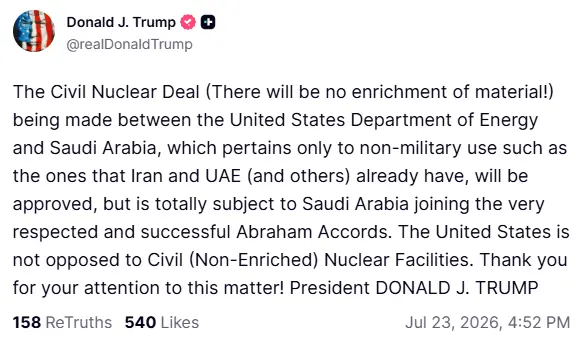
US President Donald Trump on Thursday said a landmark deal with Saudi Arabia that would establish a civilian nuclear programme in the Gulf country is contingent on Riyadh joining the Abraham Accords and normalising ties with Israel.
In a post on Truth Social, Trump said the deal only pertained to the civilian use of nuclear facilities “such as the ones that Iran and [the] UAE (and others) already have”.
He added that the deal “will be approved, but is totally subject to Saudi Arabia joining the very respected and successful Abraham Accords”.
The Abraham Accords are a set of agreements brokered under Trump in 2020 and govern the normalisation of diplomatic relations between Israel and countries that have historically been hostile to it. They, however, remain unpopular among the public in many parts of the region, not least because they do not tackle the Israeli-Palestinian conflict.
The move comes as the United States under President Donald Trump fights a war with Iran that began in large part over concerns with Tehran’s nuclear programme — an issue that remains a key point of contention during now-stalled peace talks.
Two agreements — one on “peaceful nuclear cooperation” and another on “bilateral safeguards” — were signed by US Energy Secretary Chris Wright and his Saudi counterpart Prince Abdulaziz bin Salman, the US Energy Department said.
The text of the deals was not immediately made public.
“Together, these two agreements lay the legal foundation for a decades-long, multi-billion-dollar partnership that advances several priority economic and strategic objectives, including nuclear non-proliferation,” the department said in a statement.
A provision in the deal would potentially see US companies build a uranium enrichment facility in Saudi Arabia, the Wall Street Journal reported. The Energy Department statement made no mention of such a provision and did not offer comment when asked about it by AFP.
The deal will be submitted to Congress for review, but the Republican-controlled legislature is unlikely to block its implementation.
US lawmakers from both parties and Israeli officials have previously voiced opposition to such a project over fears Saudi Arabia could eventually convert it to develop nuclear weapons.
Saudi Arabia, like Tehran, has long been adamant about its right to pursue a civilian nuclear programme.
Washington has sought in recent years to include any deal concerning a nuclear agreement in a wider strategic effort that would see Saudi Arabia normalise ties with Israel, along with the signing of a US-Saudi defence pact.
Pakistan and Saudi Arabia signed a mutual defence pact in September 2025.
Proliferation concerns
The US signed a nuclear agreement with the kingdom’s neighbour, the United Arab Emirates (UAE), in 2009, although the country does not enrich its own uranium.
A drone struck a generator in May near the UAE’s Barakah nuclear plant, the Arab world’s only such facility, causing a fire.
Policymakers have long feared that if Iran produced a nuclear weapon, the move would set off an arms race across the Gulf.
US Energy Secretary Wright dismissed concerns about proliferation, insisting the deal was in Washington’s economic and strategic interest.
“Rest assured, these agreements uphold the highest standards of nuclear safety and non-proliferation, while relying on the world’s best nuclear technology and scientists, designed right here in the United States,” he said in a statement.
The US-Saudi deal was signed under Section 123 of the US Atomic Energy Act.
The US has agreements governing nuclear cooperation with more than 50 countries, although the extent varies.
Experts said such a deal had been in the works for a considerable period, but some raised concerns about the potential for enrichment on Saudi soil.
“It would be a mistake to allow Saudi Arabia the capability for enrichment,” said Matthew Kroenig of the Atlantic Council in comments made before the deal was formally announced.
“Washington is right to strengthen its relationship with Riyadh, but it should not do so at the expense of its effective nuclear weapons non-proliferation standards.”
Jennifer T. Gordon, director of the Atlantic Council’s Nuclear Energy Policy Initiative, lauded the agreement as a “win for the US over Russia and China”.
“Saudi Arabia has made it clear that it will purchase nuclear energy technologies and begin a civil nuclear program; the only question has been whether the kingdom would choose to work with the US and its allies, or whether it would turn to Russia or China,” she said.