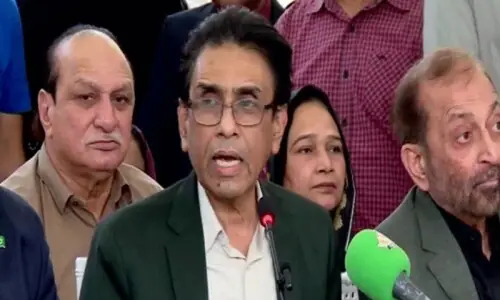
MQM-P steps up campaign for creation of new provinces
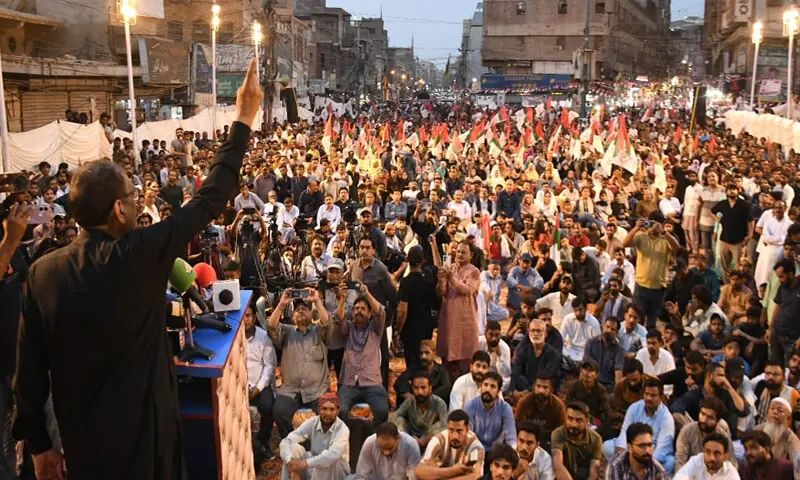

• In Hyderabad rally, Khalid Maqbool says his party has not rowed back on its demand for separate province to be carved out from Sindh
• Existing administrative system has failed to address governance needs of growing population, Kamal tells press conference in Karachi
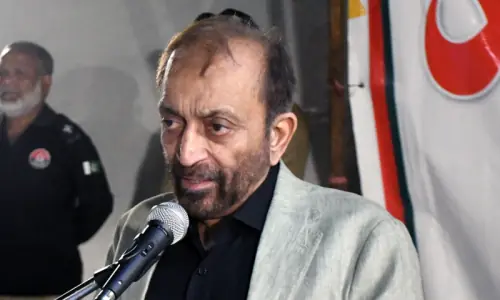
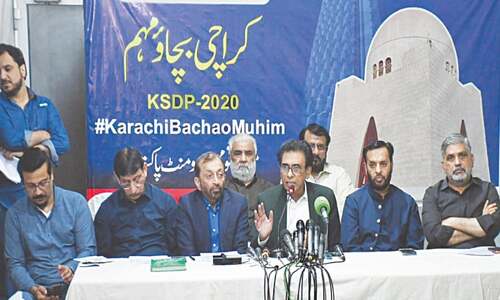
HYDERABAD / KARACHI: The Muttahida Qaumi Movement-Pakistan (MQM-P) intensified its campaign for the creation of new provinces on Saturday, as party chairman Khalid Maqbool Siddiqui led a rally in Hyderabad, while senior leader Mustafa Kamal held a press conference in Karachi to reiterate their demand for new administrative units across the country, including Sindh.
The party argued that the existing administrative structure has failed to meet the governance and development needs of the country’s growing population, particularly in Sindh, and maintains that establishing new provinces is essential to ensuring better service delivery, equitable resource distribution and effective governance.
However, two separate events highlighted increasing internal rifts as Mr Kamal did not attend the Hyderabad rally, while Dr Siddiqui was absent from the press conference held at the party’s temporary headquarters in Bahadurabad.
‘Power show’ in Hyderabad
In Hyderabad, the MQM-P staged a rally from Liberty Chowk to Kohinoor Chowk.
Addressing the participants, party chairman Dr Siddiqui said that the MQM had not withdrawn its demand for a separate province to be carved out from Sindh and told critics that the province would be created on the basis of “exchange of land” and “mother tongue”.
He said that Mohajirs from India had arrived here by choice, not by chance. He said it was under the Liaquat-Nehru pact that such migration had taken place.
He said that former prime minister Zulfikar Ali Bhutto had decided on urban and rural Sindh, and it was also decided that if the chief minister was a Sindhi-speaking fellow, then the governor would be an Urdu-speaking individual to be nominated by the party that had the mandate of urban Sindh.
He said that 97 per cent of the Sindh budget was provided by Karachi and the rest came from other major cities like Hyderabad and Mirpurkhas.
He said two classes existed in Sindh — one was nurturing Sindh with 100pctaxes, while the other was enjoying it with zero contribution. “If we are counted fairly, then the demand for a separate province will be raised from the other side,” he said.
He said the MQM-P had not withdrawn its separate province demand, and those who questioned where this province would be should understand it would be created on the basis of ‘mother tongue Sindh’ and ‘exchanged land’.
New provinces’ demand not based on ethnic lines: Kamal
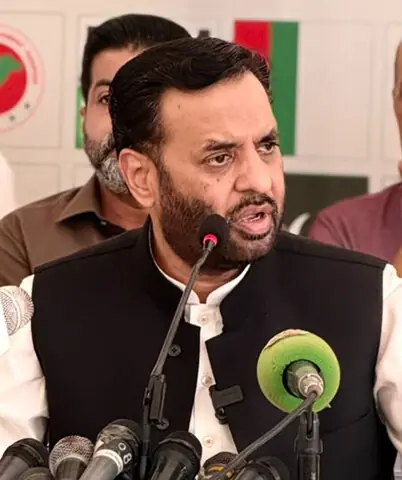
Earlier, senior MQM-P leader and Federal Health Minister Mustafa Kamal told a press conference in Karachi that the establishment of new provinces on administrative grounds had become essential to ensuring better governance, efficient public service delivery and balanced development.
He said the demand for new provinces was not based on ethnic or linguistic considerations but on administrative necessity. The increasing population and expanding urban centres, he said, required a governance structure that could effectively respond to people’s needs.
Mr Kamal claimed that the Sindh government had received Rs22 trillion over the past 18 years but allocated only Rs680 billion to Karachi, despite the city contributing more than 90pc of the province’s revenue.
He said that if the pre-2010 formula for sharing General Sales Tax (GST) revenues had remained in place, Karachi would have received around Rs2 trillion, which could have been invested in improving roads, water supply, public transport, schools, hospitals and employment opportunities.
He accused the Sindh government of centralising powers after the 18th Amendment while failing to provide basic services such as clean drinking water, sanitation, education and healthcare in Karachi and other parts of the province.
He alleged that despite the devolution of powers under the 18th Amendment, local governments had remained financially and administratively weak, leaving citizens deprived of effective municipal services. He maintained that local bodies should be empowered to resolve civic issues at the grassroots level.
The MQM-P leader said his party had proposed constitutional amendments in parliament aimed at improving governance and strengthening local government institutions but alleged that the PPP used its parliamentary majority to block those proposals.
He added that the party would now take its campaign for public rights to the streets after failing to secure legislative support.
He urged citizens to participate in the party’s planned protest rally in Shah Faisal Town on Sunday (today) and raise their voices for improved governance, transparency and equitable distribution of resources.
Responding to questions from journalists, Mr Kamal said the party would continue pursuing democratic and constitutional means to press its demands while expanding public awareness about its proposals for administrative reforms.
Published in Dawn, July 26th, 2026