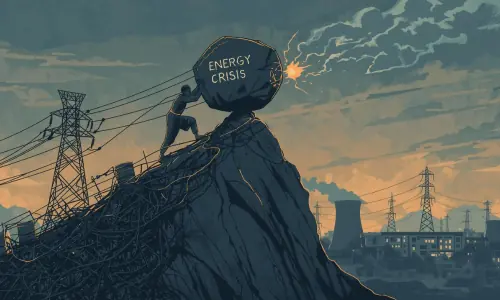
THE power sector’s circular debt grew by Rs61bn in the last fiscal year, taking the total to roughly Rs1.67tr from Rs1.61tr a year before. This breaches the IMF funding programme condition to cap the stock at Rs1.61tr.
The Power Division blames a federal subsidy cut: Rs98bn was trimmed from the Rs893bn allocated for the sector, and officials say the debt would have fallen to Rs1.58tr without that cut. Perhaps so. But the explanation says more about the system’s fragility than its own defence. A power sector that needs fiscal transfers just to avoid piling up fresh arrears was never built to stand on its own. Successive governments have tried nearly everything.
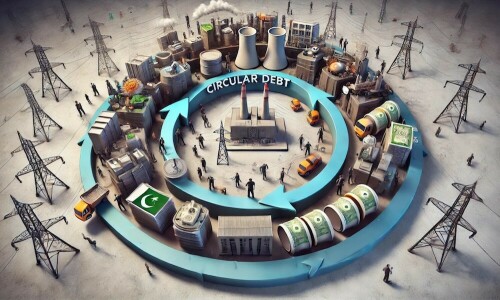
Power purchase agreements with independent producers have been renegotiated more than once. Old, inefficient plants have shut down. Tariffs have climbed sharply. Banks have stepped in with fresh loans. Last year’s Rs1.23tr financing deal with 18 banks, serviced through a Rs3.23-per-unit surcharge on consumers, was billed as the largest such transaction in the country’s history. None of it has stopped the debt from growing again. Debt keeps moving from one ledger to another; it does not disappear.
The government’s claim that distribution losses are falling deserves credit. Disco losses have dropped from Rs591bn to Rs326bn over two years, a welcome improvement. But it sits awkwardly next to a system that needs higher tariffs, bigger subsidies and fresh borrowing every year just to keep functioning. Consumers cannot be expected to absorb the constant surcharges and rate hikes.
Meanwhile, rooftop solar has exacerbated the situation for the regulators. While grid electricity grows pricier, solar panels keep getting cheaper. Anyone who can afford its upfront cost is quietly moving towards solar. The exponential growth in net-metered and off-grid solar capacity leaves the grid’s fixed costs resting on a shrinking pool of consumers who cannot afford to leave. And every fresh tariff hike gives the next affluent household a reason to instal panels of their own. Hence, fewer paying customers, higher bills for those who remain, and more reason to exit. The loop feeds itself.
None of this is really about debt. Bank loans, surcharges and balance sheet swaps may slash or even wipe out the existing stock, but if the leaks that create new debt stay open, debt piles up again. Those leaks are well known: distribution losses, transmission bottlenecks, weak bill recovery, dependence on imported fuels, theft and power-purchase contracts written on assumptions that no longer hold. Raising tariffs simply delays the day the bill comes due. The government must start treating power, gas and oil as a connected system, since a subsidy shortfall in one, a tariff decision in another, or an import bill spike in the third eventually show up as fresh circular debt somewhere down the line again.
Published in Dawn, July 30th, 2026