INFRASTRUCTURE: NEW BUSES, OLD PROBLEMS
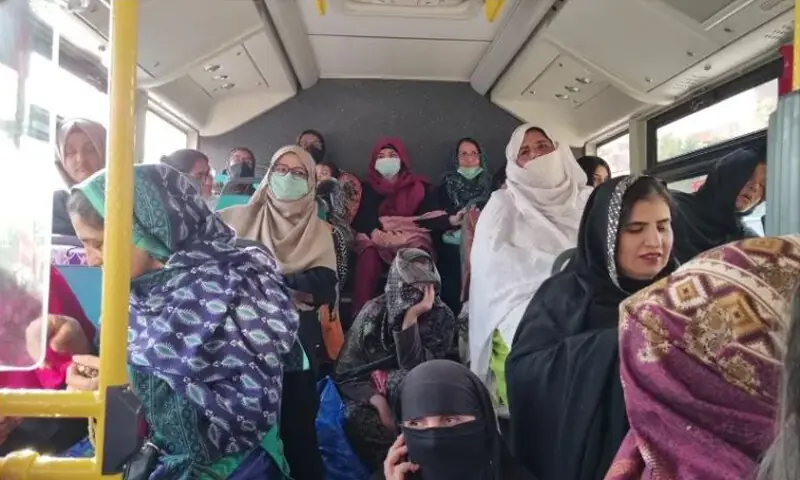

The introduction of electric buses has emerged as a positive development for Karachi’s public transport system. Providing an affordable, comfortable and environmentally friendly mode of travel, these buses have been widely welcomed by commuters in this teeming metropolis of over 25 million people.
During the city’s harsh summer months, air-conditioned electric buses offer relief from the scorching heat, making daily travel significantly more comfortable for passengers.
I take public transport daily, travelling around 13 kilometres from my residence in Gulistan-i-Johar to my office in Muhammad Ali Society. The commute takes around one hour in the morning and increases to 90 minutes on the way back. These journeys have exposed me to the many problems commuters face.
Most buses remain overcrowded, with passengers vastly exceeding seating and standing capacity, particularly during peak hours. Sindh’s transport ministry revealed in 2024 that the city had only 1,029 buses, as opposed to the total requirement of 15,000 buses. This includes around 380 electric and hybrid buses as part of various Sindh government initiatives.
Karachi’s electric buses promised comfort and relief from the heat — but overcrowding, erratic schedules and under-investment are turning the ride into another daily ordeal
Typically, a bus with a seating capacity of approximately 30 passengers between the men and women’s section carries between 70 and 80 passengers. During peak hours, the number can exceed 100 passengers on a single journey.
CROWDED OUT
Overcrowding in the city’s electric bus service has also begun to affect basic operational features, including the automatic door system. Although these buses are designed with automated doors for safety and efficiency, heavy passenger loads often prevent the mechanism from functioning. In such conditions, the doors fail to close automatically. The excessive passenger load not only reduces comfort but also places a strain on the technical systems of the bus service.
Alongside that, overcrowding poses other challenges for passengers, including pickpocketing, ineffective air-conditioning and unwanted, and at times inappropriate, contact. On one journey, a bus conductor advised me to keep my valuables secure, warning that passengers often face theft and other security concerns while travelling.
The daily journey on overcrowded buses can also compromise passengers’ dignity and self-respect, particularly among women. Many women have described overcrowding, unwanted physical contact and a lack of personal space as routine experiences.
Some expressed frustration and said that they had considered quitting their jobs because of the humiliation and discomfort they face during their daily commute. However, due to financial constraints and the need to earn a living, they feel unable to leave their jobs.
THE INTERMINABLE WAIT
The buses are also expected to arrive at stops at 20-minute intervals, but that rarely happens. Moreover, there are no properly designated or well-maintained bus stops, which is a source of inconvenience, and commuters have to wait for extended periods.
What can make the wait worse is that bus drivers often skip designated stops due to overcrowding, leaving commuters stranded even longer. Moreover, there are no properly designated or well-maintained bus stops, forcing commuters to wait for extended periods in poor conditions.
The staff of hybrid and electric buses often blame delays on power outages. The electricity charging stations for these buses are located at the Mehran Depot in Mominabad. According to the staff on-board, frequent disruptions in electricity supply affect the timely charging of buses. As a result, some buses are unable to complete their charging cycles on schedule.
These challenges highlight the importance of reliable charging infrastructure and uninterrupted power supply for the efficient operation of Karachi’s electric bus system.
SHORT-CHANGED
The red buses previously operating on the Malir Cantt-Numaish route were reassigned to other districts of Sindh, including Sukkur and Shikarpur among others. To compensate, 15 new white buses, operating under the name EV-3, were introduced on the route.
The red buses previously running this route should be restored, alongside the new white electric buses, rather than replaced by them. This would significantly increase passenger capacity and provide much-needed relief to commuters facing overcrowding and long waiting times.
At the same time, efforts to improve public transport services in other districts, including Sukkur, Shikarpur and Khairpur, should continue through the addition of new electric buses rather than by reallocating old buses from Karachi. Expanding the fleet across Sindh would help ensure that residents of different cities benefit from improved public transport.
PLANNING IN THE DARK
There is also a need to build institutional capacity for training bus drivers and conductors, so they can operate and manage the new system effectively. Such training should include vehicle operations, safety protocols, customer service, emergency response procedures and the basic management of electric bus technology.
Conversations with bus staff reveal that they receive only three days of training before being assigned to a bus. This training covers basic bus operations, ticketing procedures and passenger relations.
Karachi’s public transport network still faces major structural challenges. One of the most critical gaps is weak institutional coordination and limited long-term planning. There is little visible evidence of a comprehensive assessment to determine the actual number of buses required to meet the city’s demand.
At present, the number of buses operating in Karachi remains far below what is needed for a city of its size and population. In addition, route coverage has not expanded in proportion to the city’s rapid urban growth, leaving significant gaps in accessibility.
While electric bus services are a valuable addition to public transport options available to citizens, issues in operation and management are limiting their value. Addressing these issues could significantly improve service efficiency and the commute experience of millions who rely on public transport.
Samina Hassan Laghari is a visual artist working as a research assistant with Arif Hasan. She can be contacted at saminahassan130@gmail.com
Arif Hasan is an architect and urban planner. He can be reached at arifhasan37@gmail.com and through the website www.arifhasan.org
Published in Dawn, EOS, August 2nd, 2026