
THIS month’s Makkah Joint Defence Agreement (MJDA) has sparked a great deal of commentary about strategic shifts in West Asia’s security architecture. The agreement between Türkiye, Saudi Arabia and Pakistan is potentially a significant development, even though details about precisely what it might entail in military terms are perhaps deliberately shrouded in ambiguity.
There’s speculation about its expansion (some see Kuwait and Qatar as particularly keen aspirants for club membership), as well as explanations for Egypt’s exclusion: did Cairo voluntarily opt out for the time being, or was it rebuffed by Riyadh? Only time will tell what the future holds, but there’s a near-consensus among analysts that the repercussions of the US-Israeli aggression against Iran reinforced the impression of America as an unreliable saviour, despite the billions the Gulf states have invested in its military industry.
There is, of course, a crucial difference between the pact and the two military alliances Pakistan leapt into during its first decade of existence. Both the Baghdad Pact (renamed Cento after Iraq pulled out in 1958) and Seato were Western-sponsored groupings intended to thwart Soviet and Chinese communist influence. Pakistan appeared to entertain broader expectations, and was miffed when Cento offered no help during the 1965 and 1971 wars. No one envisages direct Turkish or Saudi involvement in the event of any further hostilities with India (which hopefully can be avoided), but the MJDA is notably an arrangement between three sovereign states, supposedly separate from their discrete links with the West.
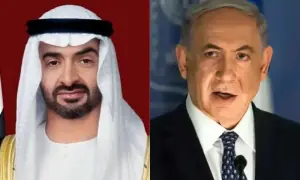
The bigger picture, meanwhile, remains either blurred or ugly. The region’s shifting sands include India’s tightening embrace of Israel, spurred on by the fascistic outlook shared by the worst elements of Hindutva and Zionism, as well as the UAE’s alignment with the genocidal Netanyahu regime. The backdrop includes a bunch of states battered, fragmented or rendered ungovernable by Western and regional interventions in the 21st century alone — although the preceding decades cannot be ignored.
Israel has cemented its status as the region’s most toxic cancer.
In the early 20th century, it was the European colonial powers that carved the Middle East into incoherent nation states. The US, attracted by the smell of oil, stepped in during World War II, and scored its first big ‘triumph’ by throttling democracy in Iran. In due course, it adopted Israel — a colonial settler state established just as African and Asian countries were vying for liberation — as a mascot. Gandhi and Jinnah were frequently at loggerheads, but both saw the manner of Palestinian displacement and expulsion in favour of European Jews as unwarranted and ominous.
Almost all Arab states have much to answer for in terms of misgovernment and a marked tendency towards autocracy, and repression as the go-to response in the face of domestic tumult. But there’s no getting away from the fact that Israel has doubled down on its status as the region’s most toxic cancer with unfaltering aid from its mainly Western benefactors. Following some sort of discussions with Hamas officials in Cairo last weekend, the US president’s son-in-law and his cohorts travelled to Israel for talks with Benjamin Netanyahu. The upshot was US acquiescence in Israel’s continued attacks on Gaza, where at least 1,265 Palestinians — mostly civilians, and many of them children — have been killed since last October’s ‘ceasefire’.
If Hamas were to give up all its weapons, would that slow down or accelerate the genocide? Itamar Ben-Gvir, Israel’s national security minister, wants a nightly death toll in Gaza of ‘30 or 40’. The West Bank, with its daily pogroms against Palestinians by settlers, often assisted by the IDF, is another tale of horror. The Gaza playbook is being repeated in south Lebanon. Southern Syria is yet an-other Israeli-occupied zone. The Arab response? Zilch. As it has been throughout the stepped-up genocide, barring the occasional pointless call for restraint.
Riyadh at least has held back from joining the wretched Abraham Accords, despite its nuclear deal with the US being held to ransom. Israel would love West Asia and North Africa to be ruled by the kind of satraps that Nazi Germany positioned across occupied Europe. It has made some headway, but hopefully will go no further. On the other hand, what are the chances that the emerging regional architecture will make a jot of difference either in halting the genocide or in mending the fractures, inflicted or deepened by interventions, that stretch from Yemen and Iraq to Libya?
Besides, one is also obliged to wonder whether military arrangements that ostensibly ignore the global hegemon can make much difference as long as the US and its Western appendages continue to flex their muscles in a domain where they don’t belong.
Published in Dawn, August 19th, 2026