In 1995, it was an unusually cold winter in London with overcast days. One could cut the gloom in the air. There were no cell phones and the land line never rang. I heard a loud knock at the door of my flat.
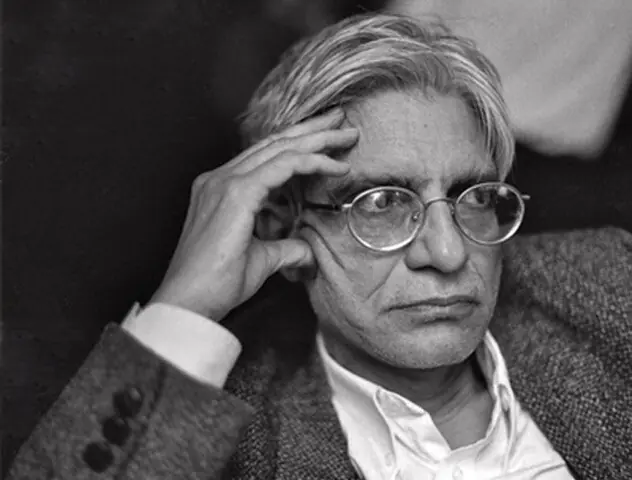
The late Rahat Saeed, a cultural and political campaigner and then one of the editors of the journal Irtiqa, had arrived with a gentleman whose sartorial elegance and beaming smile immediately caught my eye. In a moment, the two of them filled the room with warmth and affection. The gentleman Saeed had brought along was Prof Mohammed Amin Mughal.
Saeed went back to Pakistan after a couple of days but Mughal and I became as thick as thieves from the first meeting. When my parents visited London in the autumn of 1999, Mughal and my father — who knew each other from before — decided to meet every single day and either sit together from breakfast time until dinner at my place to discuss everything under the sun, or sometimes visit places of interest in the city. Once in a while, my mother and my maternal uncle would also join them.
After I moved away from London, whenever I was in the city, Mughal and I would spend every other evening together. Often we would visit the homes of his or my friends, who all became mutual friends over the years. This continued to happen for three decades, until only a year ago. Due to his fast-deteriorating health, the number of our in-person meetings reduced. However, we would call each other and speak about all and sundry — our mutual acquaintances or his old friends and comrades I had never met — and the books he was reading or fresh ideas that kept popping up in his mind even after reaching a ripe-old age.
Prof Amin Mughal, who passed away in London on August 12, was a journalist, academic and Marxist. Why was he sought after by all sorts of intellectuals and students despite never having published a single book in his lifetime?
Mughal and I were close at a personal level. But I am well aware that I am just one among innumerable people of all ages, genders, faiths, national origins, varied social backgrounds and diverse political views who looked up to him as a source of immense knowledge, deep insights, sharp analyses and, at times, deadpan humour.
After the news of his death was received in Pakistan on August 13, an uninterrupted succession of phone calls from our mutual friends and his admirers started pouring in. I had always wondered what was there in him that had turned him into a magnet for tender hearts and restive minds.
Why would literary writers, political workers, academics and students — the likes of scholar Aijaz Ahmed and poets such as Fahmida Riaz and Ali Sardar Jafri, politicians L.K. Advani and Khan Abdul Wali Khan, filmmaker Zia Sarhady and journalist and human rights advocate I.A. Rehman — all seek him out when in London?
Interestingly, Rehman sahib also made him a member of the Human Rights Commission of Pakistan (HRCP) when in London once. But why would Prof Trevor Thomas of East European studies, journalist and author Nawab Sayeed Hasan Khan and journalist and historian David Page regularly request him to join their company?
Why, when he had not published a single book himself, were there so many prominent writers and poets who made him write forewords to their works or endorsements on their books? Why, even during his lifetime, did some eminent poets compose verses on him in Urdu, Punjabi and English? Why was he one of the most sought-after speakers in London to preside over any South Asian seminar of intellectual significance or the launch of a serious book?
There can be long answers to the questions posed above. However, there are five essential reasons that come to my mind.
The first is that Mughal was not only a voracious reader of multiple disciplines, he had an elephant’s memory that served him well for most of his life. Second, he kept revising himself and shed any dogmas he would have on the basis of new knowledge acquired through reading, observation and reflection. He was a living reference on a host of subjects, not just books. Third, he had an uncanny ability to hold a cogent, coherent argument on the basis of a sharp analysis on matters of philosophy, history, politics, society, culture and literature, whether in his writings or in conversations and talks.
Although he spent 30 years of his active life in Lahore and more than 40 in London, the fourth reason was Mughal’s ability to extract purposeful learnings from his role in Pakistan’s politics between the 1950s and the early 1980s, both for intellectual freedoms and for civil rights. Besides, he kept himself abreast of the latest happenings in the world, with a particular focus on South Asia. Finally, his integrity, humility, humanity and tolerance added to his cosmopolitan appeal.
Mughal started off as an academic and a journalist. He co-edited and edited newspapers and weeklies, including Viewpoint and Avaaz, both in Lahore and London. He taught at Islamia College in Lahore before being thrown out of the job under Gen Ayub Khan’s regime. He co-established the Shah Hussain College in Lahore as a response. He was a Marxist and, on the instructions of the proscribed Communist Party of Pakistan, joined the National Awami Party and became its Punjab secretary-general.
Z.A. Bhutto’s government was not kind to him either but he faced the worst under Gen Ziaul Haq’s dictatorship. After receiving his due share of incarceration and torture, he went to the UK to see his ailing brother and to get some respite. But he neither came back nor surrendered his Pakistani citizenship until he passed away on August 12, 2026, at the age of 91.
He called his writings mere musings, out of modesty. Some of his writings, like the one on Bhagat Singh or some of his essays on culture and literature, offer serious theoretical substance. His journalistic pieces or editorials are also spread over a wide timeline. Some are available on the internet, like a few of his speeches and talks, but most are not. Hopefully, a scholar will dig up his work and bring it together for younger people.
Mughal was born in Kotli Loharan, district Sialkot, studied in Jabalpur (now Madhya Pradesh, India), Sialkot and Lahore. Three ideals he always held close to his heart were promoting books, peace in South Asia and public service. For many years, he volunteered in local London hospitals, donated a large part of his collection of books to a library in Bagh, Azad Kashmir, and left a will gifting whatever small savings he had to any organisation working for peace between Pakistan and India.
Mughal’s critical intellectual inquiry on the one hand and his compassion for all on the other will continue to define his unique legacy.
The writer is a poet, essayist and
secretary-general of the Human Rights
Commission of Pakistan
Published in Dawn, EOS, August 23rd, 2026