Inclusion of Swat archaeological site in Unesco list termed landmark development
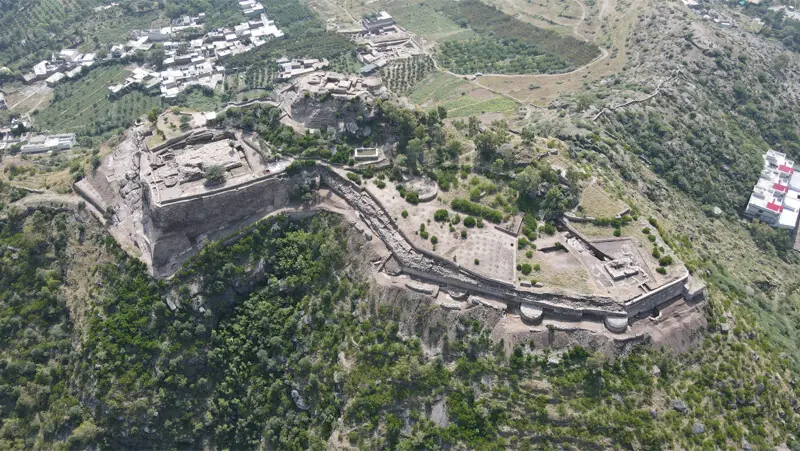

SWAT: The inclusion of Bazira-Barikot archaeological site of Swat in Unesco Tentative List has been described as a landmark development for preservation and promotion of the region’s rich cultural heritage.
Dr Luca Maria Olivieri, head of Italian Archaeological Mission, who has worked at the site for more than three decades, said that the nomination was of immense signi- cance because of Barikot’s exceptional historical depth, archaeological importance and remarkably well-preserved evidence of successive civilisations.
Located on the left bank of the Swat River, Bazira-Barikot comprises a crescent-shaped hill or acropolis and an adjoining alluvial plain.
Archaeological evidence indicates human presence at the site from the second millennium BCE, while its history extends through the Early Historic, Kushan, Kushano- Sasanian, Late Historic and early Islamic periods. Historical sources identify the ancient city with Bazira and Vajirasthana.
Dr Luca terms Bazira-Barikot one of the most important locations in South Asia
According to Dr Olivieri, the site is among the most important archaeological locations in South Asia because of its long history of occupation, systematic excavations, extensive archaeological publications and the visibility of its surviving ruins. These include ancient city walls, the hilltop acropolis, defensive structures, Buddhist religious monuments and later Hindu Shahi and Islamic remains.
The archaeological record at Bazira-Barikot presents an unusually detailed picture of urban life. Excavations have uncovered planned streets, houses, workshops, storage areas and defensive infrastructure alongside Buddhist stupas, monasteries and shrine-temples. Among the signicant discoveries are Temple B, a Late Kushan urban temple, and Shrine H, an early Buddhist sanctuary whose origins date to the third century BCE.
The site has also yielded a vast collection of artefacts, including pottery, terracotta gurines, beads, metal objects, coins, sculptural fragments and production debris.
The material evidence provides important information about local industries, trade networks, religious practices and cultural interaction across the wider Gandharan region.
Dr Olivieri pointed to the nearby Swat Archaeological Museum in Saidu Sharif, particularly its Gallery 3, which is dedicated to Bazira-Barikot.
The collection includes inscriptions in Greek, Kharosthi and Brahmi, sculptures, coins, jewellery, weapons and arrowheads, offering visitors a tangible account of the site’s long and complex history.
He said that Bazira- Barikot’s importance extended beyond Swat, as its inclusion in Tentative List increased Khyber Pakhtunkhwa’s representation among sites being considered for Unesco recognition.
More importantly, he described it as the rst site in Swat to be nominated.
The archaeologist said that the nomination could become the rst step towards a full proposal for its inclusion in Unesco World Heritage List.
KP Directorate General of Archaeology and Museums (DGOAM), in collaboration with Italian Archaeological Mission, is working on the proposal, with heritage-management specialist Prof Francesco Saverio Fera coordinating the dossier.
The long-term vision is to integrate Bazira-Barikot into a broader archaeological area incorporating important nearby sites such as Gumbat Balo Khale, Abbas Saheb China and Amluk-dara, set against the natural landscape of Mount 11am.
The Unesco nomination documents describe Bazira- Barikot as a signicant example of cultural interaction, bringing together Hellenistic, Buddhist, Hindu and Islamic traditions. Its association with Alexander the Great, who captured the citadel in 327 BCE, further connects the site to major events in world history.
Dr Olivieri said that the future of the site would depend heavily on effective protection and management.
Parts of the archaeological footprint have already been disturbed by human activity and natural processes, making timely conservation and protection essential.
“If properly protected and managed, the nomination could pave the way for Bazira- Barikot’s eventual designation as a Unesco World Heritage Site, potentially by 2028- 2029,” said Dr Olivieri, describing it as a dream turning into a gradually emerging reality for the people of Swat and Khyber Pakhtunkhwa.
Published in Dawn, August 24th, 2026