


I HAVE been accused of being an exuberant optimist. Guilty. As I prepare to leave Pakistan after nearly three unforgettable years, people ask me what I will remember most. They expect me to mention the peaks of the Karakoram and the Hindu Kush, the colours of Sindh, or the beauty of the Margalla Hills.
Those places will stay with me. But what I will remember most are the people.
Pakistan is one of the most misunderstood countries. Too often it is seen through the lens of political crises, insecurity or economic hardship. Those challenges are real, but they are not the full story. The Pakistan that I have come to know is found not only in Islamabad, Karachi, Lahore, Peshawar and Quetta, but also in places like Umerkot, Sujawal, Badin, Jhang and Booni. It is in the conversations over tea, the warmth shown to complete strangers, and the quiet confidence of communities that rarely attract attention but embody the country’s character.
I have often said that if GDP were measured in hospitality, Pakistan would be the richest country in the world. Hospitality here is not performance. It is instinct. It reveals itself clearly in moments that never make headlines: neighbours rebuilding homes after floods, volunteers travelling across the country to help communities in crisis, and countless quiet acts of generosity that ask for nothing in return. This generosity cannot be captured in economic statistics, but it is one of Pakistan’s greatest strengths.
That richness is also reflected in Pakistan’s extraordinary diversity. I have admired the poetry of Allama Iqbal and listened to the haunting music of the rabab. I have watched the spring skies filled with Basant kites, marvelled at the blind dolphins of the Indus river, and discovered that in Gilgit-Baltistan the finest meals allow the ingredients — not just the spices — to speak for themselves. Every journey challenged another stereotype.
Hospitality in Pakistan is not performance. It is instinct.
Pakistan’s diversity is reflected not only in its landscapes and traditions, but also in its people. Muslims, Christians, Hindus, Sikhs, Parsis and many others all call this country home. I have met Pakistanis from every faith and every background whose love for their country is unquestionable. Yet it is also true that some communities — including Ahmadis, Hazaras and others — continue to face discrimination and exclusion. A Pakistan in which every citizen enjoys equal dignity, opportunity and protection is not only a constitutional aspiration; it is essential to the country’s future.
During my time here, I have watched Pakistan rediscover confidence on the international stage. Whether through humanitarian leadership, peacekeeping, climate diplomacy or helping ease regional tensions, it has shown that it can be a constructive voice in an increasingly uncertain world. Pakistan has come a long way. Perhaps that is why I leave more optimistic than when I arrived.
But optimism should never turn into complacency — as Pakistan’s founders knew. The greatest opportunities still lie ahead. The work continues. Too many children remain out of school. Too many women are denied the opportunity to contribute fully to the country’s future. Too many communities still lack the quality healthcare, education and local services they deserve. Political divisions too often overshadow the interests that Pakistanis share.
The responsibility now belongs to everyone who shapes Pakistan’s future — government and opposition, business and civil society alike. Political leaders should remember that what divides Pakistan is far smaller than what unites it. The country’s greatest challenges — from education and jobs to security and economic growth — cannot be solved through perpetual confrontation. They require consensus, compromise and the confidence to govern for the next generation, not simply the next election.
Pakistan already possesses everything needed to become one of the world’s great success stories: a young population, entrepreneurial energy, abundant natural resources, extraordinary resilience and, above all, remarkable people.
The ingredients are already on the table. What is needed now is the confidence and leadership to bring them together.
I leave with gratitude — for the kindness shown to me, for the friendships formed, and above all for the people who welcomed me into their homes, their communities and their lives. Wherever I go next, I will continue telling a different story about Pakistan — not the one too often found in headlines, but the one I have been privileged to know. A story about its people. A story of warmth, resilience and extraordinary generosity. A story whose brightest chapters, I remain convinced, are still to be written. As the poet wrote: “Sitaron se aage jahan aur bhi hain/ Abhi ishq ke imtihaan aur bhi hain.”
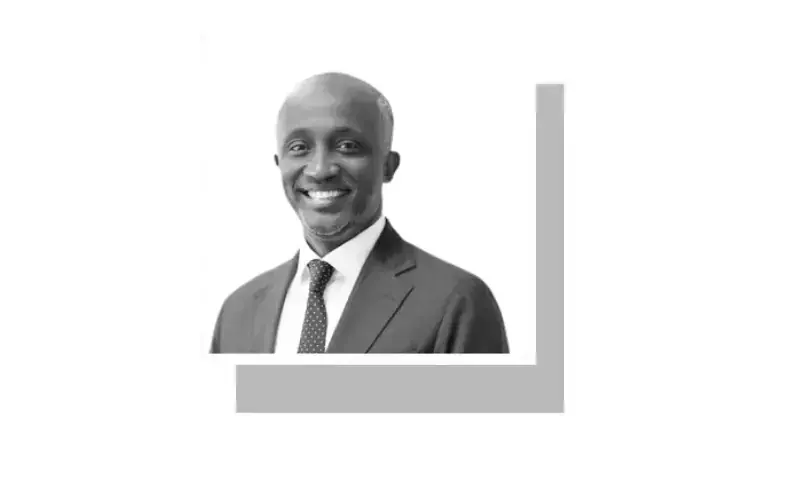
The writer is UN resident & humanitarian coordinator in Pakistan.
Published in Dawn, August 29th, 2026


























