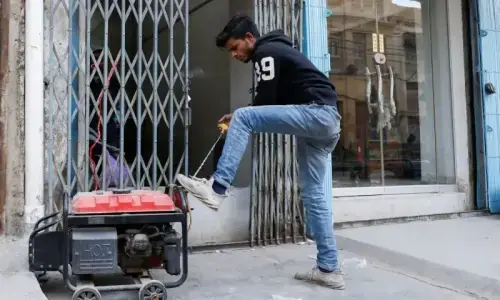
Rights activists decry excessive loadshedding in low-income areas of Karachi
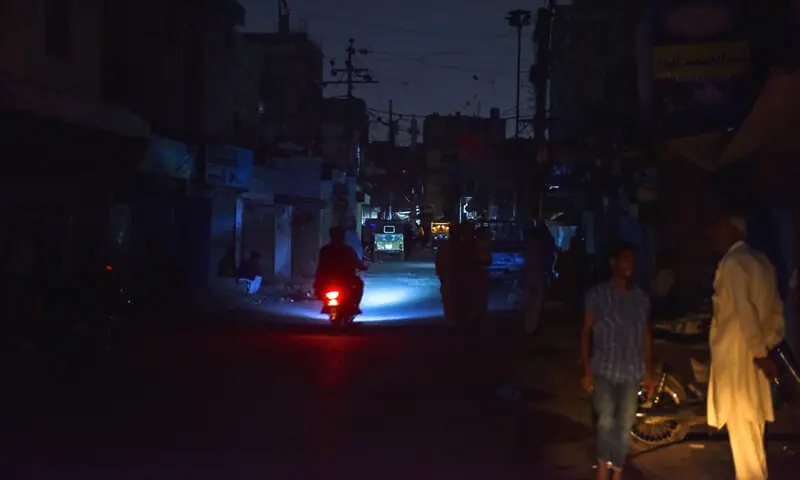

KARACHI: Rights activists and members of civil society have said prolonged and excessive loadshedding had made everyday life increasingly difficult for Karachi’s low-income communities, disrupting children’s education and making cooking, washing, bathing and maintaining personal hygiene a daily struggle.
They were speaking at a press conference organised under the banner of the Civil Society Collective for Clean Energy for Karachi here at the Karachi Press Club.
The speakers pointed out that Karachi witnessed widespread protests and traffic jams during the week beginning Aug 24, as residents of Lyari, the old city areas, Baldia, Orangi, Korangi, SITE and Sohrab Goth demanded an end to what they described as unusually prolonged loadshedding.
They said residents of North Karachi, Nazimabad and parts of Gulistan-i-Jauhar had reported 16 to 24 hours of loadshedding. They further claimed that K-Electric’s loadshedding schedule available on its website showed up to 12 hours of outages a day on more than 615 feeders, suggesting that around one-third of the city’s feeders were affected.
Say KE website shows up to 12 hours of loadshedding a day on more than 615 feeders
Qazi Khizer of the Human Rights Commission of Pakistan highlighted the impact of loadshedding on working-class neighbourhoods and said prolonged outages were contributing to the difficulties already faced by residents. He referred to recent reports describing Karachi as a city with one of the highest levels of mental stress in the world. He said excessive loadshedding was one of the factors contributing to the problem.
“Electricity is not a luxury, it is a necessity,” he stressed.
Abbas Haider of the Pakistan Institute of Labour Education and Research (Piler) said, “The current loadshedding in Baldia, SITE, Korangi and other industrial areas of the city targeting households is having an extremely negative effect on informal workers, who mostly reside in these areas. Prolonged loadshedding depletes them of their energy, sleep and rest, which then impacts their performance at work. There has been a marked increase in workplace accidents due to the ongoing increase in the load-shedding hours.”
Karachi Union of Journalists President Tahir Hassan Khan questioned the benefits of the privatisation of K-Electric, saying that despite claims of improvements in its systems and digitisation, the company had failed to provide reliable and consistent electricity to Karachi.
Lyari-based social activist Najma Maheshwari said women in Lyari were bearing a disproportionate burden because of prolonged power outages and inadequate water availability.
“Due to excessive load-shedding in Lyari, we have to buy water even for washing our clothes. The financial stress of managing everyday life is becoming extremely brutal. Women are particularly impacted as they are burdened with managing cleanliness in the household. Due to water non-availability because of load-shedding, women struggle to manage cleanliness in the house and for children, leading to a serious outbreak of skin and reproductive health illnesses in the area.”
Zeenia Shaukat of The Knowledge Forum said the public debate on the city’s electricity crisis had become excessively focused on electricity theft and recovery, with responsibility often being placed on neighbourhoods rather than the utility.
“Nepra has repeatedly warned KE to end feeder-level loadshedding. On several instances, the regulator has reinforced the utility to conduct PMT-based loadshedding after all efforts have been exhausted to reduce commercial losses. The conversation should therefore move from “Who is stealing electricity?” to “Who is accountable for the electricity system and for protecting customers,” she asked.
Published in Dawn, August 30th, 2026