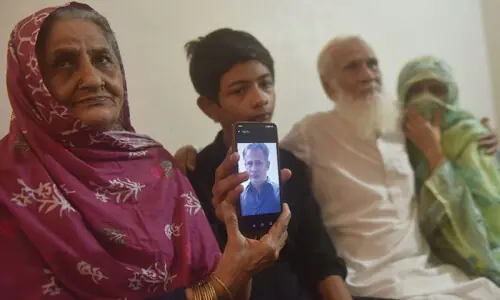
PAKISTAN has for decades grappled with the problem of missing persons, as powerful actors within the state have been accused of tolerating the practice of enforced disappearances. Due to the sustained activism of those whose loved ones have reportedly been ‘disappeared’, as well as rights groups, the state has at least acknowledged that the problem exists, and formed official bodies to look into the matter. But today, as the world observes the International Day of the Victims of Enforced Disappearances, the state must pledge to eliminate this unlawful practice and handle suspects within constitutional bounds. At least two bodies have been set up at the federal level, with the Commission of Inquiry on Enforced Disappearances primarily looking into cases, while a provincial committee formed by the Balochistan High Court is also in operation. Balochistan and KP face the highest number of missing persons, though cases have been reported from other provinces as well. According to the COIED, 8,873 cases were “disposed of” between March 2011, when the commission was formed, and August 2025. Yet independent observers, such as HRCP, say these figures are “vastly underreported”. Moreover, last year the Balochistan Assembly amended the provincial antiterrorism law allowing for detention without charge for up to three months. This can hardly be called a progressive step towards bringing transparency to the issue of missing persons.
There is no doubt that the state continues to face critical law and order challenges, such as insurgencies and terrorism. But these difficulties cannot be tackled by skirting constitutional rights, and creating parallel systems that are beyond public scrutiny. Arguably, when officialdom hauls people away without due process, and without telling their families why and where they are being held, it only adds to the people’s alienation from the state. A confident state relies on the law to prosecute those it believes are involved in wrongdoing. Or if the rulers believe the legal system is broken, they should correct it without compromising fundamental rights. A weak legal system is no excuse for violating rights. If the state believes individuals are involved in wrongdoing, instead of keeping them incommunicado, it must produce them before a court, so that they can defend themselves.
Published in Dawn, August 30th, 2026