Early years critical in addressing malnutrition: experts
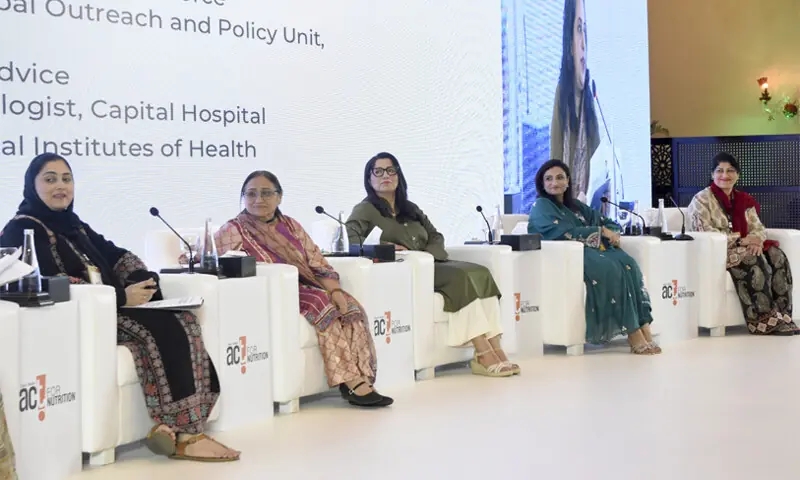

ISLAMABAD: Medical experts called for a multi-sectoral approach and the incorporation of the latest research to address malnutrition, stressing that a focus on nutrition was essential at the community, systemic, and legislative levels.
Addressing a session at DawnMedia’s ‘Act for Nutrition: The Emergency We Can No Longer Ignore’ conference, they discussed the nutritional needs of women and girls and the importance of the period from pregnancy through a child’s second birthday.
International Research Force Director Dr Hana Mahmood said 80 per cent of a child’s brain develops during the first two years and nutritional deficiency during this window causes irreversible developmental harm and permanent loss of human capital. She said malnutrition heavily contributed to Pakistan’s high infant mortality, adding that focusing on stunting in the first 1000 days could avert up to 250 million global deaths.
Dr Rafat Jan, professor at Aga Khan University, said field research in remote areas showed that pregnant women and midwives often lacked basic meals, directly leading to weak bone development in newborns. When we are producing research, the challenge is how to scale up and reach the right people at the right time with the right intervention, she added.
Nutradevice Founder Dr Nosheen Taqvi said it was a misconception that healthy food was expensive. She said plant proteins, eggs, and milk were accessible alternatives to costly animal proteins like beef or mutton. She said social media was creating body image issues, which was also leading to nutritional deficiencies.
Capital Hospital Associate Gynaecologist Dr Urooj Yasir Khan said the focus of nutrition should not be limited to pregnancy or childbirth. The first 1,000 days effectively begin in adolescence, she said, adding that there was hardly any awareness about nutrition in adolescent girl groups. She said that the prevalence of anaemia in Pakistan was around 40 to 50pc, which carries multiple risks.
“If she’s entering (pregnancy) in a nutritionally deficient state…her body is not going to be able to meet that requirement, the baby itself will be affected, so you will be having…growth-restricted babies.” She also stressed the importance of dietary diversity and supplements, which she termed “very very affordable”, and suggested school-level nutritional programmes to address malnutrition.
Dr Nosheen Ashraf of the National Institutes of Health, speaking about maternal nutrition, said that during antenatal visits, mothers are asked to take supplements to address nutritional deficiencies; however, she noted a lack of consistent monitoring. Dr Ashraf said there were not enough laboratories in far-flung areas, as she called for rigorous testing of pregnant mothers to track any nutritional deficiencies.
Published in Dawn, September 3rd, 2026