Punjab’s budgetary borrowing jumps 145pc
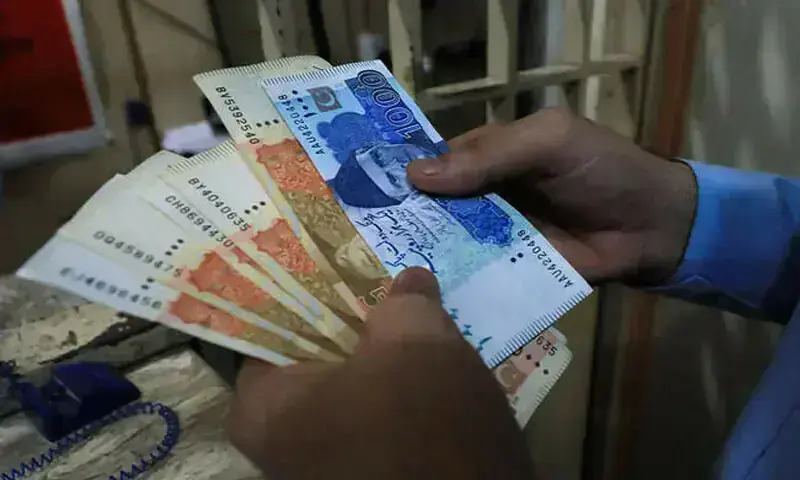

KARACHI: Punjab more than doubled its borrowing from banks for budgetary support during the first seven weeks of the current fiscal year, reflecting growing liquidity pressures on the country’s largest province.
The latest State Bank data shows that Punjab borrowed Rs753.4 billion between July 1 and Aug 21 compared to Rs306.8bn during the same period of the previous fiscal year, suggesting an increase of more than 145 per cent.
The provinces have been required to generate fiscal surpluses and share them with the federal government, which continues to rely heavily on bank borrowing to meet its financing needs.
However, the World Bank in a recently issued report noted that while the federal government transfers a larger share of revenues to the provinces, it does not reduce its own expenditure commensurately.
Centre borrows Rs571bn during first seven weeks of FY27
The divisible pool for determining federal and provincial shares has been frozen at Rs13.35 trillion to meet strategic national requirements. Tax collection is projected at Rs15.264tr in FY27, implying that around Rs1.9tr would remain available to the federal government beyond the frozen divisible pool.
Provincial spending has also shifted away from service-delivery needs. According to World Bank reports, the largest increase in provincial expenditure since 2010 has been on administrative costs rather than education or health.
Around 80pc of consolidated provincial expenditure continues to be absorbed by recurrent costs, while local governments’ share in total public spending has declined from around 10pc in 2005 to less than 5pc at present.
SBP data shows that the federal government borrowed Rs571bn for budgetary support during the same period, less than Punjab’s borrowing.
The provincial position varied considerably. Sindh had deposits of Rs69.6bn with the State Bank, while Balochistan had Rs43.4bn. Meanwhile, Khyber Pakhtunkhwa had borrowed Rs1.8bn.
According to the SBP, a negative sign in government deposits represents a credit balance, while a positive sign indicates withdrawal from the system.
Provincial governments rely overwhelmingly on federal transfers, which account for up to 78pc of their revenues, rather than raising a larger share through their own tax bases, including agriculture and retail.
This dependence leaves provincial finances vulnerable when they are required to generate larger cash surpluses for the Centre, potentially squeezing resources available for essential services such as education, healthcare and local infrastructure.
Agriculture accounts for more than 20pc of GDP, but agricultural income tax collections remain negligible. No province has so far generated significant revenue from this head, contributing to weak provincial own-source revenues and Pakistan’s low tax-to-GDP ratio.
Published in Dawn, September 3rd, 2026