Policy gaps deter nutrition investment
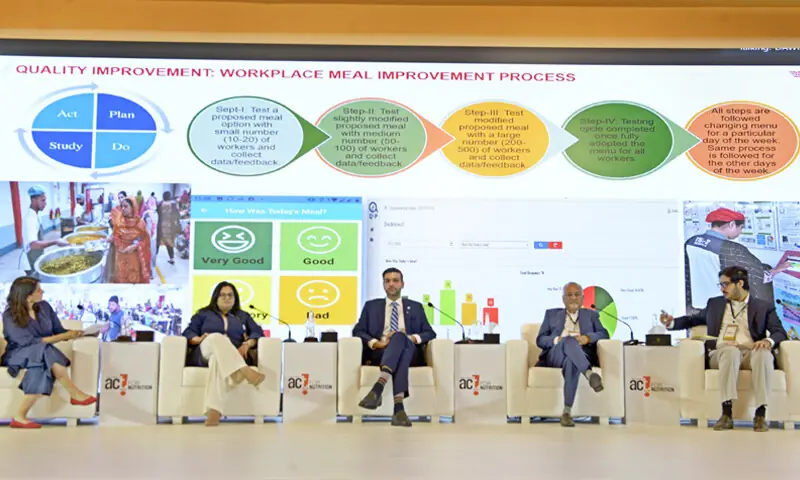

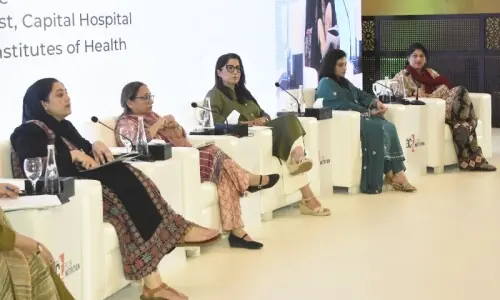
ISLAMABAD: While acknowledging that the public sector alone cannot meet nutrition requirements, speakers at a conference said on Wednesday that a lack of policy consistency and coordination among government agencies was restricting the private sector from playing an active role in this regard.
Speakers at the session — ‘Mobilising Private Capital and Partnerships’ — at the ‘Act For Nutrition: The Emergency We Can No Longer Ignore’ conference highlighted the need for greater private-sector involvement in addressing the country’s nutritional challenges.
Corporate Affairs Director at Tetra Pak Noor Aftab stressed that food systems needed to be treated as critical infrastructure, not only for nutrition but also for the economy. He said Pakistan was one of the largest milk-producing countries, but there were no safe-milk or pasteurisation laws in the country.
He added that there was an 18 per cent GST on packed milk in Pakistan, which was one of the highest in the world. “This tax was enforced after the private sector invested heavily in the milk and milk products sector.”
Experts call for consistent policies, govt coordination to tackle nutrition challenges
He informed the participants about the school milk programme already implemented in 104 countries and said such programmes were essential for addressing the nutritional needs of young boys and girls.
A case study on investment in nutrition in Bangladesh was presented by Reza Sumon, Project Manager, Workforce Nutrition, who joined the conference via a video link. He said that in Bangladesh’s government sector, the anaemia rate among the workforce was 51.9pc. However, after interventions involving funding for fortified rice and oils, as well as iron and folic acid tablets, the anaemia rate dropped to 32pc.
Mr Sumon said the improvement helped convince the private sector to make similar investments in nutrition. After the private sector invested $10 million in nutrition over the past year, workplace absenteeism had reduced from 70pc to 40pc.
Agriculture consultant Hasan Khurrum Hanif, talking about producing nutritionally dense food, said Pakistani farmers needed a demand pull rather than a supply push. He said farmers would produce if the return was lucrative and that the system had to provide them with an ecosystem.
Head of Corporate Communications and Sustainability at English Biscuit Manufacturers, Attiyah Inaam Khan, shared details of an initiative launched by the company, under which fortified biscuits were provided to mothers to address malnutrition.
“We tracked them for five years, and mothers who received biscuits showed great iron levels during pregnancy, and children born under the study showed stronger cognitive development,” she recalled.
She added that the government could also play a very important role by providing tax credits for fortification in products and reducing import duty on fortification.
Meanwhile, speakers at another session noted that no multisectoral nutrition programmes had been launched in the past decade except the Benazir Nashonuma Programme.
Chief of nutrition at the planning ministry, Dr Nazeer Ahmed, said: “We have the policies in the four provinces, and nutrition strategies at the federal level, but on the ground, we do not have any multisectoral programmes implemented.”
Senior Project Officer at the Asian Development Bank (ADB) Mansoor Ali Masood said the bank was looking at malnutrition through an economic lens rather than viewing it solely as a health issue.
“We are trying to mainstream it through social protection, education, agriculture and water, sanitation, and hygiene (WASH) services,” he said, adding that the ADB was supporting the Benazir Nashonuma Programme and had allocated around half of a $960m fund to address stunting.
Gates Foundation’s Senior Programme Officer for Development Policy and Finance, Dr Ammar Malik, said that according to World Bank statistics, for every dollar a government invests in nutrition, it could get up to $23 in economic benefits. Global Alliance for Improved Nutrition Executive Director Lawrence Haddad noted that another reason nutrition was underfunded was a lack of dedicated efforts to address it. He added that there should be a ministry of nutrition.
Published in Dawn, September 3rd, 2026