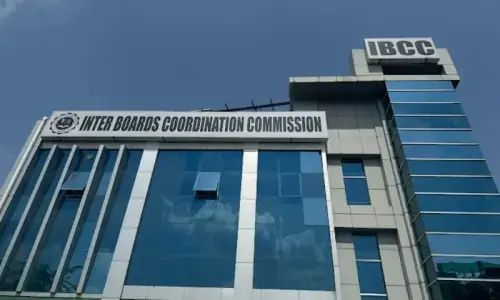
ISLAMABAD: The Inter Board Coordination Commission (IBCC) on Saturday decided that Science Group equivalence would be awarded to students of foreign boards who had passed at least two science subjects, providing greater flexibility in academic pathways.
Similarly, the forum recommended 12 additional Deeni Madaris for equivalence of their qualifications with SSC and HSSC, bringing the total number of institutions under the equivalence framework to 26. It also agreed to include B-Form/CNIC numbers on SSC and HSSC certificates, making academic records easier to identify, access and verify.
Additionally, the commission will offer scholarships and overseas exposure opportunities to board toppers, besides arranging winter and summer camps for high-achieving students to provide them with broader learning, leadership and exposure opportunities.
These decisions were made during the 184th IBCC Forum meeting in Murree.
“The two-day IBCC Forum concluded in Murree with a series of important decisions aimed at transforming Pakistan’s examination system from rote learning towards conceptual assessment, while improving transparency, uniformity and international recognition of Pakistani qualifications,” a press release said.
It added that chairpersons from Boards of Intermediate and Secondary Education (BISEs) across the country, technical education boards, and senior representatives of curriculum and textbook boards had come together for the meeting.
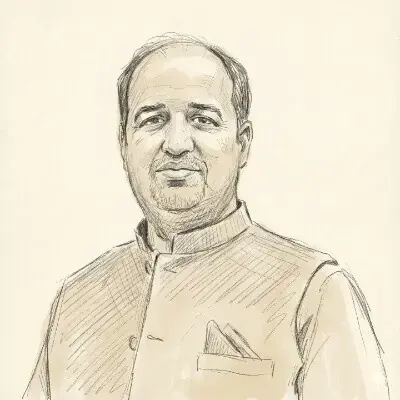
According to the press release, National Coordinator of the IBCC Forum Inayatullah Waseem emphasised the importance of active participation and collective ownership of examination reforms.
He said the IBCC Forum provided an important national platform for boards to learn from one another, share successful practices and develop common solutions to challenges faced by the examination system.
The national coordinator also stressed that greater coordination among boards and consistent implementation of agreed reforms were essential for ensuring fairness, quality and public confidence in examinations across the country.
“A major focus of the forum was the implementation of the prime minister’s directives for standardisation of the examination system across the country. The forum adopted measures for greater uniformity in assessment and examination practices, which will also support the credibility and international recognition of Pakistani qualifications,” the press release said.
It stated that the forum was informed that examination boards in Sindh, the Federal Board of Intermediate and Secondary Education (FBISE), the AJK Board, the KIU Board, the Aga Khan Board and the Ziauddin Board had implemented the new grading policy, under which the minimum passing marks had been increased to 40 per cent. Awareness sessions and workshops would also be organised to facilitate implementation of the revised grading formula across the country.
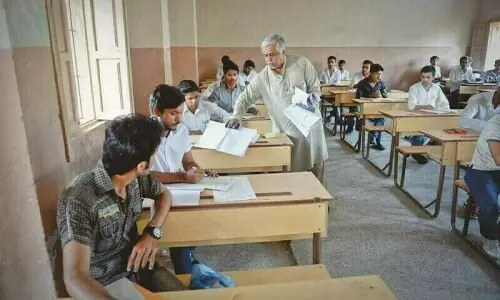
Meanwhile, the forum agreed to develop a uniform calendar for theory and practical examinations and formulate common guidelines and procedures for practical examinations to ensure greater consistency, fairness and transparency across examination boards.
During the meeting, BISE Kohat, BISE Quetta and FBISE presented their best practices, innovative initiatives and outcomes for possible adoption and replication by other boards.
Speaking on examination reforms, IBCC Executive Director Dr Ghulam Ali Mallah appreciated the Punjab government for the merit-based appointment of chairpersons of examination boards. He observed that competent professional leadership was adding value to the IBCC Forum and strengthening the national effort to shift examinations from rote learning towards conceptual assessment.
Dr Mallah also appreciated the Sindh government and chairpersons of Sindh examination boards for implementing e-marking across the province, describing it as an important step towards greater transparency, efficiency and credibility in the examination system.
He emphasised that the reforms being pursued through the IBCC Forum were part of a broader national effort to develop an examination system that tests understanding rather than memory, rewards genuine learning, embraces technology, and strengthens the national and international credibility of Pakistani qualifications.