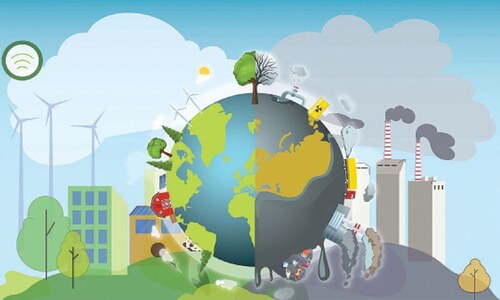
THE world is edging into climate territory governments have spent years trying to avoid. A new UN Environment Programme report warns that the Paris Agreement’s 1.5°C warming threshold is likely to be breached within the next few years. That does not mean climate action has failed or that the target no longer matters.
UNEP argues that humanity must keep any “overshoot” as low and brief as possible, as every fraction of warming raises the risk of extreme weather, ecosystem loss and irreversible tipping points.
Adding to the concern, the World Meteorological Organisation says the El Niño strengthening in the Pacific could be the strongest in four decades, intensifying heat, drought and floods worldwide. For Pakistan, the fallout could include water stress, food insecurity and greater strain on urban infrastructure and services.
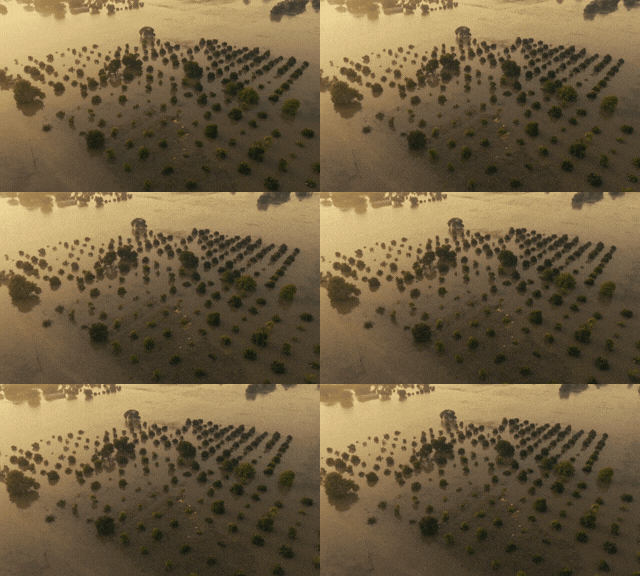
The Nepal-China floods have shown how quickly climate hazards can devastate lives. As warming intensifies, Pakistan will increasingly have to contend with several climate stresses at once, often in places least equipped to cope. That demands a rethink of how the country plans for development.
Pakistan must plan for a climate changing faster than its institutions. Adaptation cannot remain confined to emergency response after floods, heatwaves or droughts. Development policy itself must change.
New housing, roads, power systems and urban drainage should be built for harsher weather. Water policy must account for uncertain river flows and rainfall. Agriculture needs crops and irrigation methods better suited to greater heat and water stress, along with support to help farmers adapt. Cities require heat-action plans, shaded public spaces and stronger protection for outdoor workers.
A World Bank assessment covering Pakistan and the wider MENAAP region found that prolonged extreme heat is depressing sales, labour productivity and wages, showing that climate damage is also an economic competitiveness problem. None of this absolves the major emitters. UNEP identifies finance, equity and global cooperation as essential to navigating a dangerous climate future, while stressing that countries with greater responsibility for global warming must act fastest.
Pakistan should press that case. But it must also spend development resources intelligently. The age of treating climate disasters as one-off emergencies has ended and it must plan for a harsher reality.
Published in Dawn, September 6th, 2026