Key port falls as Houthis eye Red Sea gateway

• Advance brings group closer to Hanish islands, Bab el-Mandab
• Over 70 wounded in attacks on southern Saudi Arabia; Riyadh launches several retaliatory airstrikes across Yemen
• Coalition allies regroup near Dhubab opposite Perim island
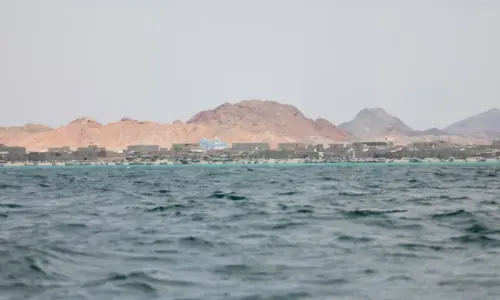
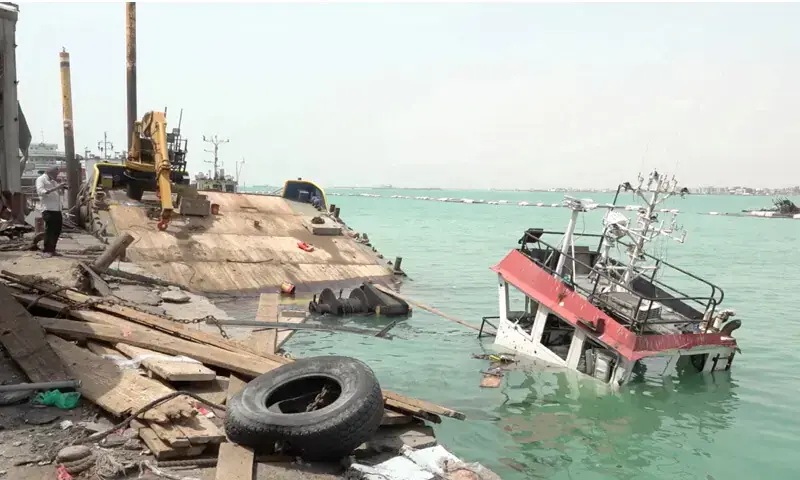
SANAA: Houthi forces on Thursday seized the strategic Yemeni port city of Mocha and pushed south along the Red Sea coast towards the Hanish islands, raising fears that fighting could threaten one of the world’s most important shipping routes.
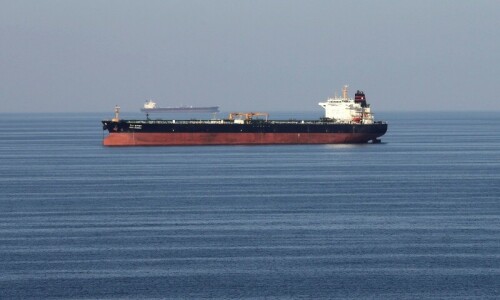
The advance brings the group closer to the Bab el-Mandab strait, the narrow waterway connecting the Red Sea with the Gulf of Aden and a crucial passage for oil, fuel and international trade.
The development comes at a particularly sensitive moment for global energy markets. Saudi Arabia has increasingly relied on its Red Sea export route after disruption to traffic through the Strait of Hormuz during the wider conflict with Iran.
Millions of barrels have instead been shipped through the Saudi port of Yanbu.
Brent crude rose as much as 4pc on Thursday, reaching about $105 a barrel, while US benchmark WTI climbed above $100 as traders reacted to the possibility of further disruption to energy supplies.
The Houthi-run Humanitarian Operations Coordination Centre said navigation in the Red Sea remained safe for shipping companies other than Saudi vessels.
Mohammed Abdulsalam, a Houthi spokesperson, described the group’s operations as defensive and said they would end when attacks on Yemen stopped.
Yemeni government military sources said Houthi forces reached the Hanish islands after rocket attacks and an assault involving fighters transported by boat.
Government forces and their allies have meanwhile been repositioning towards Dhubab, on the coast opposite the island of Perim. Both locations sit close to the Bab el-Mandab and are considered strategically important for controlling access to the strait.
The Bab el-Mandab, or “Gate of Tears” separates Yemen from Djibouti and Eritrea. Oil and fuel travelling from the Gulf towards the Mediterranean through the Suez Canal pass through the waterway, as does substantial commercial traffic heading towards Asia.
“Controlling the coast would strengthen Houthi maritime coercion,” Andreas Krieg, a security expert at King’s College London, said.
The capture of Mocha represents a significant setback for forces aligned with Yemen’s internationally recognised government.
Rashad al-Alimi, the head of the Presidential Leadership Council, appealed for Arab and international assistance in protecting Yemen’s coastline and restoring government authority over ports and territorial waters.
“The protection of Yemen’s coasts and the restoration of state control over its territory, ports and waters is a joint Yemeni, Egyptian, Arab and international interest,” al-Alimi said.
Tarek Saleh, whose National Resistance Forces had controlled Mocha, said his command centre had been moved to a secure location while his forces regrouped. He acknowledged heavy losses during the fighting and accused Iran of planning and supporting the Houthi offensive.
As the Houthis pressed their offensive, Saudi Arabia launched dozens of airstrikes. Houthi military spokesman Yahya Saree said Saudi aircraft conducted 64 strikes over the past 24 hours across multiple provinces.
Meanwhile, the Houthis stepped up attacks on southern Saudi Arabia. Saudi civil defence authorities issued emergency alerts in Khamis Mushait for the fourth time in 24 hours, and the kingdom reported that recent Houthi strikes wounded 73 people.
Witnesses in Mocha reported fighters marching and chanting, “Death to America, death to Israel.”
The advance drove many residents to flee to Aden. Mohamed, a 46-year-old who left Mocha in the middle of the night, described an “apocalyptic” atmosphere, while another fleeing resident, Mujahid Tahami, said some families fell victim to “looting by gangs as they tried to flee”.
The renewed fighting has left more than 500 dead since last week, and displaced nearly 20,000 people.
Yemen relapsed into war in July after the Houthis let an Iranian plane land in defiance of Saudi control of Yemeni airspace, prompting the government to strike Sanaa airport. The current clashes risk returning Yemen to the devastating civil war that began in 2014 when the Houthis seized Sanaa.
Published in Dawn, September 11th, 2026