Govt asked to review PDL, daily pricing
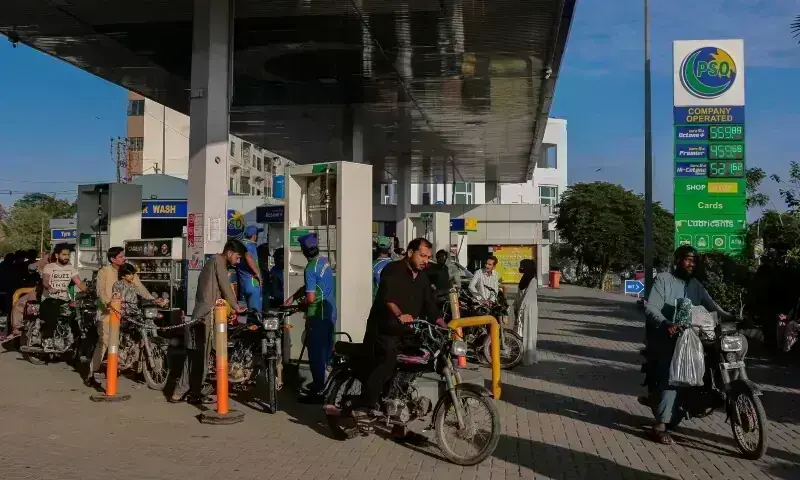

KARACHI: The business community has urged the government to review the existing system of taxes and levies on petroleum products, as well as its policy for determining fuel prices daily.
According to businessmen, they face problems accurately determining production costs and product prices, which is severely affecting their business planning.
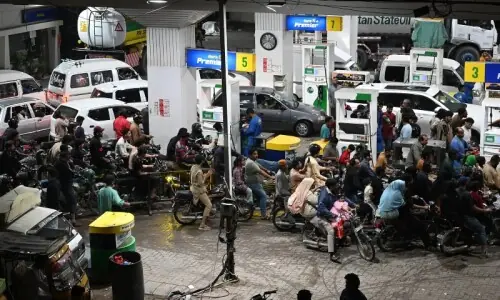
Korangi Association of Trade and Industry (KATI) President Muhammad Ikram Rajput said the daily price hike was creating significant difficulties for the industry and adding to economic uncertainty rather than promoting stability. He said petrol and diesel prices had increased by approximately Rs22 and Rs14 over the past three days, placing an additional burden on inflation-hit consumers.
The government data showed that taxes, duties and levies accounted for approximately 37 per cent of the price of petrol and 31pc of the price of diesel. Instead of directly passing on the impact of fluctuations in international petroleum prices to the consumers and the industry, the government should also review the existing system of taxes and levies, he added.
Mr Rajput said any decline in international prices should also be passed on to the consumers immediately. “It is not acceptable for increases to be passed on immediately while reductions are delayed,” he said.
He called on the federal government to reconsider the decision to determine petroleum prices daily and, after consulting the industrial, commercial and transport sectors, introduce a transparent and predictable pricing mechanism that could protect business costs, consumers and the national economy from unnecessary fluctuations.
SITE Association of Industry President Abdul Rehman Fudda urged the government to abandon the policy of revising petroleum prices on a daily basis and introduce a 15-day pricing cycle which would help industrialists in assessing production costs and enter into commercial agreements.
Mr Fudda said the repeated increases were particularly damaging at a time when the government claimed it was working to boost exports, attract investment, and improve the ease of doing business.
Federation of Pakistan Chambers of Commerce & Industry (FPCCI) President Atif Ikram Sheikh expressed grave concerns over the mounting pressure of volatile global oil markets on Pakistan’s macroeconomic stability. He warned that successive international oil shocks – compounded by high domestic levies — were crippling the country’s export competitiveness, widening the trade deficit, and threatening widespread industrial closures.
On the one hand, committees are being formed and commitments are being made to increase exports and facilitate businesses, while on the other hand, policies are being pursued that are making it increasingly difficult for industries to remain operational, he said.
He said small and medium-sized enterprises (SMEs), already struggling with difficult operating conditions, were being pushed further into distress.
Published in Dawn, September 11th, 2026