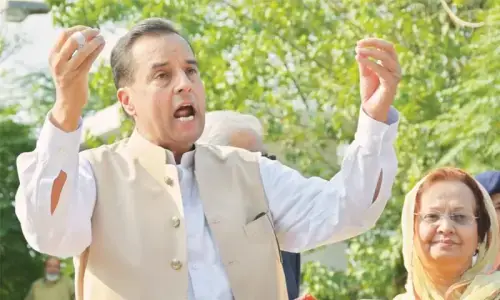

LAHORE: Leading Pakistani architect, educator and heritage conservationist Kamil Khan Mumtaz presided over a discussion that underlined the need for conservation and the detrimental impact of modern technology on the environment.
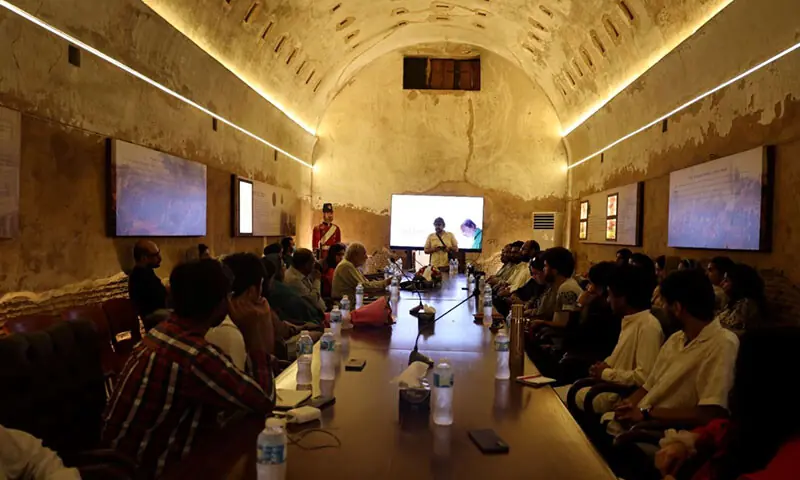
The session titled ‘The value of Traditional Practices’ was held at Barood Khan, Lahore Fort, on Friday. The event called “Café Learning Session,” was organised by Aga Khan Cultural Service – Pakistan (AKCS-P). It was attended by architects, fine artist buffs, engineers and conservationists.
Mumtaz, who was awarded Tamgha –e- Imtiaz in 1993 and Sitara –e- Imtiaz in 2019, described the modern conception of development as antithetical to the preservation of the environment, deploring that natural resources had been exhausted. “Nature doesn’t have unlimited resources. You cannot take more from nature than its capacity,” he warned.
He noted the impact of greenhouse gases in the form of global warming, the thinning of the Ozone layer, melting of glaciers and floods that have caused destruction world over, warning that if the carbon footprint is not reduced soon the impact would be “disastrous”.
Mumtaz described how conservation enabled us to restore historic structures to their past glory while learning valuable lessons in the process which were rooted in indigenous forms. Referring to history, he shared that the economy that was practiced then was a “natural economy”, in which we took from nature what we needed and gave back what we did not need, which made it circular in the true sense. It sustained our species and others in perfect balance and harmony, he added.
Reflecting on the historical trajectory of the world economy, he described how the balance was first disrupted by the Agricultural Revolution which entailed the stewardship of natural resources such as land and animals in a way that enabled humans to get more out of them, which led to the production of surplus. “With machines and industrial production humans were able to go beyond hunting and gathering.” Given that machines enhanced production and consumption, he said that the expansion of production and consumption can go on endlessly.
Referring to the post-1970s period, he explained that the world began to consume more than what it produced, which upset the balance of the ecosystem. The existing norm, he argued, was only recent, compared to 300,000 years of human civilization, which was predicated on a way of life that was conducive to the preservation of the environment.
Mumtaz examined conservation as a process that looks backwards, at a better time in contrast to post-modernism that looks ahead and measures progress in terms of the possession of material wealth. “In hunting-gathering societies, there is no advantage of hunting more. You only hunt as much as you need.”
He lamented the dearth of research and literature on conservation science, and narrated his experience of documenting heritage sites, an experience that gave him an insight into traditional wisdom whose legacy lived on among rural communities. “Ironically, it is the educated strata of society that is destroying the environment while many who lack formal education are more mindful about protecting their habitat.”
Senior Consultant Architect at AKCS-P Rashid Makhdum, in his closing remarks, thanked Kamil Mumtaz for sharing a new perspective on the world order. “We should look at life from different perspectives and Mr Mumtaz has shared a new and important perspective today. Our way of life should not be such that it causes harm to others and we should aspire towards adopting approaches that are of benefit.”
Published in Dawn, September 12th, 2026