
PESHAWAR: The Khyber Pakhtunkhwa health department has deployed a rapid response team in Kohat district after a surge in dengue cases due to the failure of the district administration to level the Afghan refugee camps, declared the main source of mosquito production.
In a report, the Integrated Diseases Surveillance and Response System at the Directorate-General Health Services revealed that the province recorded 148 new dengue cases in the current week, bringing the province’s overall infection tally in the current season to 729.
It is the highest number of cases reported in any week, with Kohat reporting 71 infections. Kohat, with a total of 274 confirmed dengue cases, surpassed Peshawar, which is second on the list with 241 cases.
More and more cases are being reported in Kohat and Peshawar, along with Bannu (72) and Haripur (35) as the province has already entered the “endemic phase” for the mosquito-borne disease that will continue to witness the rising incidence until October.
Likewise, Dera Ismail Khan and Swabi have recorded 11 cases each, Bajaur, Charsadda, Swat and Nowshera 10 each and the rest of the 24 endemic districts one each.
In view of the uptick in Kohat dengue cases, the director (public health) at the Directorate-General Health Services has deployed a rapid response team in the district to carry out immediate measures to prevent an impending infection outbreak.
A notification by the health department said that during the ongoing monsoon season, it was necessary for the provincial team to extend technical support to the district-level team to prevent the situation from snowballing into a major public health issue.
Members of the RRT, along with staff of the Public Health Reference Laboratory, visited Kohat on Thursday and assessed the effectiveness of ongoing surveillance and response activities in collaboration with district health authorities.
They noted that the main issue confronting anti-dengue workers was the stagnant water in the refugee camps vacated by Afghan nationals.
Officials said last month, the health department requested Kohat’s district administration to level the refugee camps following a surge in dengue cases to eliminate puddles to deny breeding grounds to mosquitoes.
They, however, said the situation remained unchanged, with most dengue cases being reported in areas located near the refugee camps.
The officials said chemicals were sprinkled on the standing water every three weeks but that was not a durable solution to the dengue issue, so the levelling of the surface was required.
They also revealed that the situation was equally bad in Mansehra and Haripur due to the presence of water pools. Bannu, too, has also reported high dengue incidence.
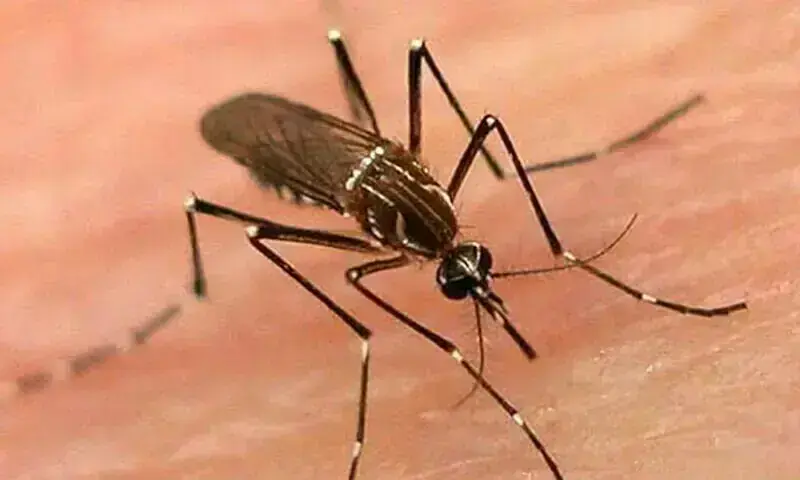
The officials said that members of the RRT also collected positive larvae samples from air coolers, underground water tanks and flower pots and asked people to change the water every two to three days and wash the pots with detergents as the ongoing rainy season would leave behind more stagnant water, causing an increase in mosquito production.
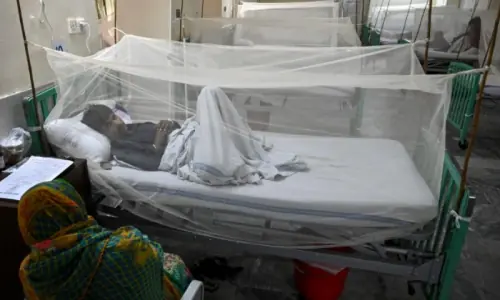
They said bed nets and chemicals had been distributed to the vulnerable population but the main role for dengue control and prevention would be played by the community.
The officials said the countries with more resources than Pakistan had eliminated dengue through community awareness as the governments couldn’t reach all houses every day.
They said people wrongly considered the health department responsible for dengue prevention as that problem should be tackled by other relevant departments.
The officials said the next two months were very crucial, so the government should effectively enforce the Dengue Action Plan, 2026, which required all departments concerned to collaborate for infection prevention and control.
Published in Dawn, September 13th, 2026