Adhoori Kahaniyaan
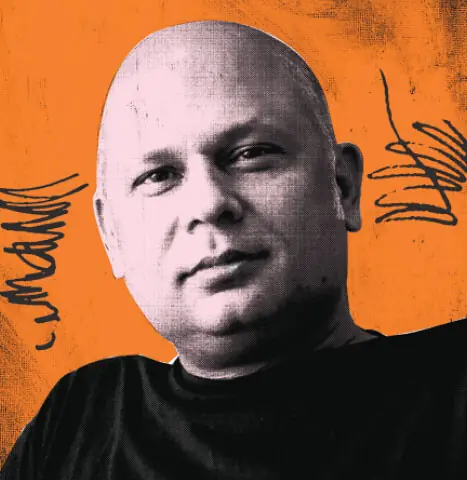
By Anwaar Ahmed
BTA Publishing House
ISBN: 978-969-7859-41-2
204pp.
It was in June 2026 that I decided to read Adhoori Kahaniyaan [Incomplete Stories] by Anwaar Ahmed. I knew Anwaar sahib through some of his earlier works. Adhoori Kahaniyaan is his fourth book — his first two books explored Karachi through sketches and essays, while his third was based on the poetry of his maternal uncle Nazish Pratapgarhi. Expecting to find more about Karachi of yore in his fourth offering, I discovered a world far bigger and stranger than I had initially anticipated.
The book’s title, Adhoori Kahaniyaan, is wonderfully deceptive in a way. The six stories here are anything but incomplete. They all are rooted in society and, according to Ahmed, are based on true incidents, with the characters’ identities changed. They are expansive, layered and immersive, with each creating its own universe. In fact, the first two stories alone span almost half the book, giving the reader an indication of the collection’s depth and ambition.
The first story, also titled ‘Pehli Kahani’ [First Story], caught me in an unexpected way. While I was reading it, Bollywood director Imtiaz Ali’s Main Vaapas Aaonga [I Will Return] was being released in India. At home, I was immersed in the first story, while on my phone I was watching snippets of the film that were spread across social media. By the time I watched the film in August on Netflix, I was struck by its strong thematic resemblance to Ahmed’s first story.
An elderly man returns to his hometown, revisiting a pre-Partition love story that remained adhoori [incomplete]. The film uses a similar idea and gives it an India-Pakistan treatment, perhaps making it more accessible and commercially appealing.
Love, loss, displacement and vanished worlds collide in a collection of six Urdu stories that travel across time, cities and generations
‘Pehli Kahani’ is powerful not only because it connects you deeply with the characters, but also because of its quiet sadness and grief. It shows the pain of growing old with an unfinished love and returning to places that now exist only in memory. The empty house, the familiar rooms and the place where the protagonist once held his beloved’s hand feel so real that the reader can almost see them.
The way the story is written takes the reader back to an era when life was slower, relationships were deeper and memories were closely tied to places and people. There is a strong sense of nostalgia throughout, making the reader feel as if they too are walking through old streets and revisiting a love that was never meant to have an ending.
The second story, ‘Doosri Kahani’ [Second Story], which continues beyond page 100, offers the other side of the same tale. While the first story is narrated from a man’s perspective, the second shifts to the vantage point of the woman, allowing us to experience the same love, separation and memories through her eyes. This was perhaps one of the most interesting aspects of the book for me: seeing one incomplete love story from two completely different perspectives.
The third story, ‘Hasrat-i-Natamaam’ [An Incomplete Wish], is a love story steeped in the culture, traditions and values of Lucknow. Since my parents also belong to the city, the familiar names of places, customs and cultural references immediately drew me in. I was particularly struck by the author’s ability to vividly recreate an era he himself had never lived through.
Set against the backdrop of a Shia family in Lucknow, the story begins in the era of Nawab Asaf-ud-Daula — the fourth nawab of Awadh (1775-1797) — and eventually concludes at an imambargah in Rizvia Colony, Karachi. Through a deeply personal love story, Anwaar Ahmed captures Lucknow’s cultural traditions, social life and political upheavals, while portraying the painful transition from the nawabi era to an entirely different historical reality. The story is not only about love — it is also about a way of life that slowly disappears with changing times.
‘Abla Paa’ [Blisters on the Feet] continues this exploration of a vanished world. It follows the lives of people displaced and left destitute following the exile of Nawab Wajid Ali Shah, the last king of Awadh (1847-1856). Those who had once enjoyed dignity, privilege and status were reduced to poverty and humiliation. The story shows how the fall of a ruler can also mean the collapse of an entire social order, leaving ordinary people to face the consequences of a history they had no control over.
By this point, the book develops a gripping quality. Just when you begin to feel that the tension is becoming too much, the next story takes you in a completely different direction. This is because the fifth story, ‘Kaffaara’ [Atonement], brings the reader firmly back to the society around us.
It explores families torn apart by false pride, misplaced egos and sectarian divisions. It is an uncomfortable story, because its themes remain painfully relevant even today. According to Anwaar Ahmed, Kaffaara is very close to his heart, and there is a strong sense that the story draws, at least in part, from his own experiences, giving it a deeply personal and authentic feel.
The sixth and final story, Bey-Unwaan [Untitled], is an analytical narrative that begins in the era of British India and eventually reaches Karachi. It examines two opposing currents within society — extremism on one end and moderation on the other — bringing out the tensions and contradictions that continue to shape our social fabric. Like the other stories, it moves between personal lives and the larger historical forces surrounding them. Each story has its own mood, setting and subject, keeping the reader curious about what comes next.
Anwaar Ahmed is not a professional writer and has spent his professional life working in human resources with international firms. Yet, the ease with which he writes and the grip he maintains over his narratives clearly reflects his upbringing and his deep exposure to literature and learning. Each story feels like a journey into a different wonderland, yet none is completely detached from the world we know.
What begins as a collection of incomplete stories gradually becomes a reflection on memory, love, displacement, lost worlds, social divisions and histories that continue to live within us.
Perhaps Pakistani media producers should take note as well. We often hear about the shortage of strong original content and the difficulty of finding stories suitable for platforms such as Netflix, but Adhoori Kahaniyaan offers plenty of possibilities.
Its six stories contain love, loss, family conflict, history, social tensions and unexpected turns — enough material, perhaps, for several compelling screen adaptations. If the industry is looking for stories, this book is certainly a place to begin.
The reviewer writes on old films and music and loves reading books.
X: @suhaybalavi
Published in Dawn, Books & Authors, September 13th, 2026