Iran's economic ties to Dubai hard to break despite Middle East tensions
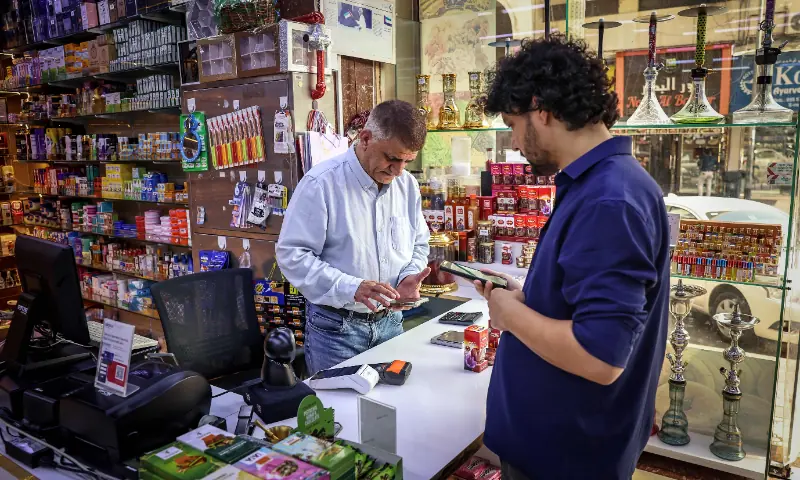

In the markets of old Dubai, saffron, cumin, pistachios and almonds from Iran still fill the stalls, as if the two shores of the Gulf were not separated by the ongoing regional conflict.
Last month, the United Arab Emirates (UAE) announced the suspension of trade and financial exchanges with Tehran, which has responded to American attacks by targeting the US-allied country and tightening its grip on the strategic Strait of Hormuz.
But in old Dubai, where Iranian merchants are firmly established, they do not believe there will be a break in the ties forged over decades between the UAE’s financial hub and southern Iran.
Since the start of the war, certain Iranian products have become scarcer, and others have seen their prices soar, says Morteza Asaadi, who runs the grocery store his father founded in 1963.

Most traditional foodstuffs, such as nuts or zereshk — small red berries used in Persian cuisine — remain available, however.
“It’s just coming. How? I don’t know, but it’s coming,” he said.
Two wholesalers interviewed by AFP on condition of anonymity said they are still sourcing from Iran, notably via Omani ports.
“We can’t export from the Emirates anymore, but we can still bring in certain goods,” one of them said.

In Yasser’s saffron shop, the precious spice arrives by air from Mashhad, in northeastern Iran, thanks to the resumption of air links after a brief interruption.
Dubai’s Iranian community
Dubai is home to a large Iranian community, estimated at several hundred thousand people, which has contributed to the emirate’s commercial development and weathered the various periods of tension with Tehran.
After the US tightened its sanctions against the Islamic republic in 2012, “those in Dubai managed to convince their partners in Abu Dhabi that the trade, regardless of the sanctions, needed to continue because it was contributing to the UAE economy,” Mehran Haghirian of the London-based Bourse & Bazaar Foundation think tank told AFP.
In 2024, the UAE was the main entry point for goods into Iran, accounting for more than 30 per cent of imports, worth $21 billion.
It was also Iran’s third-largest customer, absorbing nearly 12pc of its exports, worth more than $7 billion, according to the World Trade Organisation.
Dubai is an important financial hub for Iranian businesses, with Washington accusing it of being a key node in financial networks used to circumvent sanctions.
As part of its policy of economic pressure on Iran, the United States announced new measures at the end of August targeting Iran’s trading partners, and sanctioned the director of the Dubai branch of Iran’s Bank Melli.
The institution nonetheless continues to welcome clients.
“We’ve been under sanctions for years,” sighs an employee at one of two branches in Dubai.
‘Priorities change’
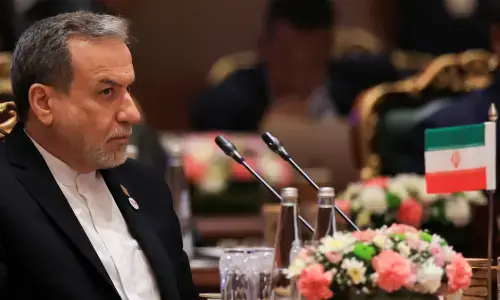
For Haghirian, Abu Dhabi’s announcement of the suspension of relations with Iran is part of efforts to bring Tehran back to the negotiating table, and is meant to show the Gulf country’s alignment with the United States.
But it will not necessarily cut informal flows or exchanges between private actors, which are deeply rooted on both sides of the Gulf.
In the long run, a lasting rupture could even weigh on Dubai’s economy.
“It’s difficult to just suddenly cut it off and not have an impact, leave a huge chunk. That chunk cannot easily be replaced,” he stressed.
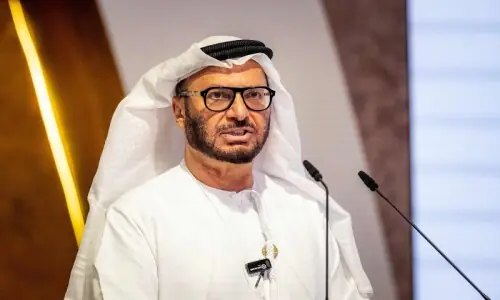
But at a conference in Dubai, Emirati businessman and former senior official in the emirate, Nasser al-Shaikh, downplayed these concerns, saying that Iran is “no longer as important to the emirate’s economy as it was a few years ago”.
“The relationship was mutually beneficial,” he conceded, but “in times of war, priorities change… National security comes first”.
In his shop in Bur Dubai, Asaadi is convinced that trade will survive the current crisis.
“You see the water there?” he said, gesturing at the Gulf separating the UAE from the coasts of southern Iran.
“Water can break a mountain.”