UN mission finds grounds to believe US committed war crimes in Iran with strikes on school, sports centre

A United Nations fact-finding mission on Iran said on Thursday it had reasonable grounds to believe the United States was behind two military strikes on a school and sports facility in Iran in February, and that these constituted war crimes.
It also said that Iranian authorities committed crimes against humanity during their deadly crackdown on anti-government protests before the war.
The findings in a new report by the Independent International Fact-Finding Mission on Iran, to be submitted to the UN Human Rights Council in Geneva, examined the US’s conduct during the Iran war that began in February and the Iranian government’s response to nationwide unrest that began in late December.
The Iranian and US permanent missions in Geneva did not immediately respond to Reuters requests for comment.
US officials have previously said military operations are conducted in accordance with the law of armed conflict, while Iran has consistently rejected allegations of systematic rights violations.
Minab school strike
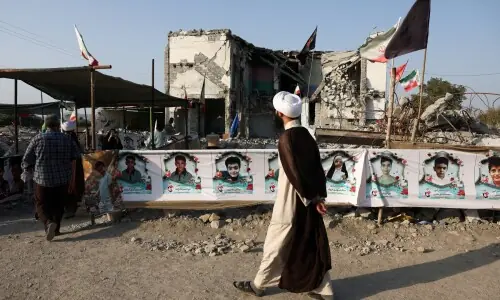
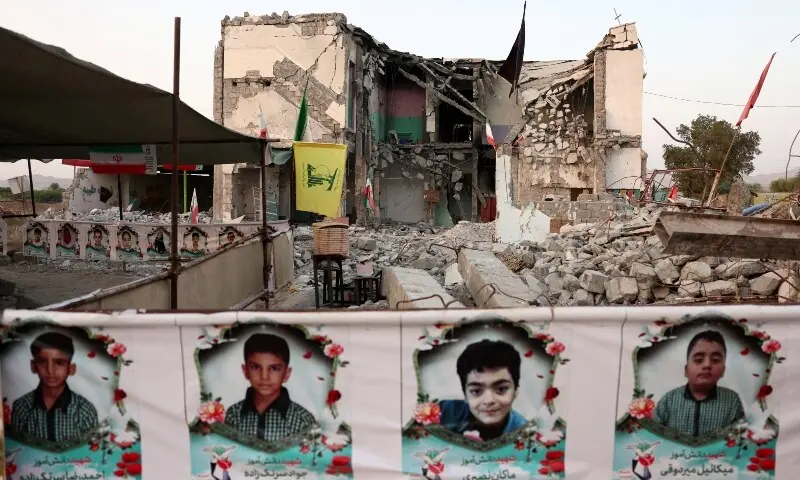
The UN experts said they found reasonable grounds to believe US forces were responsible for an attack on the Shajareh Tayyebeh Primary School in the city of Minab, where more than 150 people were killed, including around 120 schoolchildren, according to Iranian officials.
The indiscriminate attack caused civilian deaths and damage to civilian infrastructure, amounting to a war crime under international law, the mission concluded.
According to the report, the US failure to update information in relation to the school, which was adjacent to an Islamic Revolutionary Guard Corps (IRGC) naval complex, in its targeting databases and to confirm the building was a military objective amounted to more than mere negligence.
According to the report, the US relied on intelligence suggesting a senior Iranian military commander was present at the site but failed to adequately verify the information before launching the strike.
“Rather, the US directed the strikes at the building of the school while being aware of a substantial risk of striking a civilian object and acting recklessly as regards the possibility that this would happen.”
In June, US President Donald Trump said that “nobody” purposefully attacked a girls’ school in Iran in February, citing an investigation into the incident.
Reuters first reported that an initial internal US military investigation showed US forces were likely responsible for the fatal strike in Minab in southern Iran.
The Pentagon has since elevated the probe, but it has not published any preliminary findings.
UN experts said the school was a clearly identifiable civilian object and found no evidence that it was being used for military purposes.
The experts reached a similar conclusion over a strike on a sports centre in Lamerd.
The report said the attack damaged nearby residential buildings and a school and killed and injured 22 civilians. It concluded that the strike was indiscriminate and therefore constituted a war crime.
US Central Command said in a statement in March that US forces did not launch any strikes into the city of Lamerd on that day.
Iran abuses
The UN mission’s probe found that Iranian authorities carried out a widespread suppression of civilians during protests that erupted in late December last year.
Tehran blamed “terrorists and rioters” backed by exiled opponents and foreign foes — the US and Israel.
The probe said it could not independently verify the death toll, but that it believed the number of dead and injured was likely far higher than official figures, which say 3,038 people were killed and 25,000 people injured.
The government’s response to the protests — including violence, cutting off the internet and the use of the death penalty — marked a significant escalation from previous patterns of suppressing dissent, the report said.