
Humans are not the only ones to fall head over heels for fuchsia’s attractive flowers. Hummingbirds are equally attracted to them. However, it is debatable whether hummingbirds are drawn to the flower’s tubular shape, its stunning colours or the nectar within.
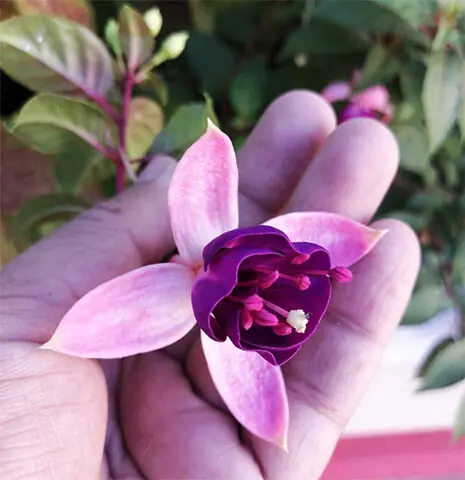
The pendulous flower in bloom generally has two whorls: an outer whorl of four vivid sepals and an inner whorl of four petals. The number of petals can be two to three times greater, depending on the variety. Apart from the signature reds and maroons, fuchsia flowers come in dozens of colour combinations.
The base of the flower is tubular, although it appears to be the upper part when the flower hangs downward. This tubular base contains nectar, which attracts birds and insects. The flower also has eight stamens and a pistil, its male and female reproductive parts, which are central to pollination. As hummingbirds collect nectar, they also act as natural pollinators for the fuchsia plant.
Once fuchsia cuttings have developed new roots and leaves, they can be shifted to their permanent location. Fuchsia prefer shade or filtered light, particularly in intense climates, as intense sunlight can stress the plant. Therefore, the plant should be kept in shade or exposed to gentle early-morning light.
Fuchsia’s colourful, pendulous flowers have plenty of admirers, from gardeners to hummingbirds. But growing this cool-loving beauty in Karachi is no easy feat
Limited exposure to sunlight can also reduce evaporation from the soil, particularly in a shaded location. Hence, the potting mix should have adequate drainage and water should not be allowed to accumulate in the soil or around the roots. Otherwise, waterlogged soil can deprive the roots of oxygen and prove fatal to a young fuchsia plant.
Use the same potting mix when moving the cuttings to their permanent location. The mix should be well-drained and can be supplemented with a handful of fine compost.
Initially, apply a small amount of nitrogen-rich fertiliser every two to three weeks. Once the plant starts to flower, switch to a balanced fertiliser, containing nitrogen, phosphorus and potassium. Potassium supports flowering and overall plant health, while phosphorous plays an important role in root development.
Because fuchsias are generally grown in shade or filtered light, careful watering is particularly important. The plant doesn’t require a strict watering schedule. At times, the plant may not need watering for up to a week because water evaporates more slowly in shaded conditions. Fuchsia should be watered when the upper surface of the soil surface has dried, with excess water allowed to drain away.
Mealybugs, aphids, spider mites and whiteflies can all attack fuchsias. A spray, comprising a spoonful of neem oil mixed with a few drops of any dishwashing detergent in a litre of water can be used to ward off most pest attacks. Spray the solution on alternate days until the pests are removed. The same solution, without the detergent, can be applied periodically as a preventive measure. Fuchsias can also suffer from root-rot and powdery mildew. Careful watering and good drainage can help prevent these problems.
It is quite difficult to grow fuchsia in Karachi because of the city’s climate. The ideal temperature to grow fuchsia is between 15 and 20 degrees Celsius. An established plant may tolerate temperatures between 10 and 25 degrees Celsius. But the plant may become stressed if the temperature goes outside this range. Fuchsia performs better in cooler climates and is therefore commonly grown in the northern areas of Pakistan.
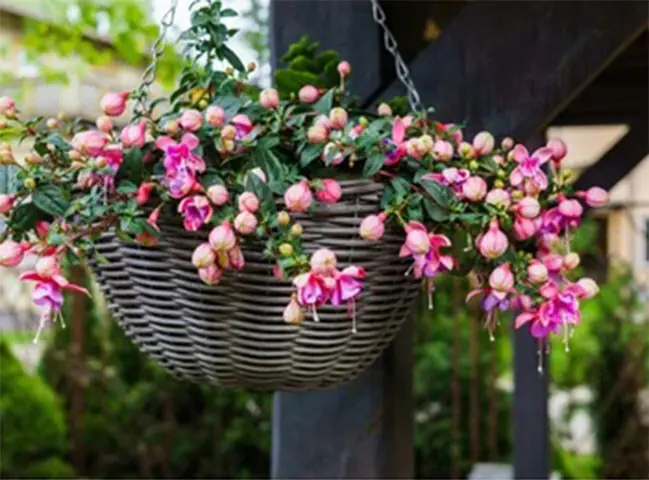
The plant can range from a few inches in height to almost 10 feet, depending on the variety. Similarly, the plant can be grown in hanging baskets or trained as a bush, hedge or shrub based on the cultivar. It also determines the number of flowers that may dangle from the plant in a season, ranging from a few dozens to a couple of thousand.
Please send your queries and emails to doctree101@hotmail.com. The writer is a physician and a host for the YouTube channel ‘DocTree Gardening’ promoting organic kitchen gardening
Published in Dawn, EOS, September 20th, 2026