US again denies Palestinian President visa to attend UN assembly
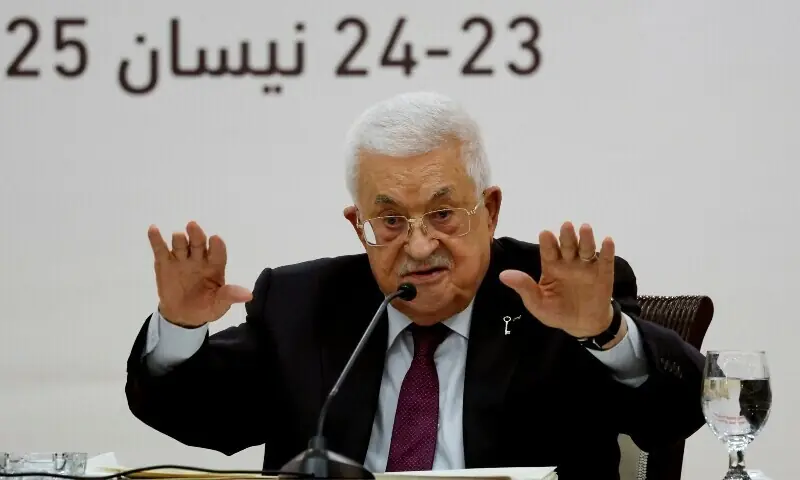

WASHINGTON: The United States has denied Palestinian President Mahmoud Abbas an entry visa to attend the UN General Assembly in New York next week, extending a ban in place since last year, a Palestinian official familiar with the matter said on Thursday.
Without naming specific officials, the State Department said on Wednesday it would extend visa sanctions against Palestinian officials over actions they took to “internationalise the Israeli-Palestinian conflict,” including pursuing cases against Israel at international tribunals.
It marks the second year in a row that President Donald Trump’s administration has prevented Abbas from speaking in-person to the gathering of world leaders, where several US allies last year recognised Palestine as a state.
The Palestinian official, who spoke on condition of anonymity, confirmed Abbas’s visa had been denied.
Palestinian Authority warns decision could hinder two-state solution
In a statement, the Palestinian Authority’s foreign ministry described the measure as counter to “developing Palestinian-US relations and creating the political climate necessary to implement the two-state solution and achieve peace and stability in the region”.
The ministry also “expressed its astonishment at the US statement’s disregard for the substantive reforms carried out by the State of Palestine”. It said these included reforms to the social welfare system, as well as those in the financial, administrative, educational, and legal fields “according to clear, transparent, and verifiable mechanisms”.
Palestinian officials say that decades of US-mediated talks have failed to end Israeli occupation and secure an independent Palestinian state.
Under a 1947 UN “headquarters agreement”, the US is generally required to allow access for foreign diplomats to the UN in New York. However, Washington has said it can deny visas for security, extremism and foreign policy reasons.
President Trump’s policies have regularly targeted Palestinians, pro-Palestinian voices and critics of US ally Israel. Internationally, the Trump administration has sanctioned International Criminal Court officials, including prosecutors and judges. The court’s decision to issue an arrest warrant in 2024 for Israeli Prime Minister Benjamin Netanyahu over allegations of war crimes and crimes against humanity during Israel’s assault on Gaza has drawn Washington’s ire.
Domestically, the Trump administration has attempted to deport pro-Palestinian foreign protesters, threatened a funding freeze for universities over protests and enforced social media screening for immigrants.
Published in Dawn, September 18th, 2026