Govt finalises sweeping civil service reforms

• 11 specialised professional cadres in bureaucracy proposed
• BS-20, above posts may be opened to officials, academics, private-sector professionals
ISLAMABAD: Amid concerns over declining standards and lack of specialisation in the bureaucracy, the federal government has finalised a sweeping restructuring of the civil service, proposing 11 new professional cadres, a complete overhaul of the Central Superior Services (CSS) examination and senior-level promotions and linking officials’ performance to financial rewards.
The proposed reforms, estimated to cost Rs11 billion to implement, seek to reshape recruitment, training, career progression, performance evaluation and the institutional structure of the federal bureaucracy.
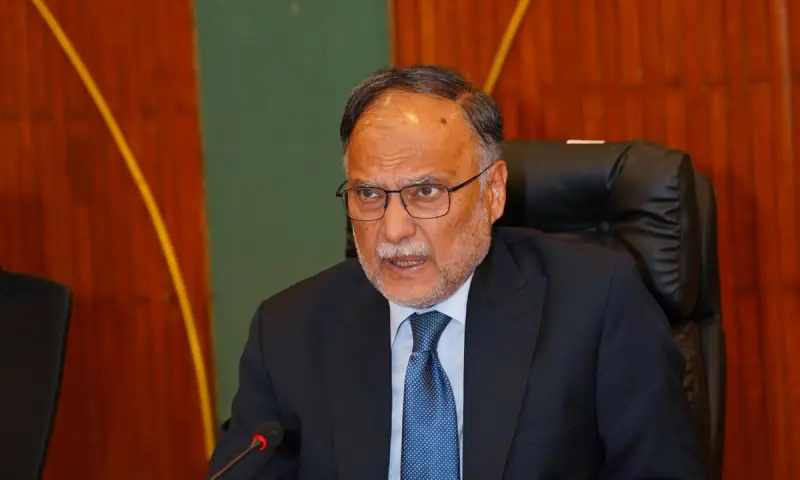
The package was unveiled at a consultative session on civil service reforms chaired by Planning Minister Ahsan Iqbal on Saturday.
The session was attended by Senator Saleem Mandviwalla, Federal Minister Aleem Khan, former PTI federal minister Asad Umar, senior policymakers, sector specialists and other stakeholders.
Prime Minister Shehbaz Sharif had constituted two committees on civil service reforms, which have held 18 meetings since September 2024 and reached consensus on 43 of 46 recommendations.
The proposed new professional cadres include HR, Law, Engineering, Science and Technology, IT and Telecom, Energy, Climate, Agriculture and Forestry, Education and Health groups.
The Establishment Division would be converted into a Human Resource and Organisation Development Division, while federal decision-making would be reduced from five tiers to three.
Under the proposed National Executive Service (NES) structure, posts in BS-20 and above would be filled through open competition on five-year contracts against published performance targets, with serving officers, private-sector professionals and academics competing on equal terms. The Police Service and Foreign Service would remain outside the NES.
It also proposes piloting performance-linked pay in the federal secretariat and a retirement package comprising a Rs5 million lump sum funded through monthly deductions, along with subsidised health insurance.
The new policy also draws on Pakistan Army human resource practices, proposing replacement of the one-day viva voce with a multi-day competency-based assessment on the pattern of ISSB.
The model emphasises psychometric, emotional intelligence and leadership assessments at recruitment, placement on the principle of the “right person for the right job”, specialised training and multi-tier performance evaluation.
It also draws on the army’s structured promotion system, under which progression becomes increasingly selective at senior ranks and promotion decisions are made collectively by boards on prescribed criteria rather than individual discretion.
A key shift under the proposed system is recruitment according to specialisation, ending the existing arrangement under which officers can be allocated to fields they have never studied.
The CSS examination itself would not be abolished. Candidates would have the option of attempting five compulsory papers — Essay, Précis and Composition, Islamiat, Pakistan Studies and Current Affairs — in Urdu, while functional proficiency in English would remain a screening requirement.
The preliminary test threshold would be raised from 33pc to 40pc, with analytical reasoning added and negative marking removed.
The package also proposes published assessment criteria, full digitisation and reduction of the recruitment cycle to six months or less, alongside affirmative measures to fill unfilled quota seats for Balochistan, Sindh, minorities and women.
The performance system would also be recast, with every ministry entering into an annual performance agreement with the prime minister and individual targets flowing from it.
Officials would be evaluated twice a year, while 5pc of employee-related expenditure would be earmarked for performance-based honoraria.
The National Management Course would be shortened from 18 weeks to 10, while existing national and specialised training institutions would be merged into a National University of Public Administration.
No constitutional amendment would be required for the package. Following approval, an implementation committee would oversee execution, report monthly to the prime minister and target full implementation within 120 days.
Published in Dawn, September 20th, 2026