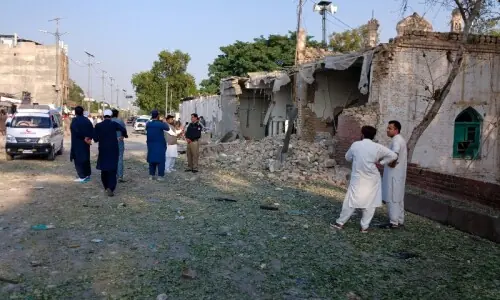
FRIDAY’S attack in Kohat marks a further escalation by Pakistan’s enemies. They targeted a mosque in Kohat’s old Police Lines with an explosives-laden vehicle, then attempted to storm the compound and attack police facilities in the ensuing chaos.
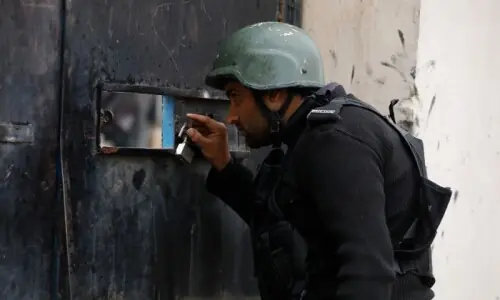
At least 23, including 17 police personnel and officials, were martyred in this dastardly assault on worshippers. More than 100 were wounded. But police and security forces regrouped quickly and launched a valiant counterassault, eliminating all but two of the attackers within hours of the initial bombing. The remaining two were neutralised in a clean-up operation that extended overnight, supervised by some of the top police and counterterrorism officials, with one holed-up terrorist killed and the other blowing themselves up rather than face the consequences of their actions.
The operation produced considerable acts of courage, not least by the additional inspector-general of the CTD, who was injured by a grenade yet returned to conclude the clean-up.
The nation will mourn the lives lost and pray for those who were injured. The nation will also demand swift justice for those who lost loved ones.
The group which claimed the attack has, by attacking worshippers on what Muslims consider the holiest occasion of the week, not only shown that it observes no ethical limits, but also that it is operating with a single goal: to cause maximum bloodshed and harm.
The Ittehadul Mujahideen, an umbrella organisation of terrorist outfits, is, according to the Jamestown Foundation think tank, believed to operate from safe havens across the border, share intelligence and coordinate attacks with its terrorist factions, and run organised digital campaigns. It has apparently used drone technologies to deadly effect while targeting security forces and installations in the past. As such, it is considered in some circles to be a more serious and sophisticated threat than the TTP. It needs to be treated as such.
The KP police must be better equipped and trained. They are facing an enemy which is increasingly using modern technology to cause bloodshed. They must be supported with the equipment, strategies and technologies they need to effectively limit and counter the constant, deadly threat they face.
Simultaneously, the authorities need to review the approaches being taken to counter violent actors. National policy on counterterrorism requires recalibration and revisiting, especially regarding its diplomatic, political and social aspects, which must be addressed together to secure stable dividends.
Sadly, the public’s attention is so fixated on social, political and economic problems that the terrorism crisis has been pushed to the margins of national discourse. Pakistan must confront these networks with the full force of the state and the law, but cannot do so effectively till its own house is in order.
Published in Dawn, September 20th, 2026