PRIME TIME: DRAMAS AND THE PSYCHOLOGY OF INFIDELITY

We love to hate the cheating spouse, weep for the betrayed wife, curse the unfaithful husband and judge the ‘other woman’ that we often see in dramas. But what if we stopped watching them as entertainment and started seeing them as psychological case studies?
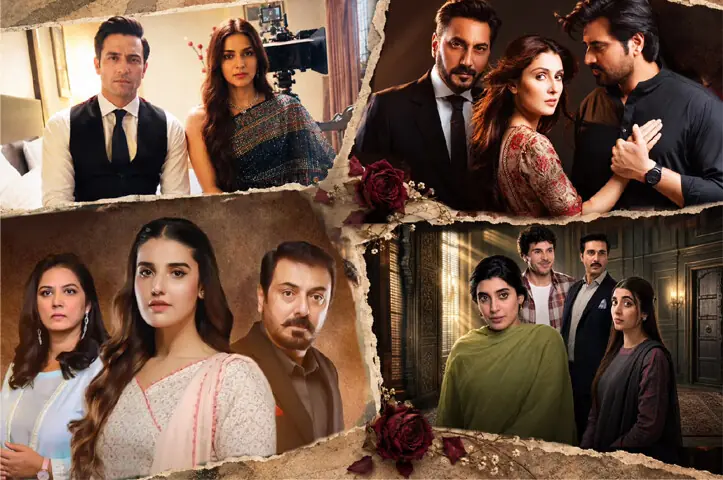
In recent years, Pakistani dramas have given us glimpses into infidelity — not as scandals but as windows into the human psyche. From the sugar daddy in Bismil and the religious hypocrite in Aap Ki Izzat to the rare portrayal of a female cheating spouse in Mere Pass Tum Ho and the transactional marriage in a sub-plot of Kabhi Main Kabhi Tum, these dramas expose their characters’ flaws, emotional voids and psychological wounds that drive them to betray their partners.
They invite us to look beneath the surface and ask what compels someone to betray the person they once vowed to cherish. They reveal the anatomy of a choice.
BISMIL: THE SUGAR DADDY AND THE GOLD DIGGER
Tauqeer Taseer (Noman Ejaz) possesses everything a man is supposed to desire: a loyal wife, Reham (Savera Nadeem), a son about to get married and a successful business he has built over decades. Yet, he lacks something less tangible: a sense of his own significance. That emptiness, more than anything else, pushes him towards Masooma (Hareem Farooq), his wife’s employee — and this ultimately proves to be his undoing.
This ‘Sugar Daddy’ dynamic is rarely just about sex. It is about power, the need to feel chosen, desired and necessary. Masooma offers TT a mirror where he sees the version of himself he misses: a young man with options. She, however, is not attracted to him but to his wealth and what it can provide.
From mid-life crises and material ambition to secret marriages, Pakistani dramas often explore the wounds, desires and self-deceptions behind infidelity. A mental health professional examines through four dramas what they tell us… and what they don’t
The ‘Gold Digger’ is not born. She is taught to see marriage as a route to security and status in a culture that equates a woman’s worth with the status of the man she marries and this leaves her with few other options.
TT’s error is not desire but believing boredom justifies destruction. He had other paths: conversation, counselling and even divorce. Instead, he chooses concealment. The ideal family he spent decades building becomes collateral damage.
AAP KI IZZAT: THE SECRET NIKAAH AND THE WOMAN WHO REBELS
In public, Tabish (Ahsan Khan) champions women’s rights. In private, he gaslights his wife Beena (Urwa Hocane) and decides to marry his secretary, Naaz (Alina Khan), as he feels that Naaz is more socially fit and useful for his new political career.
What makes Beena’s story even more devastating is not that she was betrayed but that she is asked to absorb it silently. Her mother tells her to be grateful. Her best friend tells her to forgive and adjust. Fourteen years of devotion become the argument — she has given so much to the marriage and shouldn’t throw it away. This is the cruel arithmetic of a society that measures a woman’s life in years served rather than dignity retained.
Beena makes a choice that may defy morality and logic but makes psychological sense. She does not leave conventionally or seek khulaa [a divorce initiated by the wife]. She runs away with her sabzi wala, a vegetable vendor with neither status, wealth nor promise.
It is easy to dismiss this as madness. But look closer: it is the act of a woman famished for recognition. A stranger gazed at her as if she mattered. He offered nothing but acknowledgement. For Beena, that was more precious than the home she abandoned. Beena had permissible paths like khulaa but knew she would only be advised to stay grateful and quiet. So she chose the only exit she could think of.
KABHI MAIN KABHI TUM:THE TRANSACTION
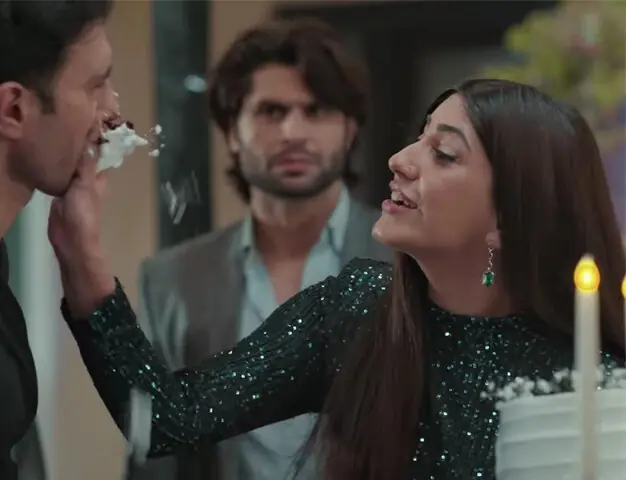
Adeel (Emmad Irfani) is set to marry Sharjeena (Hania Aamir). When his super-rich boss, Rubab (Naeema Butt), hears about it, she proposes to him. They tie the knot as Adeel realises Rubab can provide financial benefits Sharjeena can’t.
Adeel believes love can be traded for a better life. Rubab believes love can be acquired and purchased like a desirable object but, to be fair to her, she does love Adeel. However, neither views intimacy as a meeting of equals, because neither was taught what that looks like.
Their marriage is therefore a merger, not a union. Mergers collapse when the assets fail to perform. Trapped in a life built on appearances, Adeel manipulates Rubab’s business accounts and begins an affair with her best friend, Natasha (Areej Chaudhary).
Natasha is cast as the home-wrecker but is the story’s most tragic figure. She too married for money and found her life empty. Rather than confronting this, she tries to fill the void by reaching out for another woman’s husband. She does not love Adeel — she loves the idea of a life she never dared claim.
Natasha and Adeel are two people who chose security over integrity and find each other, not through passion, but through recognition. They are not lovers. They reflect the same despair.
MERE PASS TUM HO:GLITTER OVER GOLD
Danish (Humayun Saeed) and Mehwish (Ayeza Khan) have been married for several years and have a young son. While Danish is irrevocably and madly in love with Mehwish, she is not — and therefore chooses to betray Danish when Sheharyar (Adnan Siddiqui) enters their lives.
Mehwish’s betrayal is not fuelled by passion but by her hunger for wealth, status and the life she believes she deserves. Danish may offer her love and steadiness, but Sheharyar offers money and excitement. Her calculations reflect the twisted reasoning of someone who learned to measure a woman’s fulfilment in material terms because of the society she lives in. She has never learned that love itself can be a form of wealth.
Sheharyar’s cowardice is the drama’s real revelation. He offers Mehwish no protection, no commitment and has no courage. The story doesn’t punish her for being a woman. It is punishing her for choosing a man whose wealth always outweighed his integrity.
However, a double standard is exposed. Audiences judged Mehwish more harshly than TT, Tabish or Adeel ever were. Why? Because society still expects women to be the guardians of marital honour while men’s failings are brushed aside and excused.
THE PSYCHOLOGY OF BETRAYAL
What causes infidelity? It’s rarely the physical aspect.
• The Hunger for Validation: The cheating spouse is sometimes propelled by an anxious craving for validation or a deep urge to flee intimacy and difficult conversations. Tabish clings to Naaz because his ego withers without praise. TT seeks Masooma to outrun time. Adeel chases an ego lift. Mehwish hungers for flattery and fortune. None of them is searching for true love. They all seek relief from something they can’t name or don’t have.
• When Youth Slips Away: As people get older, many confront a burning question: is this all there is to life? This is not a moral failing but a transition. Handled correctly, it can produce renewed purpose. If not, it can, among other things, produce extramarital affairs — an attempt to recapture youth, overcome performance anxiety, escape from difficult conversations about intimacy, or gain an improved self-image through someone else’s eyes.
• When Money Replaces Meaning: In most dramas, the affair is tied to money. That is because wealth is viewed as the ultimate yardstick to gauge self-worth and the spark for betrayal. When money reigns supreme, love becomes irrelevant.
• The Illusion of an Upgrade: Every cheating spouse imagines they are stepping toward something better. In truth, they are only fleeing what feels unbearable. They forget running away is not the same as finding a new refuge.
• Filling the Void Within: The betrayer doesn’t commit a crime of passion. Instead, they try to fill the void in their lives by cheating on their spouses. Many times, they carry self-loathing and shame and try to escape them. However, the emptiness in their lives does not leave. It deepens.
WHAT DRAMAS MISS OUT ON WHEN EXPLORING INFIDELITY
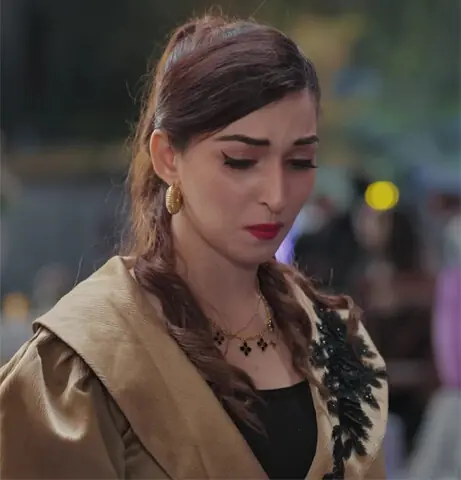
For all their layers, these dramas leave crucial ground unexplored. What remains unsaid shapes what we cannot understand.
• The Work Behind Rebuilding Trust: For couples who stay together, rebuilding trust and redeveloping genuine intimacy are essential, be it by holding hands or resting their head on their spouse’s shoulder as a sign of trust. In reality, neither happens quickly. Healing is slow and trust is the hardest to reclaim. Dramas skip this part. Either the marriage ends or the wounds heal overnight magically.
• Male Mental Health: Depression in men often presents itself not as sadness but as irritability, risk-taking, detachment and, sometimes, infidelity. TT’s boredom, Adeel’s restlessness, Tabish’s hunger for admiration and Sheharyar’s narcissism may be symptoms of depression no one identifies or talks about. Men in dramas rarely examine the invalidation, distress, insecurity or dissatisfaction driving their behaviour. Dramas never show men being raised to seek help. Instead, many avoid difficult emotions, externalise distress, or seek validation elsewhere.
• Escaping Economic Entrapments: Many dramas show women staying in unfaithful marriages because they cannot afford to leave. Financial dependence is a powerful constraint but should not become a narrative dead-end. Women who lack financial independence can find ways to leave, seek support from family or community, pursue khulaa or rebuild their lives on their own terms. Dramas rarely explore these possibilities. Instead, financial dependence is often treated as if it automatically means a woman has no choice. Reham and Rubab, by contrast, have the financial freedom to walk away, but their stories raise a larger question: what choices are available to women without that freedom?
• The Absence of Therapy: Not one character sees a therapist or a couple’s counsellor, despite being urbane, ‘upper class’ and educated for the most part. This is the most glaring omission of all in many dramas, although they are increasingly focusing on ‘racy’ themes. Exploring one’s inner world through therapy can give meaning to behaviour. The trauma, often hiding in one’s unconscious from their earlier years, memories, regrets, unmet needs and deprivations, can shape adult behaviour unless examined, processed, resolved and healed. And that’s exactly what therapy aims to do.
• The Impact on Spouses…: The betrayed spouse is not just heartbroken. For some, the experience can be destabilising and may produce trauma-like symptoms. Shame can convince them that, if they were enough, their partner would not have strayed. Identity erosion can unsettle the person they thought they were. Sleep, appetite, concentration and a sense of safety can all be affected. Research suggests that infidelity can produce clinically significant post-traumatic stress symptoms in some people, although the severity and duration vary. For men, the social pressure can be even bleaker. They are expected to swallow pain, not process it. When they speak, they risk mockery or dismissal. This silence becomes its own private hell.
• …and the Estranged Couple’s Children: We often forget the children. But they are always watching. Young children cannot grasp infidelity, but they feel the tension between their parents. They internalise the anxiety as their own. Their sense of safety — the foundational belief that home is a secure base — can be shattered. Older children bear different scars. They understand too much and anger, betrayal and confusion swirl within them. Respect for the cheating parent may vanish. Their own relationships can also become battlegrounds, haunted by the fear of repeating their parents’ cycle. Infidelity can even become an intergenerational wound — a blueprint for dysfunction that is passed down the line.
THE TAKEAWAY: THE CASE FILE IS STILL OPEN
These dramas don’t pretend that marriage is easy and nor do they claim every union should be saved. Instead, they whisper a harder truth: your character is revealed not by what you desire, but by what you do with that longing.
They also reveal that betrayal is seldom sudden. It starts with self-justification: the belief that one deserves more, that marriage is a barrier, that someone else can restore what is missing, or that consequences can be postponed. By the time the affair surfaces, the psychological groundwork has already been laid.
TT seeks to feel significant again and reclaim his youth. Tabish wants validation and the freedom to construct a new life without having to confront the damage he has done to his previous one. Mehwish mistakes material security for fulfilment and thinks she is securing her future. Adeel treats marriage as an economic calculation and cheating as an ego boost. Beneath these differences, however, the mechanism is remarkably similar: internal dissatisfaction becomes a reason to violate an external commitment.
Each character had choices — honesty, confrontation, separation, counselling, khulaa or acknowledging the hard truth that desire does not equal entitlement. However, what they actually did was perform surgery on themselves — and cut out the wrong organ. They removed loyalty, integrity and self-respect and kept the tumour of their own unmet needs. Then they wondered why they were still bleeding.
Perhaps more importantly, what is not examined is that cheating is not always the disease. It can be a symptom. The disease is the wound beneath it, caused by myriad reasons: an ego that cannot tolerate ageing, a hunger that cannot be satisfied, an emptiness no amount of money, admiration, or new people can fill.
These reasons do not excuse betrayal. To understand is not to absolve. In fact, understanding makes responsibility and reality harder to escape from.
These dramas might tempt us into judging who was right and who was wrong. But the deeper question is: how do people arrive at a place where doing the wrong thing seems like the only option left?
And once the damage has been done, how can it ever be repaired, both for the person who caused it and the people who had no choice but to bear the weight of the betrayal and live with its repercussions?
Sarwat N. Shah is an integrative therapist and founder of Khudi Wellness.
She can be reached at shah.n.sarwat@gmail.com
Published in Dawn, ICON, September 20th, 2026