US warns Middle East conflict could 'escalate rapidly', urges citizens to reconsider travel

The United States on Sunday warned that fighting between Saudi Arabia and Houthis could “escalate rapidly” after a missile attack targeted Riyadh for the first time since the Yemen conflict resumed.
“This military conflict has the potential to escalate rapidly,” the US State Department warned, adding American citizens outside the Middle East should “seriously reconsider travel to and through the region”.
US President Donald Trump also cut short a weekend at Camp David, a secluded presidential complex in rural Maryland, to return unexpectedly to the White House on Saturday.
The White House gave no explanation for the early return, which comes as a new threshold was crossed in the conflict between Saudi Arabia and the Houthis, who control a large part of Yemen and are fighting government forces backed by a coalition.
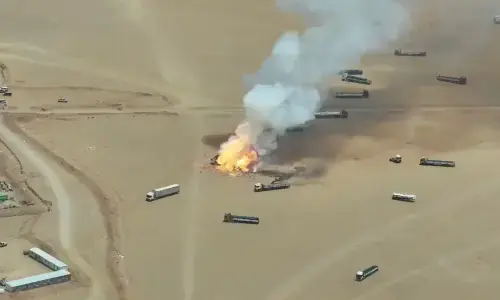
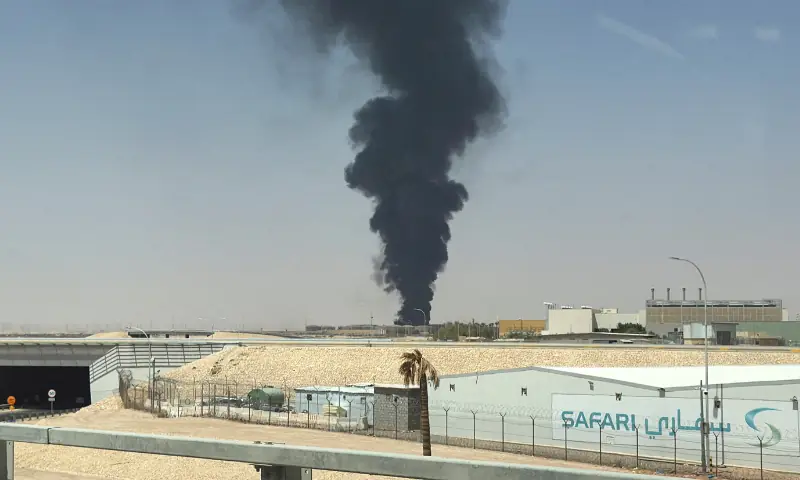
Loud explosions rang out on Saturday in the Saudi capital, where AFP journalists saw a fuel tank bearing the logo of oil giant Aramco on fire near the airport.
In recent weeks, the Houthis’ lightning offensive seizing swathes of Yemeni territory has left hundreds dead and, according to the UN refugee agency, displaced more than 110,000 people.
The violence has already disrupted exports from Saudi Arabia, the world’s leading supplier of crude oil, as well as maritime traffic.
CIA chief meets Egypt’s Sisi
On Sunday, US Central Intelligence Agency (CIA) Director John Ratcliffe met Egyptian President Abdel Fattah al-Sisi in a rare visit to Cairo.
Sisi stressed “the paramount importance of settling regional crises through political and diplomatic tracks”, according to a presidency statement.
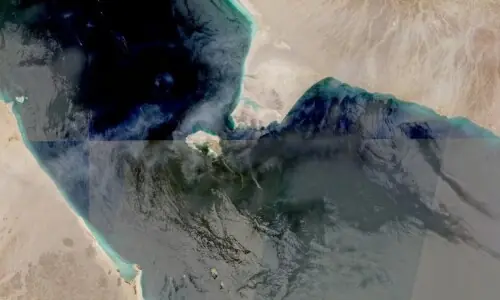
The visit came days after Saudi Crown Prince Mohammed bin Salman was also in the Egyptian capital, where he and Sisi urged safe and secure navigation through Bab al-Mandab, after the Houthis seized the Yemeni coast.
The Bab al-Mandab strait is a Red Sea waterway that is crucial to energy flows and global shipping and which has become even more strategic since Iran imposed a blockade on the Strait of Hormuz.
Condemning the Houthis’ latest attacks, Turkiye’s Foreign Minister Hakan Fidan told the broadcaster NTV that his country had had discussions with Saudi Arabia and Pakistan, partners in a mutual defence pact, about possible assistance.
“In this regard, military needs, especially in state technical matters, may happen. There would be no problem in meeting this demand either,” he said.
Saudi Arabia meanwhile seemed to contain the fallout of the Houthis’ attacks on its territory.
On Sunday, the attack on Riyadh was not mentioned in several major Saudi papers, even though hours beforehand, the Saudi-led coalition had said that a ballistic missile launched by the Houthis was “successfully intercepted and destroyed”.
The coalition added that the pro-Iranian fighters had tried to target “civilians and civilian infrastructure” in several cities in the west of the kingdom, including the port of Yanbu on the Red Sea, an important export hub for Saudi oil.
It said these attacks were thwarted by the Gulf monarchy’s air defences.
Claiming responsibility for the attack, Houthi military spokesman Yahya Saree said fighters had carried out “two successful military operations using a large number of ballistic and cruise missiles and drones”.
“The first targeted sensitive sites in the Saudi capital, Riyadh, and the second targeted Aramco facilities in Yanbu.”
Saudi Arabia has responded with scores of airstrikes on Houthi-held areas but has been unable to stop the fighters’ advance.
The United States, according to US news platform Axios, last week refused a Saudi request to strike the Houthis, but Washington has since approved a $24.3 billion sale of 48 F-35 fighter jets.
Widening conflict
This is the first time since Yemen’s civil war resumed that strikes have threatened the Saudi capital, piling further pressure on a global economy already rocked by seven months of war between the US and Iran.
Iran’s top negotiator said Tehran had conveyed to the US through mediators its conditions for reopening the Strait of Hormuz, which it has blockaded throughout the Middle East war.
The Middle East war began in February with US-Israeli strikes on Iran, which responded with retaliatory attacks on nearby Gulf countries. Hezbollah in Lebanon and the Houthis in Yemen also carried out attacks against their foes.
While conflict in Yemen predates the Middle East war, the recent escalation in the country — one of the world’s poorest — has turned it into the most active front of the wider violence.
A fragile truce reached in 2022 collapsed in July, and the Houthis went on an all-out offensive against the internationally recognised government this month.