Trump mulls next moves on Iran amid ominous warnings
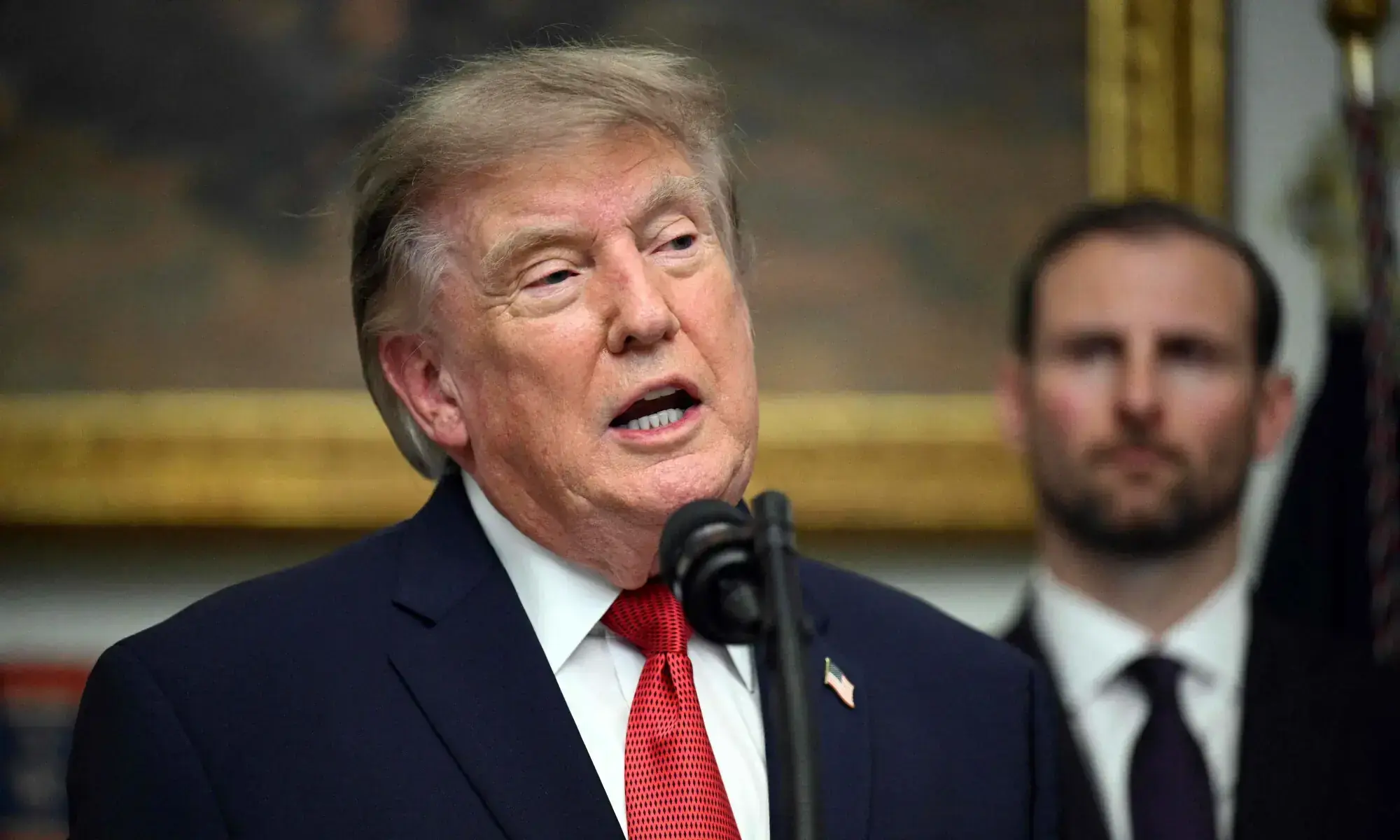

• State Dept warns Americans to brace for ‘unforeseen escalation’ across the Middle East
• Trump abruptly leaves Camp David; tells Fox News ‘if and when I blow entire nation up is my question’; claims Houthis agreed not to fight US
• Iran threatens ‘sustained retaliation’; says Washington allies will be considered party to conflict
• PM Shehbaz to highlight mediatory role at UNGA, says envoy
WASHINGTON: The United States issued fresh security warnings for Americans in the Middle East on Sunday, cautioning that the security environment remained volatile and could face an “unforeseen escalation” as President Donald Trump considers his next steps in the war with Iran.
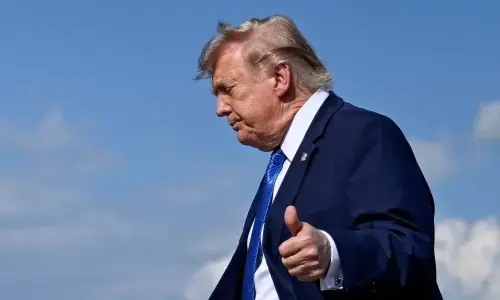
Trump cut short a weekend at Camp David, returning unannounced to the White House on Saturday evening as the White House offered no explanation for the abrupt change of plan, which comes just days before he is due in New York for the UN General Assembly.
The warnings, circulated through US diplomatic missions in the region, urged Americans currently in the Middle East to exercise heightened vigilance and prepare for possible flight cancellations, airspace closures and other travel disruptions.
Americans outside the region were advised to “seriously reconsider travel to and through the region”.
“Due to tensions in the Middle East, the security environment remains complex with the potential for unforeseen escalation,” the State Department said in its alerts.
“Houthis have engaged in hostilities against Saudi Arabia, including civilian airports. This military conflict has the potential to escalate rapidly.”
Meanwhile, Israeli Prime Minister Benjamin Netanyahu also cut short his US visit and returned to Israel, adding to the uncertainty surrounding the region.
Trump’s next move
Trump has indicated that he faces a major decision over whether to intensify the conflict. The US president told Fox News that he is in “deciding mode” on Iran and “big things will be happening in the not-so-distant future”.
According to network’s Trey Yingst, the president outlined the options as “wiping Iran out, letting them rot economically, or making a deal”. Trump reportedly added, “My question is, if and when do I blow the entire nation up? They [Iranians] better behave.”
When asked about meeting Iranian President Masoud Pezeshkian, who will be attending the UN General Assembly in New York this week, Trump said he would ‘probably be open’ to it.
In an interview with Axios earlier this week, Trump said: “I have a big decision coming up. Do I want to go in and annihilate them, or do I not? It’s a big decision. Anything could happen with me.”
On the other hand, Trump reiterated that Houthis agreed not to attack the United States, Fox News reported.
He also claimed a week ago the Houthis were holding back from attacking US forces in the region. “The Houthis called us and they don’t want to fight with us,” Trump said during a visit to Ireland on Sept 12. “They don’t want us to go after them.”
Sustained retaliation
Meanwhile, Iran warned on Sunday against any big new attack by the US and its allies, saying it had information such a move was being prepared, adding to the anxiety in a region already on edge.
Iran’s military central command said on state media that any new attack would trigger sustained retaliation against US bases and interests and that Washington’s regional allies would be considered parties to the conflict. It did not elaborate on the information it said it had about a coming US attack.
Mediatory role
Meanwhile, briefing journalists ahead of the 81st UN General Assembly session, Pakistan’s Ambassador to the UN Asim Iftikhar Ahmad said that Islamabad will stress its mediatory role amid the widening Middle East crisis during the high-level week of the UN General Assembly.
He said that PM Shehbaz Sharif’s address on the 25th would present Pakistan’s perspective on the evolving regional and international security environment and emphasising dialogue, diplomacy, restraint and the peaceful resolution of disputes.
Pakistan, the ambassador said, would also use the high-level week to underline its constructive role in promoting regional peace and stability and its resolve to work with UN member states to uphold the UN Charter, strengthen multilateralism, prevent conflict and advance international cooperation.
Published in Dawn, September 21st, 2026