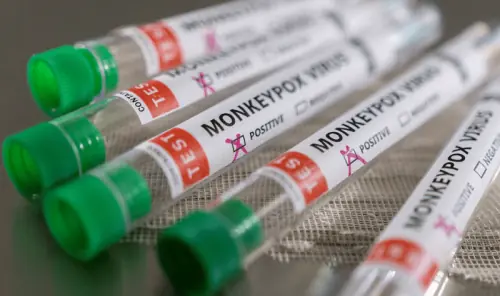
Woman tests positive for Mpox at Pims
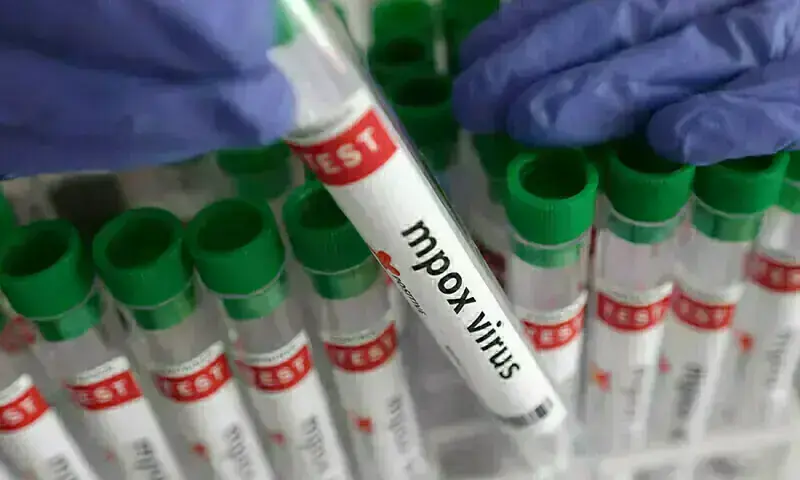

ISLAMABAD: A 41-year-old woman admitted to the Pakistan Institute of Medical Sciences (Pims) has tested positive for Mpox.
According to a doctor at the hospital, an Islamabad resident was brought to Pims last week after developing skin lesions on her face.
“She was admitted to the hospital’s Infectious Control Ward. As she had symptoms of Mpox, samples were collected from her and sent to the National Institute of Health (NIH). The NIH has confirmed the presence of Mpox in the patient,” the doctor said.
However, he said the patient was out of danger and was improving.
It is worth mentioning that Mpox, which spreads through close contact and tends to cause flu-like symptoms and pus-filled skin lesions, was declared a global health emergency by the WHO in July 2022.
In November of the same year, the organisation named the disease Mpox to replace the older term monkeypox, citing concerns over stigma and racism associated with the name.
Mpox is a rare viral zoonotic disease caused by infection with the Mpox virus. Although the natural reservoir of Mpox remains unknown, African rodents and non-human primates, such as monkeys, may harbour the virus and infect people. The patient develops a rash within one to three days after the appearance of fever, often beginning on the face and then spreading to other parts of the body.
“There are two types of Mpox virus: clade I (Congo Basin) and clade II (West African). Clade I, which is more associated with recent outbreaks, causes more severe illness and deaths. Some outbreaks have killed up to 10pc of the people who get sick, although more recent outbreaks have had lower death rates. Clade I is endemic to Central Africa. Clade II is the type involved in the global outbreak since 2022. Infections from clade II Mpox are less severe. More than 99.9pc of people survive,” an advisory issued by NIH stated.
According to the advisory, transmission occurs through contact with an infected animal, human, or materials contaminated with the virus. The virus enters the body through broken skin, even if not visible, the respiratory tract, or the mucous membranes, including the eyes, nose, or mouth. Other human-to-human methods of transmission include direct or indirect contact with body fluids or lesion material, or through contaminated clothing or linens.
Case management of a confirmed Mpox patient involves several steps to ensure proper treatment and prevent the spread of the virus, including isolation.
Published in Dawn, September 22nd, 2026