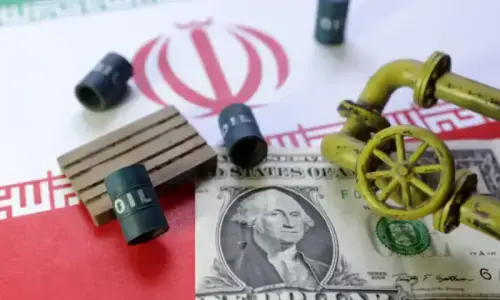
Workers idle, trucks empty as war slams Iraqi oil hub
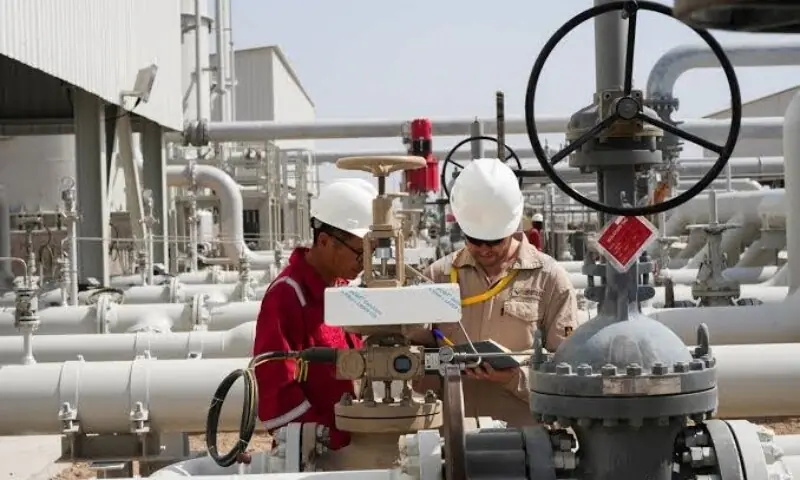

In the Iraqi oil hub of Basra, maintenance contractor Fawzi spends his days cooling his heels waiting for work that seldom comes, as the Middle East war puts a serious crimp on the once-bustling port town.
Basra has long been a key cog in Iraq’s economy but, after months of Iran choking off Gulf oil exports with its blockade in the Strait of Hormuz, the city is suffering.
Fuel trucks stand idle and workers face pay cuts and lay-offs.
“I haven’t done anything in a month,” Fawzi told AFP. “What are we supposed to maintain?” Many Basra residents have lost their jobs or taken heavy pay cuts as private contractors, as oil fields and the Umm Qasr cargo port scale back operations.
Crude oil exports account for almost 90 per cent of Iraq’s foreign revenue, and are primarily shipped through Hormuz via the cluster of facilities around Basra, the country’s only gateway to the Gulf.

The war has cruelly exposed Iraq’s dependence on oil, and its main export route, dealing a setback to its economic recovery after decades of conflict.
Fawzi said his company first slashed salaries by 20pc, then by half, before laying off dozens of employees. He now reports for duty just 15 days a month.
Basra’s parking areas overflow with oil trucks. Some linger empty, while others wait for weeks with full tanks to load their crude onto ships.
Cheap oil
Before the war started at the end of February, Iraq produced around four million barrels of crude per day and exported an average of 3.4 million, mostly via Hormuz.
But when Iran blockaded Hormuz, onshore storage quickly filled up, forcing Iraq to slash production.
Experts have long warned Iraq to introduce different income streams to cushion swings in the energy market.
But with a fledgling private sector, poor banking system and dilapidated infrastructure, diversification is difficult.
Iraq has sought to calm fears by using alternative routes, including trucks through Syria and a pipeline to Turkey, but they can handle only a fraction of the sea-bound trade.
After a sharp drop, Iraqi oil exports through Hormuz came climbing back in the first week of September, data from the maritime tracking firm Kpler showed.
However, Iraq sold the oil at “discounted prices”, a government official said.
According to authorities, Iraq exported an average of 2.6m bpd so far in September.

Iran had announced a special exemption for Iraqi tankers in late August, while the US says it has recently managed to boost Gulf exports through a secure Hormuz corridor hugging the Omani coast.
Nonetheless, the economic fallout is evident. Prices have surged and the Iraqi dinar has fluctuated.
Foreign currency reserves fell by $20 billion, according to the government official.
Iraq relies heavily on foreign currency from oil sales to pay civil servants, finance imports and stabilise the dinar.
The collapse in these revenues forced authorities to borrow internally.
While the government hopes it can continue borrowing for months, “it’s probably banking on a resolution to the conflict before the end of this year”, economic expert Ali al-Mawlawi said.
The recent partial recovery in oil exports bought the government “a little more time”, and allowed it to pay salaries with minor delays.
“The imperative is to ensure that it can continue” to do so, Mawlawi warned.
Empty wharves
Iraq imports most of its goods, from food and medicine to electronics and natural gas.
But Umm Qasr, the major southern port, now stands nearly deserted.
Only a few vessels are docked in its northern section, including an Iranian-flagged cargo ship, and a vessel that port employees said had passed through Hormuz from China.
Three newly built wharves are vacant, their cranes and walkways empty.
The downturn has hit hard. State port workers lost their monthly incentives, which are linked to the port’s profits and had supplemented their pay.

The head of the port’s northern sector, Captain Salem Hussein, said “if ships don’t come… companies cannot maintain the same workforce”.
“Real work resumes only when Hormuz reopens,” he added.
The disruption has rippled through the local economy.
Basra electronics vendor Zaid Hadi, 36, said sales had halved, blaming higher import costs, salary cuts, job losses and the exodus of foreign oil-sector workers.
Customers “now hesitate to spend… worried about possible salary delays” and fearing harder times ahead, he said.
Amir, 35, worked for a private contractor at an oil field that he said took drastic action, including slashing salaries by 40 percent.
“In Basra, we depend on the port and the oil, and now both have come to a halt,” Amir said.