Sri Lanka convicts 14 over Easter Sunday massacre
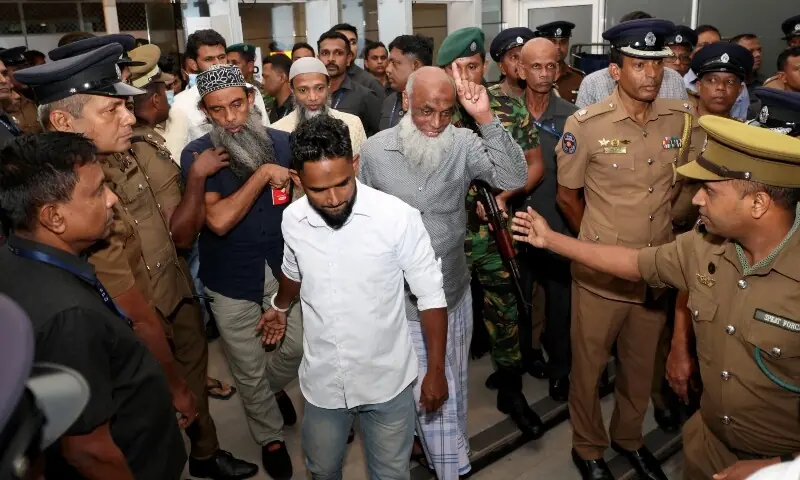

COLOMBO: Sri Lanka’s High Court convicted on Tuesday 14 of the 24 men accused of being directly involved in the 2019 Easter Sunday bombings, which killed 279 people.
The three-judge bench found that 14 of the accused were guilty on all charges, which included murder, conspiracy to commit terrorism and possessing firearms and explosives under the Prevention of Terrorism Act. A 15th defendant was found guilty of only some of the charges, while nine others were acquitted.
The presiding judge told a packed courtroom that sentencing would take place later on Tuesday. Dozens of police commandos provided security outside as the verdicts were read.
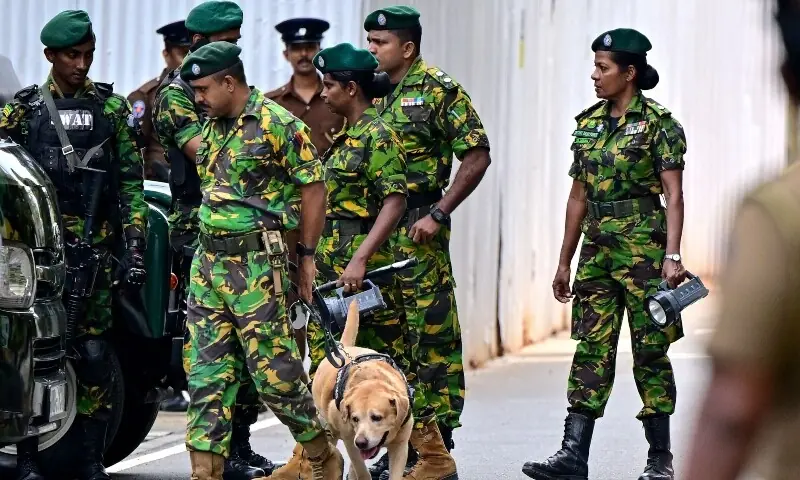
The 24 men were accused of aiding and abetting the suicide bombers who struck three luxury hotels and three churches on April 21, 2019, killing 279 people, including 45 foreigners.
Country’s historic trial brings record 23,270 charges
Local media has said some could face the death penalty, although Sri Lanka has not carried out an execution since 1976 and capital punishment is typically commuted to life imprisonment. Sri Lanka’s Roman Catholic Church welcomed the convictions.
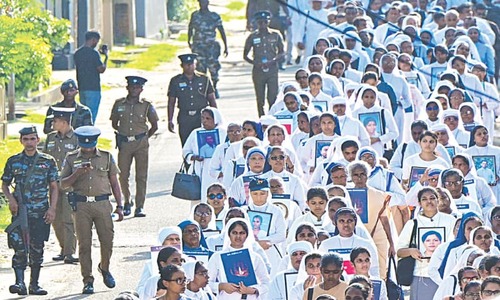
“Finally, we have justice,” Catholic priest Jude Fernando said. “It has taken a long time to get to this point.” Teresa Fernando, a survivor who suffered head injuries, said no one should have to endure what she had gone through. “We came here today as victims of this attack to receive justice,” she said.
“Whatever the court says… we will bow our heads and accept it.” It was the first criminal prosecution directly linked to the coordinated bombings, though a former police chief and an ex-security chief were sentenced to death in July for criminal negligence after failing to prevent the attacks despite prior intelligence warnings.
All of the accused are from Sri Lanka’s minority Muslim community. Twenty-five men were originally charged, but one defendant died in custody. Investigators blamed the attack on a homegrown extremist group.
The trial had already made Sri Lankan legal history, with prosecutors filing 23,270 charges, the most ever brought in a single case. The suspects were prosecuted under the Prevention of Terrorism Act.
Among those convicted on all charges was Mohamed Naufar, whom prosecutors identified as the ringleader who provided support to the eight-member suicide squad that carried out the bombings.
‘Mastermind’ spy boss
Three of the defendants were also charged by US authorities with terrorism-related offences linked to the bombings in December 2020. Five Americans were among those killed, including a US Commerce Department employee who was in Colombo on official business.
Other foreigners killed include citizens of Australia, Bangladesh, China, Denmark, India, Japan, the Netherlands, Portugal, Spain, Sweden, Switzerland, Turkiye and Britain.
The trial has unfolded against the backdrop of a separate and highly sensitive investigation into allegations that elements within the Sri Lankan state may have had links to those responsible for the attacks.
Former intelligence chief Suresh Sallay is in custody facing accusations that he had been the “mastermind” who orchestrated the bombings, allegations he denies. Public Security Minister Ananda Wijepala told parliament in June that investigators believed he had worked with Islamist extremists before the bombings were carried out.
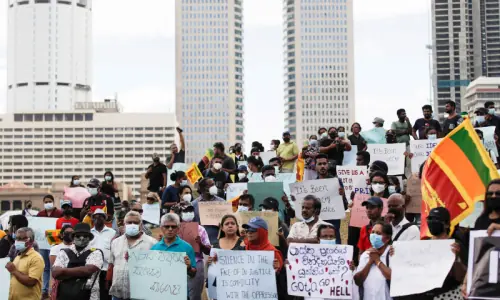
Investigators said the network was cultivated to manufacture a security threat that would in turn bolster political support for the Rajapaksa family, which returned to power several months after the attack with Gotabaya Rajapaksa’s election as president.
According to court filings, investigators believed the objective was to create chaos and present Rajapaksa, a former defence chief, as the leader best placed to restore security. Rajapaksa was credited by supporters with crushing Tamil separatist rebels in 2009 after a decades-long civil war.
Published in Dawn, September 23rd, 2026