LAHORE: The Association for Asian Studies (AAS)-in-Asia conference opened at the Lahore University of Management Sciences (Lums) on Friday, bringing together around 1,200 speakers from 37 countries for the three-day event.
Organised by Lums, the conference, being held from Sept 25 to 27, is themed – Centering Asia: Refiguring Connections, Re-charting Futures – featuring discussions covering culture, society, politics, development, knowledge and Asia’s changing connections with the wider world.
During the moot, around 323 panels and 1,200 speakers will participate in on-site, virtual and hybrid sessions.
The opening ceremony featured welcome addresses by Lums Vice Chancellor Prof Ali Cheema and AAS President Prof Elora Shehabuddin, followed by remarks from US Consul General Stetson Sanders.
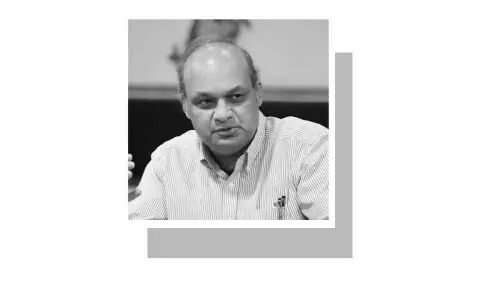
Prof Adil Najam delivered the keynote address on climate change, arguing that the issue could no longer be viewed solely as an environmental concern. Drawing on experiences from Asia and South Asia, including Pakistan, he discussed what he described as the “Age of Adaptation” and the implications of climate change for water, food security, development, governance and social justice.
The conference programme also includes exhibitions, cultural events, open houses and activities focused on wellbeing and heritage. Exhibitions on the first day included “Endangered Imprints” and “Maharaja Ranjit Singh’s Toshakhana: Material Splendor of 19th Century Punjab,” alongside a calligraphy workshop and wellness and mindfulness sessions.
The opening ceremony also featured “Legacy of the Punjabi Dhol: Jogi Dhamal & Dhol Jugalbandi,” showcasing traditional Punjabi drumming and rhythms.
One of the sessions, “Living Histories and Cultural Branding in Lahore’s Walled City: Spatial Practices, Heritage, and Urban Identity,” examined how Lahore’s historic core is being shaped by heritage conservation, cultural branding and urban regeneration while retaining residents’ lived experiences.
The speakers discussed the Walled City in the context of the global “creative city” movement and examined how residents experience the area through its streets, bazaars, chowks, landmarks, food, crafts and oral histories. They noted that local knowledge can offer perspectives on the city that differ from conventional maps and spatial representations.
The session also highlighted that heritage extends beyond historic buildings. At the same time, speakers noted concerns that commercialisation and outside influences could affect the cultural character of historic neighbourhoods. Examples of residents serving as guides and sharing local knowledge highlighted the role of communities in documenting and interpreting their heritage.
Another session, “Folk Literary Worlds of South Asia: Orality, Translation, Digitality, and Transregional Flows,” explored how folk traditions across South Asia move between oral, textual and digital forms, with discussions focusing on gender, identity, authorship and cultural memory.
A presentation on the Pashto ‘tapa’ examined the form as a concise oral poetic tradition used to express experiences ranging from love and grief to war, desire and social realities. The presentation noted that tapa often circulates through chains of poetic responses rather than being associated with a single author, with anonymity and performance playing an important role.
Particular attention was given to the changing circulation of tapa on platforms including X, Facebook and YouTube. The discussion noted that digital media can extend the reach of the tradition while also changing the conditions of its circulation. This has created new possibilities for the visibility of women’s voices, while also raising questions about exposure and anonymity.
The session further examined how oral traditions are transformed when they enter archives and digital platforms. Speakers noted that digitisation does not simply preserve oral traditions but can also create new forms of performance, interpretation and circulation, allowing folk traditions to reach new audiences across different media and communities.
Published in Dawn, September 26th, 2026