Community initiative by district Central residents gaining ground

KARACHI: In what appears to be a public-private partnership at the grassroots level, residents of Karachi’s Central district have organised themselves into associations to establish formal channels of coordination with law enforcement agencies as well as civic bodies, with the support of their area deputy commissioner.
What initially began in one of the 22 blocks of Federal B Area early this year is now expanding across District Central, which comprises areas including Federal B Area, North Nazimabad, Nazimabad, Liaquatabad, North Karachi and New Karachi.
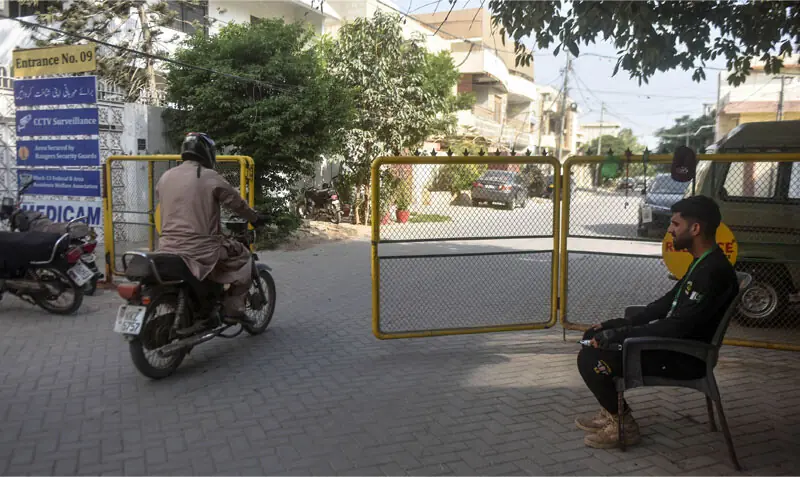
Initially, a group of residents had on their own installed barriers and security cameras at entry and exit points and hired private security guards to protect their neighbourhood from the menace of street crime. When they approached DC-Central Taha Saleem, he not only encouraged them to form a residents’ welfare association in the block but also supported them through its initial formation and subsequent registration.
The experience has since prompted residents of around 12 other blocks in Federal B Area, as well as people from other parts of District Central, to explore forming similar residents’ associations under the guidance of the DC.
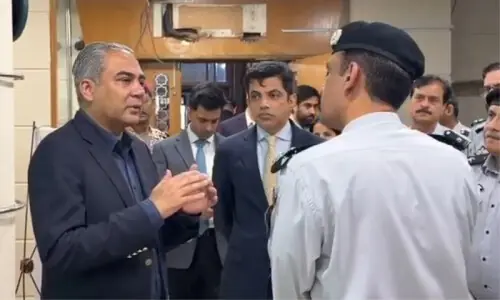
DC Taha Saleem says associations being constituted for coordination between residents, law enforcers and civic bodies under supervision of deputy commissioner’s office
Discussing the purpose of residents’ associations, a resident of Block 13 in Federal B Area said an important objective was to develop among residents a sense of ownership and collective responsibility for their neighbourhood.
He said that after the association was formed, residents had also begun collectively raising their voices against illegal water connections, unauthorised construction and attempts to extend private construction into public spaces.
“We appreciate the DC sahib for thinking about ways to address our problems and developing a system that has helped improve law and order,” he said.
Bringing residents and agencies together
Speaking to Dawn, DC Taha Saleem said his administration was working with residents of around 25 neighbourhood blocks in Federal B Area, North Nazimabad, Shadman Town, Nazimabad and adjoining areas.
The aim, he said, was to bring residents’ welfare associations into a structured coordination mechanism involving the deputy commissioner’s office, police, Rangers, town administrations, municipal bodies, utility agencies, civil defence and emergency services.
According to him, the initiative currently includes Federal B Area blocks 2, 4, 5, 8, 9, 10, 11, 12, 13, 17, 18 and 20. Residents of North Nazimabad’s blocks W, I and B, as well as Shadman and Nazimabad Nos 1, 2 and 5, are also part of the programme, while the formation of associations in these areas is at different stages.
Based on his observations, Mr Saleem said many neighbourhood-level civic problems remained unresolved not simply because of institutional shortcomings but also because residents often lacked an organised and representative platform through which to raise them.
He said the residents’ association model encouraged each block to establish or strengthen its association, create a transparent internal structure, nominate focal persons and formally document the neighbourhood’s priorities.
Asked whether gates installed at the entrances and exits of residential blocks could affect the movement of ordinary citizens and commuters, Mr Saleem said he would not allow security arrangements to obstruct public movement.
“As DC, I will not allow anyone to make arrangements in the name of security that create any kind of obstacle to people’s movement,” he said.
The installation of gates and CCTV cameras and the deployment of security guards had been carried out after consultation with Rangers and police officials at an Apex Committee meeting, he said.
The role of residents’ welfare associations and private security guards, he said, was limited to monitoring, sharing information and promptly reporting suspicious activity to law-enforcement agencies.
Each block’s monitoring room remained in contact with the relevant police station whenever required, he added.
Published in Dawn, September 27th, 2026