If they didn't, then who killed Naqeebullah Mehsud?
I still remember the call. A student activist urged me to cover a crowd gathering outside a Karachi charity morgue, waiting to claim the body of Naqeebullah Mehsud, a young Pashtun man killed in an alleged police encounter.
As a journalist covering Karachi’s violence, policing and security issues, for me, such extrajudicial killings were, sadly, routine. I did not know then that the death of a young man from South Waziristan would become one of those rare events that profoundly alter the country’s political conversation.
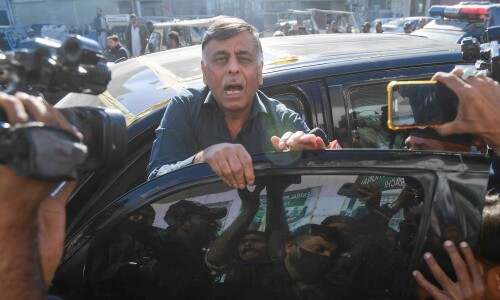
Recently, an anti-terrorism court acquitted the final seven officers accused in the case, drawing the legal chapter to a close, following the 2023 acquittal of former Malir SSP Rao Anwar and 17 others.
But for those of us who documented the fallout, the story was never only about one murder trial. It was the moment an everyday tragedy collided with a city inured to violence, a law-enforcement apparatus accustomed to labeling suspects militants, and a digitally connected generation of Pashtun youth challenging how they thought they were treated by the state.
“Naqeebullah’s killing was merely the spark,” reflects Ismail Mehsud, a veteran activist who helped lead the campaign for justice. “The political fire that followed was far larger.”
The story Karachi initially heard
On January 13, 2018, Malir police, led by SSP Rao Anwar, announced that four suspected militants tied to the Islamic State and Lashkar-e-Jhangvi had been killed in a shootout in the city’s outskirts. They claimed the men were involved in major terrorism cases, including the deadly 2014 attack on Karachi airport.
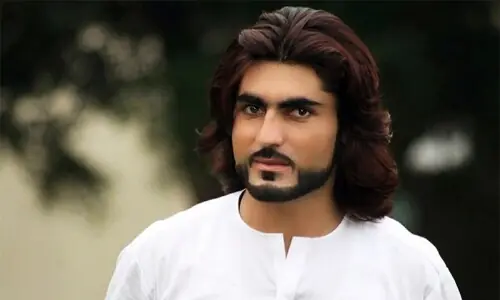
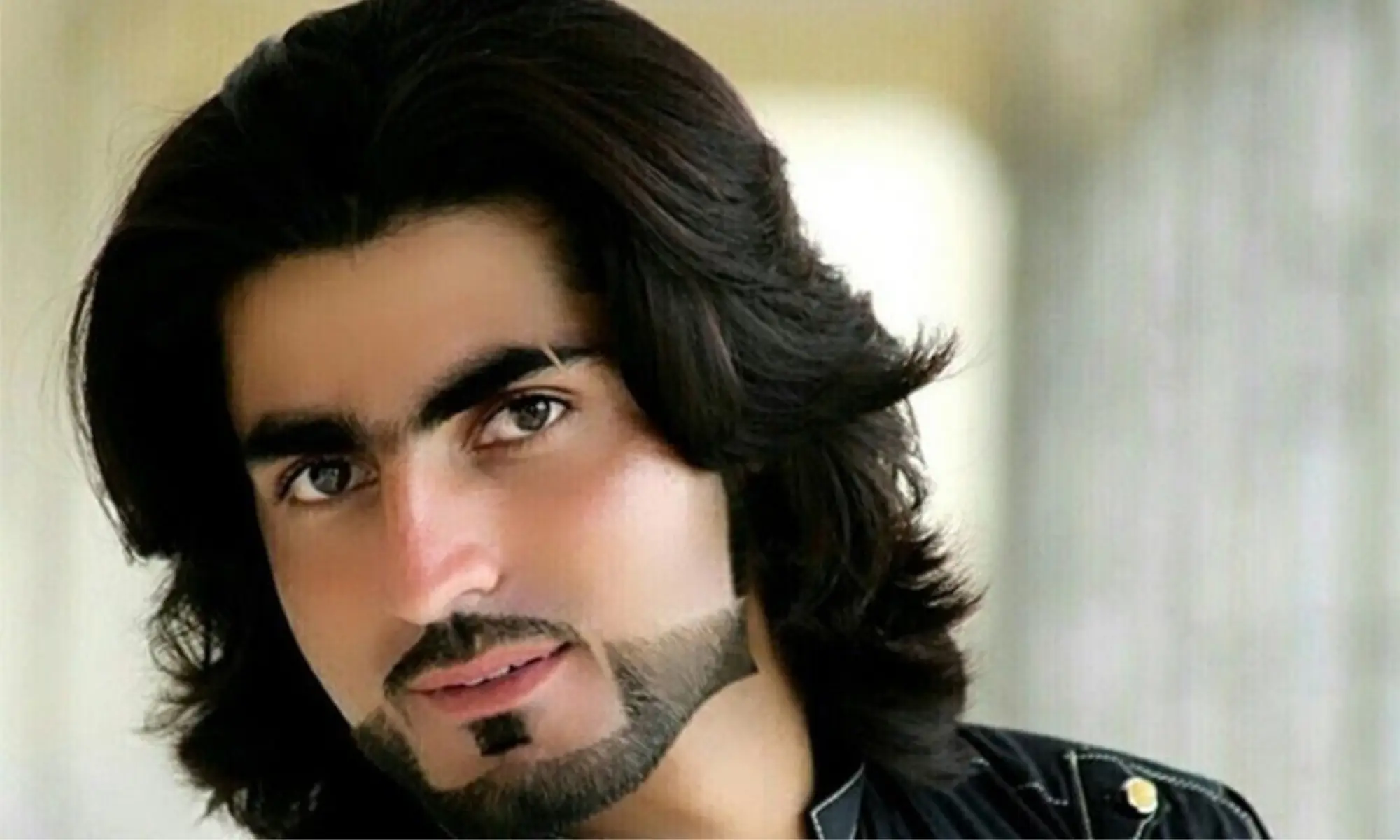
Among the dead was 27-year-old Naqeebullah, born Naseemullah, a native of South Waziristan living in Karachi with dreams of modeling.
Karachi was no stranger to genuine bloodshed. Since the launch of the major targeted operation in September 2013, law-enforcement agencies, including the police, Rangers, and Counter-Terrorism Department, had systematically dismantled armed networks, mainly the Tehreek-e-Taliban Pakistan, losing scores of officers in the line of duty. TTP chief Mufti Noor Wali later confirmed in his writings that numerous senior commanders were indeed killed during these crackdowns.
Yet, beneath this crackdown lay a troubling pattern. Well before Naqeebullah’s death, I had reported on how young Mehsud tribesmen in Karachi were being picked up and killed in staged shootouts, targeted simply because they shared a tribal surname with top TTP leaders such as Baitullah, Hakimullah, Waliur Rehman, and now Noor Wali.
Naqeebullah’s case fit this exact pattern, but his death fractured the official script. Following his death, his family and friends presented a starkly different narrative. Naqeebullah maintained a vibrant presence on Facebook, uploading photographs showing off his outfits, luxurious mane, and everyday life. His public social-media image stood in exact opposition to the stereotypical militant identity presented by the police.
That digital footprint gave the public something rarely seen in alleged encounter cases: a face, a personality, and a documented life.
When a high-level police inquiry concluded Naqeebullah had no ties to terrorism and was executed in a staged encounter, public outrage erupted. The Supreme Court took suo motu notice. For journalists following the case, the central question was no longer just about one man’s innocence, but how easily a young life could be taken and reframed as a victory against terrorism.
Escaping the newsroom
Covering a specific beat often imposes an unwritten constraint: reporters can hesitate to aggressively pursue the sources they depend on for daily access and leaks.
In Karachi, that beat dynamic heavily shaped early coverage. Many crime reporters relied on SSP Rao Anwar, whose sprawling Malir district was the epicenter for high-profile encounters. Zoha Waseem, an academic and author of a book on policing in Karachi, later documented the pattern in-depth in one of her pieces.
Extrajudicial violence was a long-standing tool used by law-enforcement during operations since the early 1990s. “Most people did not complain, as the practice seemed to work and was glorified by police officials and politicians alike,” she says. “Rao Anwar was well-known, politically patronized, and celebrated by certain pockets of Pakistan’s elite. It is hard to say if his career would have suffered had his team not been involved in Naqeebullah’s killing.”
What set Naqeebullah’s case apart was how quickly it broke free from the crime beat.
“TV newsrooms initially swallowed the official line whole, treating the incident just as the police press release framed it,” says journalist Faizullah Khan, who covered the case extensively. “Then it migrated rapidly onto Facebook, Twitter, WhatsApp, and TikTok. Photographs of a stylish, smiling young man flooded feeds across the country.”
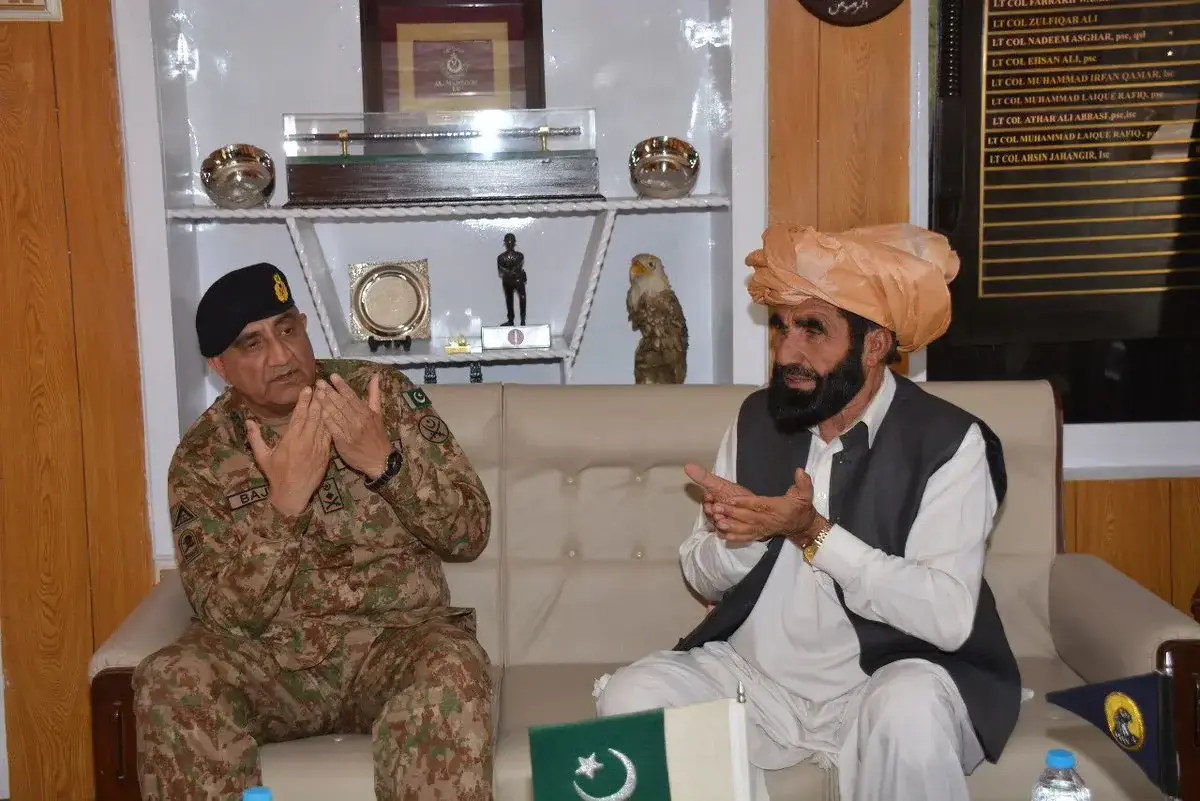
Mainstream media caught up once this digital groundswell turned into an inescapable national crisis. Momentum accelerated after Pakistan Peoples Party Chairman Bilawal Bhutto-Zardari, in a tweet, directed the Sindh Home Minister to open an inquiry; the Supreme Court intervened; political leaders, such as Pakistan Tehreek-e-Insaf chief Imran Khan, joined protests in Islamabad; and Army Chief General Qamar Javed Bajwa met Naqeebullah’s father in South Waziristan.
From Sohrab Goth to Islamabad
I witnessed the protests for justice, first in Karachi’s Sohrab Goth, and later in Islamabad, as the momentum marched through Dera Ismail Khan and Tank, the gateway towns to South Waziristan. In Karachi, the movement began with a small circle of organizers, including local PTI MNA Saifur Rehman Mehsud, disgruntled Awami National Party leader Mehmood Mehsud, lawyer-activist Jibran Nasir, and activists Hashim Mandokhail and Fida Kakar.
“Rao Anwar was an intimidating figure, and local leadership was reluctant to join at first,” recalled Ismail Mehsud, noting that Bilawal’s call for an inquiry was the single intervention that emboldened ordinary people to step forward.
In Islamabad, early sit-ins were led by Mehsud tribal elders, including Malik Inayatullah Khan, who met then-Prime Minister Shahid Khaqan Abbasi.
Researcher Sartaj Khan notes that while Naqeebullah’s murder unfolded as the state had temporarily broken the Taliban militants’ hold in tribal regions, “it inadvertently created space for a peaceful anti-war movement to take root. The streets were ready to respond.”
For years, many Pashtun had experienced the heavy toll of military operations, displacement, checkpoints, and stigma. Much of that grief remained private. Naqeebullah’s murder provided a common point around which those fragmented experiences could finally be articulated.
A timeline of activism
The outrage quickly drew activists from Khyber Pakhtunkhwa and the former tribal regions. Disillusioned with traditional parties such as the ANP and Pakhtunkhwa Milli Awami Party, a new generation of leaders emerged. At the time, Manzoor Pashteen and Ali Wazir were known mostly locally in South Waziristan, while Mohsin Dawar led a youth faction within the ANP. Joined by left-leaning activists, intellectuals and civil society networks, they formed the Pashtun Tahaffuz Movement (PTM). (The group has since been banned, with the Ministry of Interior designating it in 2024 a proscribed organization under Section 11B (First Schedule) of the Anti-Terrorism Act (ATA) of 1997).
Naqeebullah’s death occurred months before the July 2018 general elections, during which Dawar and Wazir were elected to the National Assembly as independents. In the years since, the movement fragmented: the state banned the PTM, Dawar formed a separate party, and much of the second-tier leadership retreated or sought asylum abroad.
Yet the true legacy of the campaign began for justice for Naqeebullah transcended formal politics, introducing an entirely new political vocabulary. Moving beyond the government’s counter-terrorism framework, young Pashtun began openly demanding constitutional rights, accountability, and human dignity. With traditional Pashtun nationalist and Islamist parties losing their grip, social media provided the next platform. “Naqeebullah alone commanded over 20,000 followers online. When digital influencers picked up his story, the public recognized his fate as a shared threat,” says Sartaj Khan.
And now, eight years later
The prosecution’s failure to establish criminal liability beyond reasonable doubt is a legal fact. In 2023, an anti-terrorism court acquitted Rao Anwar and 17 others, citing insufficient evidence, despite the earlier high-level police inquiry declaring the encounter staged.
“The moment that could have redefined policing in Pakistan and created a precedent for holding officers accountable appears to have passed,” notes Zoha Waseem.
This gap between investigative findings and judicial outcomes explains why the case continues to echo. “Throughout the trial, the accused routinely arrived under police protocol, walking away free while an old father went to his grave without justice,” reflects Faizullah Khan.
What began with a young man’s body outside a Karachi morgue traveled through social media, filled city streets, and reshaped the political landscape for a generation. The court record is now closed, but the agonizing question lingers: if those indicted were not his killers, then who killed Naqeebullah?
The writer is a journalist and researcher, who writes for The New York Times and Nikkei Asia, among other publications. He also assesses democratic and conflict development in Pakistan for various policy institutes. He tweets @zalmayzia