China to cut tariffs on US farm goods, but list excludes soya beans
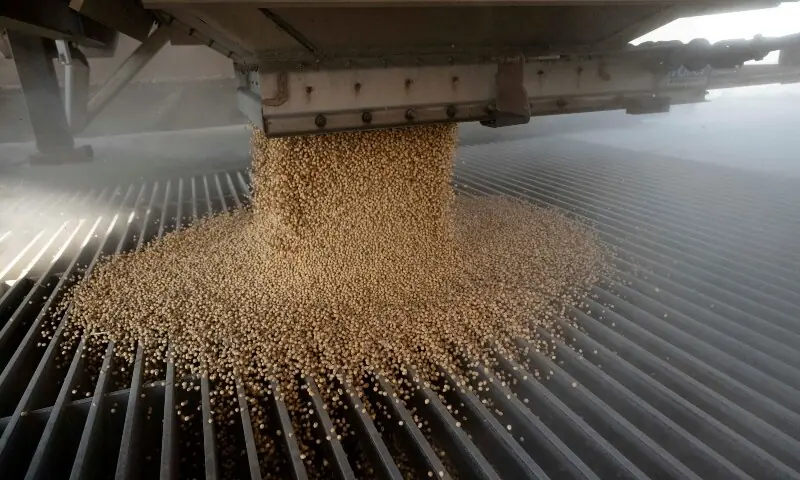

China is set to cut tariffs on a broad range of US agricultural goods, from corn and wheat to meat and dairy, but top import item soybeans were excluded from a tariff-reduction list jointly issued by China’s commerce ministry and the White House.
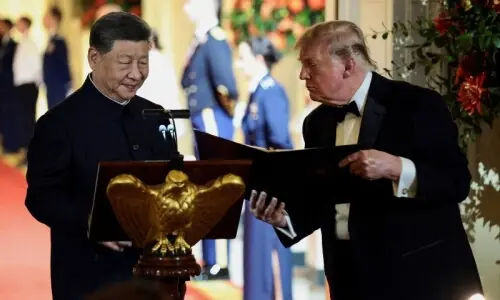
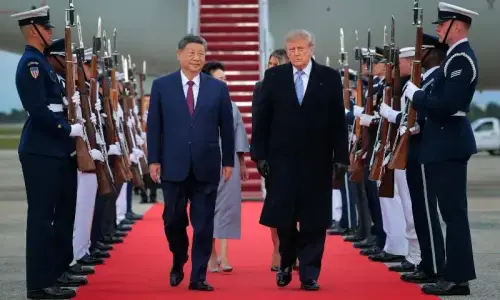
Markets have been waiting for news on Chinese tariff cuts on US farm goods following last week’s Washington summit of leaders Xi Jinping and Donald Trump.
The agricultural tariff cuts are part of the $60 billion package of reciprocal tariff cuts negotiated by the Board of Trade and unveiled for the first time on Monday.
The list covers sorghum, vegetable oils and meals, including soya oil and soya meal, along with meat, dairy products and other items.
While the proposal identifies the covered products, it does not specify when the tariff cuts will take effect.
More than 90 per cent of the covered products will be exempt from all additional tariffs imposed on each other and will instead be subject to most-favoured-nation tariff rates, the commerce ministry said in a statement.
US soybeans, however, still face an additional tariff of 10pc, which traders have warned is too high for private crushers to absorb, even as Chinese state buyers have stepped up purchases.
“Despite the soybean being a non-sensitive item in trade, the political significance of China’s soybean purchase is enormous and carries major political implications,” said Feng Chucheng, founder and partner at Hutong Research.
Keeping soya beans on a separate track gives Beijing leverage in its dealings with Washington, especially ahead of the US midterm elections, Feng added.
Chinese state-run agricultural companies Sinograin and COFCO have bought more than 12 million metric tons of US soya beans, nearly half the 25 million the White House has said Beijing committed to buying annually through 2028.
Trade in the agricultural and related products on Monday’s list stood at about $17 billion in 2024, roughly matching China’s reported purchase commitment, excluding soya beans, according to Reuters calculations.
In May, the White House said Beijing had agreed to buy that volume annually through 2028, but China has yet to confirm any target for such purchases.
State-run companies will continue to buy US soya beans and the tariff cuts on other goods will help China meet the $17 billion commitment, said a trader based in Asia with an international company that sells soya beans to China who spoke on condition of anonymity.
Without tariffs, the landed cost for both US and Brazilian beans is roughly $595 per ton, although Brazilian soya beans are generally preferred for their higher oil and protein content, according to traders. At those prices, Chinese private crushers are running at negative margins.
The most-active soya bean contract on the Chicago Board of Trade (CBOT) was trading down 1.38pc at $13-3/4 per bushel as of 0709 GMT.