Senate panel decries police ‘harassment’ at inter-provincial posts
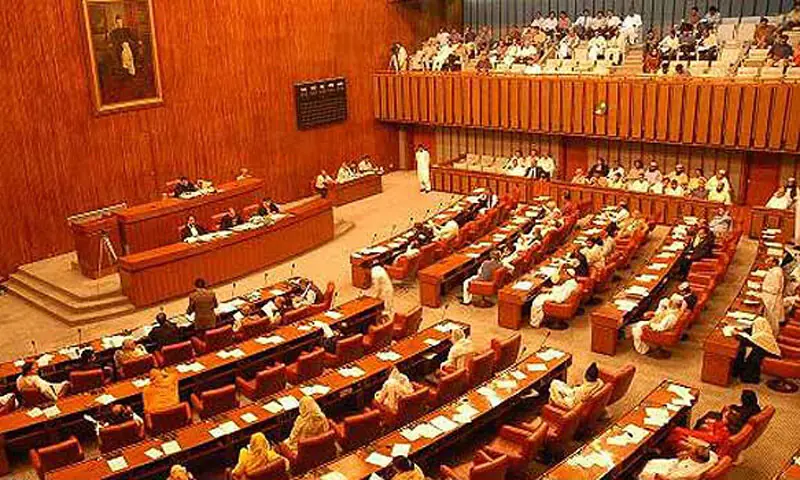

ISLAMABAD: A Senate panel on Tuesday censured police over public complaints of unnecessary checking, misbehaviour at checkpoints and the stopping of wheat-laden trucks, observing that while 31 cross-border posts in Punjab were necessary for security, they had become a source of inconvenience for inter-provincial travellers.
The Senate Standing Committee on Inter-Provincial Coordination (IPC) met here under the chairmanship of Senator Dilawar Khan to deliberate on critical issues affecting inter-provincial harmony, security, smooth transit and the management of essential commodities.
The Rawalpindi regional police officer (RPO) told the committee that 31 cross-border checkpoints were currently operational in the province, with personnel deployed at 15 critical security locations. Although only three incidents had been reported since January, he said continuous daily threat alerts necessitated strict checking at all posts.
Senator Hidayatullah Khan, who attended as special invitee, and other members noted that while the public understood the security compulsions, police personnel must improve their behaviour and conduct at checkpoints. They acknowledged that police performance was under severe strain because of heavy workloads, fatigue and a critical shortage of resources.
Police blame excessive scrutiny on Nadra categorisation of certain CNICs as ‘doubtful’
Senator Aimal Wali Khan highlighted regional disparities, pointing out that Punjab remained relatively secure in terms of law and order compared with other regions where conditions were worse.
He also raised serious concerns about searches in tribal areas, emphasising that local cultural norms surrounding women’s privacy, particularly in matters involving purdah and burqa, must be handled with the utmost respect to prevent public distress.
The committee concluded by urging the relevant security authorities to resolve these issues through mutual cooperation, striving for daily improvements in law and order while ensuring that citizens’ rights and local traditions were respected.
The DIG Khyber Pakhtunkhwa said the guidelines given by the committee were highly suitable and appropriate.
Border checks, discrimination allegations
Sindh Police officials clarified that no discriminatory policy existed against any community, explaining that uniform border-checking procedures and national security protocols were strictly maintained to curb smuggling and respond to threat alerts.
Officials reported that at Sukkur and other border checkpoints, operations at joint checkposts were conducted strictly to prevent illegal smuggling and the trafficking of drugs, while stopping general goods transport without justification had been prohibited.
Severe concern was expressed over citizens travelling from one province to another — particularly in Karachi, Lahore, Rawalpindi and Islamabad — being unnecessarily harassed under the pretexts of checking CNICs, domiciles and Afghan nationals.
Police officials clarified that the primary issue stemmed from CNICs categorised as “doubtful” by Nadra, for which district-level committees headed by deputy commissioners were working towards a resolution.
Wheat transport, food security
On food security, the committee reviewed the inter-provincial movement of wheat, addressing distribution delays caused by road blockades and the placement of containers. Officials from the Khyber Pakhtunkhwa Food Department briefed the panel on current grain reserves and procurement policies.
The chair directed that comprehensive written inputs be submitted to establish transparent mechanisms for uninterrupted commodity supplies, noting that after the committee summoned the DIG Rawalpindi and DPO Attock during its previous meeting, matters concerning flour transportation had significantly improved.
Chairman Dilawar Khan also expressed strong concern over the absence of key provincial representatives, particularly noting the non-attendance of the relevant minister/adviser to the prime minister. He also raised the possibility of privilege motions or judicial notices over the repeated non-appearance of officials.
Published in Dawn, September 30th, 2026