Reviewed by Ali Asghar

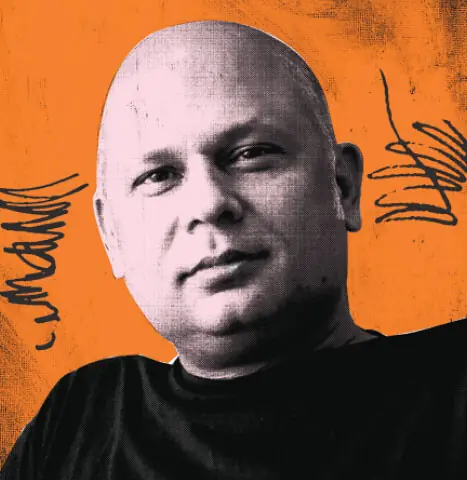
My first memory of Mani Ratnam’s magic was his deft depiction of the vegetal environs of rain-drenched South India and Kashmir in Roja (1992), a film that my father (himself an actor) prophesied would go down in the annals of Indian cinema history, if not just the comprehensive history of film. But it was only when Bombay (1995) released did Ratnam become a revered director in the Urdu/Hindi speaking world, and our household. My expectations towards Ratnam’s films never dampened until his last project, Raavan (2010). I, like most viewers and critics of the film, was disappointed by the lack of the ‘Ratnam factor’, a quality that remains as elusive as the man himself. One such critic, deputy editor of The Hindu and National Award-winner, Baradwaj Rangan, took on the task of writing a book about the man behind the lens.
Conversations with Mani Ratnam opens to an eulogy by A. R. Rahman, a man who was made popular for his soul-touching music that accompanied Ratman’s magnum opera. But then, of course, we dive straight into what is at times intimate, at times stoic, but mostly insightful and fervent conversations between the writer and the written about. Rangan alludes to being inspired by the conversation style Bible on auteur cinema, Truffaut/Hitchcock — and it is safe to say that Ratnam fits the definition of an auteur. The conversations are divided into discussions of Ratnam’s most prominent 18 (out of 22) films. Of course, the first half are mostly his contributions to South Indian cinema, which had remained fairly hidden. According to Rangan, South Indian cinema changed forever with Ratnam’s arrival.
Some fascinating anecdotes create a Ratnam who was a business graduate, unimpressed with where his life was going, and decided to fall straight for film — which remained a fairly taboo industry in his household. And then his films are dissected. We are told why he decided to make movies that told controversial stories, a Hindu-Muslim couple caught in religious riots in Bombay, a love-triangle involving a mature separated woman in Pallavi Anu Pallavi (1983), the doomed relationship of an obsessed lover and a terrorist in Dil Se (1998). Then it flows into the very minute details of each film — the selection of a porcelain Manisha Koirala to play South Indian characters, exercises in curbing Shahrukh Khan’s excitement, his run-ins with censorship and the touching details of the bhoomi pooja scene in Guru (2007). To me, a strange pattern had developed, one that isn't entirely apparent from simply watching his movies. It is that of the ‘hip rebel’ of the Indian society, and the bildungsroman nature of the lives he depicts of the diverse Indian: rural-urban, lower-upper class, Kannada-Marathi, Hindu-Muslim.
The language of the book is that of a standard editorial interview, which only happens to make it a fairly raw biographical account of Ratnam. Rangan, however, does have the flair of asking the right questions, and it is through this ability and his sporadic comments that he breathes himself into the book, making it partly about his obsession with Ratnam — especially of his South Indian cinema days. Rangan is aware of his subject’s restraint, which has led him to keep such a low profile in the world of Indian cinema, but is intelligent enough to keep him talking and peel away the layers and the stories that go with the films he has directed. And at last, through every frame explained, the man behind the camera is manifested in full: genius, vulnerable and hardly pleased with his work.

(Interviews)
By Baradwaj Rangan
Penguin, India
ISBN 9780670085200
328pp.