For weeks after coming to power in June, the PML-N government leaders sounded confusing when they assigned “first priority” to all sorts of problems ailing the country.
Prime Minister Nawaz Sharif and his team, however, went for reviving “the bankrupt economy” and electricity shortage issue first and the bloody terrorism later by way of offering talks to the homegrown Taliban.
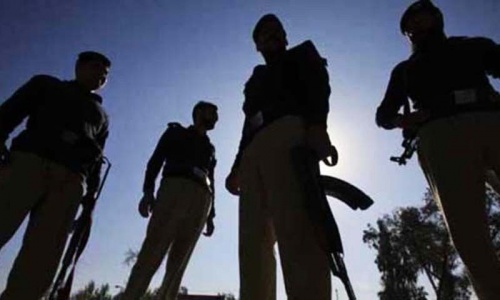
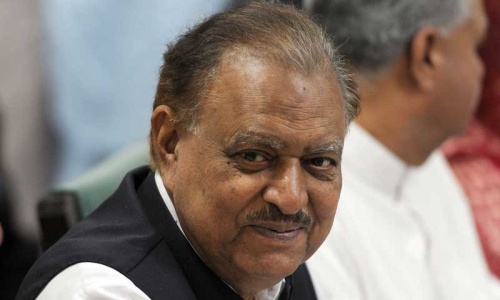
While the prospects of those talks taking place any time soon don’t look bright, President Mamnoon Hussain promulgated an ordinance that arms law enforcement forces and prosecutors with extraordinary powers to deal with suspects considered terrorists or insurgents.

Promulgated last Sunday as Prime Minister Sharif reached Washington for important talks with US President Barack Obama, the Pakistan Protection Ordinance 2013 (PPO) will be used against people suspected of helping or waging war against the country.
It amends the 19th century Pakistan Penal Code 1860 (PPC) saying scheduled offences in the code, if committed with the intent to harm security of the country, will be considered anti-state acts and will carry harsher punishments.
Taken at its face value, the offences listed in the PPC can now be tried under the PPO, if the state prosecutors believe a suspect has committed a crime that threatened the security of the state.
For example if the PPC provided maximum punishment of six months or fine or both for a certain crime, the perpetrator of the same crime can be imprisoned for 10 years under the PPO.
According to the new ordinance, offences covered under Chapters VI, VII, VIII and IX of the PPC 1860, can be considered anti-state acts if committed with the purpose of waging war against the country.
The table below lists the offences in the PPC that if tried under PPO carry harsher punishment.

A new set of crimes has also been added to the scheduled offences put under the PPO.
This new set of offences, and giving them force of law through an ordinance rather than via the parliament, has drawn mixed reaction from the legal community and politicians.
Senior PPP leader and architect of the wide-ranging 18th Constitution Amendment, Raza Rabbani, called the ordinance “an assault on the fundamental rights” because it empowers law enforcers to search any premises without warrants, keep arrested suspects in safe houses, deny them bail and send them behind bars for 10 years if special courts found them guilty.
But the PPP would challenge the ordinance in the parliament, not in any court, he said.
Lawyer Yasin Azad, formerly president of the Supreme Court Bar Association, recalled that many governments in the past tried to instill fear in the hearts of criminals by enhancing punishments but it never worked. Law provides for death sentence for smugglers of narcotics, but the trade is on the rise.
“I can hardly recall anyone convicted of the crime was hanged. What is the use of keeping harsh punishments?” he asked, adding that “not the fear of punishment, but the fear of across the board implementation of laws will serve the purpose.”
Veteran Supreme Court lawyer and lawmaker S.M. Zafar holds the contrary view. “Governments all over the world opt for such legislation to deal with extreme situations. Since the country is in the grip of all sorts of extremism and terrorism, I don’t see anything wrong in the extraordinary legislative measures,” he said.
Likewise, advocate Ahmar Bilal Sufi, endorsed the ordinance to deal with “non-state actors that are busy fighting the state”.
However, he noted that such laws could work for a limited period. If made part of the regular legal system of a country, human rights abuses could occur in conflict situations, he said.
Haji Mohammad Ramzan, a senior member of the Pakistan Bar Council, did not favour promulgating ordinances of critical importance when the parliament was fully functional.
Then, he recalled, special measures taken in the past to curb terrorism and corruption and improve accountability failed miserably.
“Special anti-terrorist and accountability courts have been working in the country but to what avail? They could neither deter terrorism nor take the corrupt to the task,” he said.
“We only need to improve the implementation of the existing legal system, instead of going for these half-baked measures,” said Haji Ramzan pointing out that almost all the offences mentioned in the PPO were covered in the PPC promulgated 150 years ago.