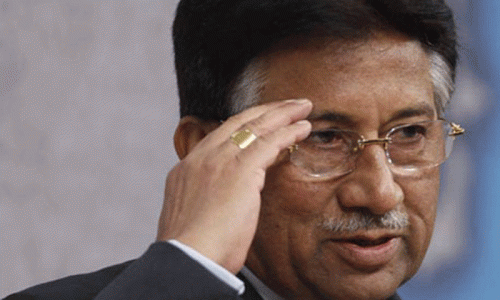
ISLAMABAD: The special court formed to try former president Gen (retd) Pervez Musharraf for treason under Article 6 of the Constitution on Tuesday adjourned its hearing until Jan 1 whereas the former military failed to appear in court after a bomb scare earlier during the day, DawnNews reported.
The start of former Pakistani military ruler Pervez Musharraf's trial for treason was delayed over security fears Tuesday after explosives were found near the road he was to take to court.
Lawyer Anwar Mansoor Khan told the special treason tribunal that the former general would not be able to attend, after police found five kilograms (11 pounds) of explosives and detonators.
Justice Faisal Arab, heading the three member court, said he understood the “gravity” of Musharraf's situation and that treason was a non-bailable offense.
He asked the former military strongman's lawyers to file an application to exempt their client from appearing in person.
Moreover, Musharraf's senior counsel Barrister Sharifuddin Pirzada raised objections to the formation and appointment of judges for the court hearing the case.
Justice Arab remarked that such objections should be submitted in writing.
The prosecuting lawyer requested the court to order Musharraf to appear in court adding that non-bailable warrants be issued upon failure to appear in court.
Advocate Ahmed Raza Kasuri, another lawyer for Musharraf, emphasised before the court, the threats faced by his client citing two previous attacks and other intelligence reports of possible attacks on him.
Justice Yawar, at this point, granted exemption to the former president from appearing for today's hearing.
The court decided to adjourn the hearing until January 1.
The government had on Nov 17 announced its decision to formally prosecute former president General Pervez Musharraf under Article 6 of the Constitution.
The Supreme Court had already given a ruling in the case in October 2012 and then in July this year disposed off all petitions against the ruling giving the government a green signal to continue proceedings.
In the ‘high treason’ case against the former president, the government has charged him with abrogating, subverting, suspending, holding in abeyance and attempting to conspire against the 1973 Constitution by declaring emergency and overthrowing the superior judiciary in November 2007.