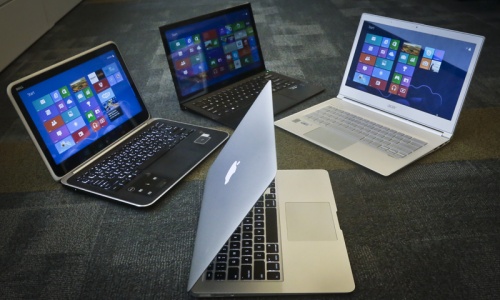
Most new laptops and smartphones/tablets use Lithium Ion (Li-ion) batteries. Even though the technology behind these batteries is the same, the usage and battery size of each device makes their optimum usage different.
Bigger screens and other power consuming devices like DVD drives, hard disks and Wi-Fi adaptors ensure that laptop batteries don't last more than three to four hours on optimum use. So the general inclination is to keep them plugged in and only use them on batteries when away from the work station or while moving around. This leads to a very limited or no battery time on extended use. The old recommendation (read: myth) was to charge the laptop to full capacity (and then keep it plugged in) and when you do let the battery discharge, take it down to almost zero before charging it again.
The best option would be to keep the battery halfway charged, so it is not stressed and when you do move, you have some battery time to continue your work. Some energy management software (Lenovo Energy Management) do this automatically through impulse charging: letting the battery discharge only down to 50 per cent and then maintaining the charge through periodic impulses.
The iPhone 5 is infamous for poor battery performance. Most Android and Windows phones have bigger bodies and therefore can house bigger batteries, but they need more charge to cater to their big screens. Carrying their chargers or placing extra chargers at home, work and in cars has become common practice.
This is not recommended for two reasons: 1) Factory provided chargers are the best option to charge your phone, since they are carefully calibrated for your particular model. 2) Flip-flop charging (multiple small charges and discharges) leads to rapid battery decay, which in turn forces you to charge even more often, initiating a vicious cycle of battery deterioration.
New research finds that the lower threshold of 15 to 20 per cent battery is not accurate either. The best time to charge your phone is at around 40 per cent battery charge and the best time to take it off charging is at around 80 per cent. Note that usually going from 40 per cent to 80 per cent and back will mean that the many users won't get a full day's use out of a single charging, so power users will need to schedule two stable charging windows per day.
It is recommended to fully charge the battery and then discharge it to lower than 20 per cent once a month. This will ensure that your OS can calibrate battery charge/discharge timing. This helps in maintaining phone logs, in case you need to view usage statistics or report an error.
Finally, many ‘Task Killer’ apps claim to save battery time by killing background apps. This is not recommended since Android has its own algorithm to gradually close unused apps and disrupting it may cause problems.