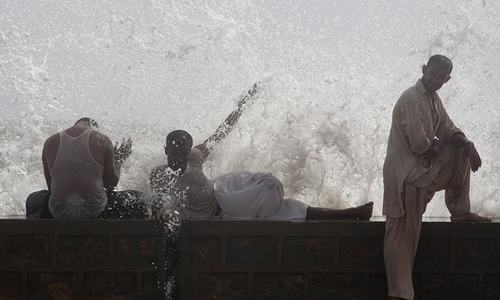
ISLAMABAD: With the mercury topping 36.5 degrees Celsius on Saturday, Feb 26, Karachi witnessed its hottest day of the month in over two decades, the Met office said Sunday.
The heatwave is expected to continue till Monday or Tuesday after which temperatures will gradually dwindle down, officials say.
The reason for yesterday’s unprecedented heat was a "disconnect of sea breeze towards Karachi", Pakistan Meteorological Department Director General Dr Ghulam Rasool told Dawn.com.
Wind blowing from the "land surface towards the sea" instead of the other way round, bringing humidity levels down to around 30 per cent is responsible for the rise in temperature, he said.
The breeze will shift direction around Sunday evening, the DG Met said, adding that temperatures will return to normal by Tuesday, falling to around 32 degrees.
Know more: Karachi, an 'urban heat island'
A scorching heatwave engulfed Sindh at the beginning of summer last year, claiming the lives of over 1,300 people — with most of the deaths taking place in Karachi.
The crisis was worsened by the faulty power grid and shortage of potable water in the metropolis.
Experts last year said that the wave of high temperatures could also be attributed to the increasing concrete cover and an acute lack of parks and green belts in the city as such spaces, they said, help lower the temperature of an area.
"The heatwave disaster is a wake-up call for the public and the government. There is need to create awareness on how to cope with severe hot weather and help high-risk populations protect themselves against it," said Rab Nawaz, serving Sindh regional director of World Wide Fund for Nature-Pakistan (WWF-P) last summer.
The impact of climate change, especially a rise in temperature, he had said, have become very apparent in Pakistan over the last decade and the current situation in Sindh, especially Karachi is worrisome.
According to these experts, the recent wave of high temperatures can also be attributed to the increasing concrete cover and an acute lack of parks and green belts in the city as such spaces, they say, help lower the temperature of an area.
Dr Qamar uz Zaman Chaudhry, senior climate change expert last year said that the government could learn from other countries that faced similar disasters.
"A good example in this regard is Ahmedabad, India, though its plan to protect poor communities from the heatwave was not implemented in other parts of the country," he said. The plan came into effect in the Indian state after around 1,300 people died as a result of a heatwave in 2010.
Authorities in Ahmedabad had established an early-warning system against extreme heatwaves as well as setting up water stations and cooling spaces in public places, malls, temples, etc after the 2010 disaster.