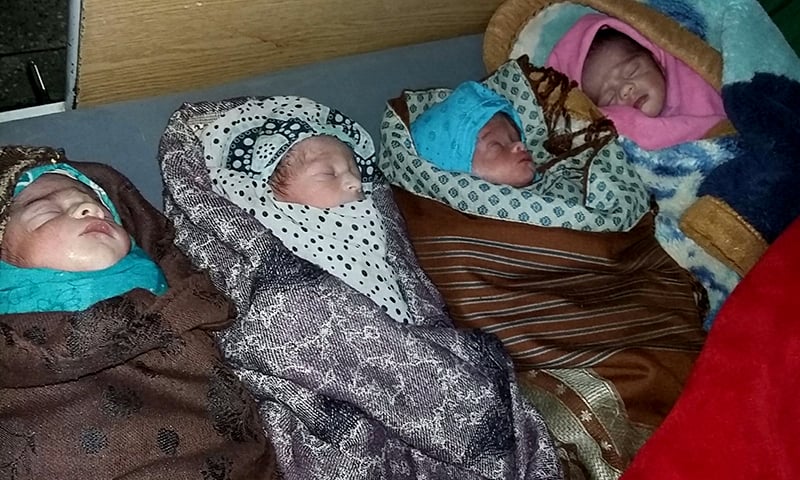
PESHAWAR: In Khyber Pakhtunkhwa’s hospitals, doctors are facing an alarming situation: maternity wards and birthing rooms are increasingly filled with cries of multiple-pair babies: twins, triplets and quadruplets are being born every day.
Also explore: First touch: 3 stories of birth and beyond
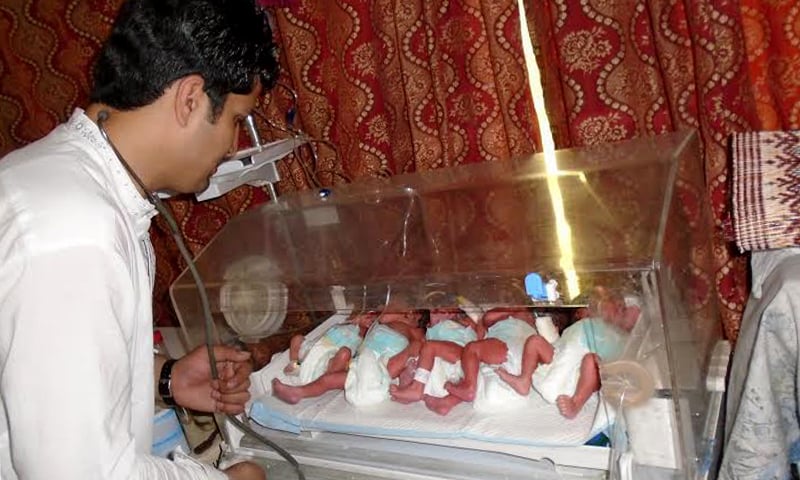
In 2015 alone, the province recorded a total of 1165 multiple gestations—the condition of carrying two or more fetuses simultaneously. Major hospitals, including Lady Reading Hospital, Khyber Reaching Hospital and the Hayatabad Medical Complex of Peshawar (HMCP), have calculated a total of 26 cases of quadruplets, 158 cases of triplets, and over 900 cases of twins.
Each hospital claims to have seen at least two hundred pairs of twins born in the last year.
Late marriages and medicines
Medical experts blame the frequent use of fertilising medicines, and the custom of marrying at a late age.
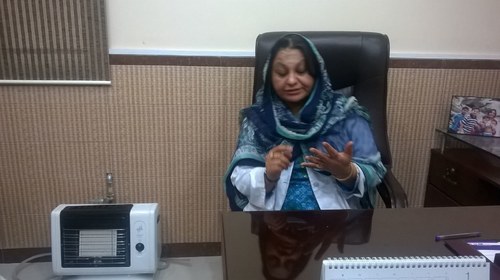
“Multiple births can also be due to genetic reasons,” explains Dr Naeema Utman, a gynaecologist at HMCP.
But in the absence of sexual health awareness and family planning practices, especially in lower-income areas, Dr Naeema says many couples end up using heavy fertiliser medicine recommended to them by “medical technicians”— health workers and midwives.
“They do not consult a specialist,” she outlines the problem. “They prefer a local lady health worker or a dai, who do not conduct proper diagnosis.”
Banning fertilising medicine
Dr Naeema says that the government should ban the frequent sale of fertilising medicine, which makes it easily accessible. She believes it is difficult for families to manage the unexpected additional children, especially when they are poor. “It is not possible for many mothers to handle multiple babies after their delivery,” she says.
Also read: My baby would be alive if it wasn't for medical negligence
Japan, which once saw an unprecedented rise in multiple births, controlled the problem by banning the sale of fertilising medicines. Dr Naeema says Pakistan should follow Japan’s precedence, otherwise the issue will go out of hand.
Dr Robeena Akhtar and Dr Sadia Shams, who are also gynaecologists, echo Dr Naeema’s concerns with fertilising medicine.
“The open sale must be banned,” they reiterate. “Otherwise, cases of multiple births are likely to increase in the coming years.” The two gynaecologists worry about the ratio of single-child births and multiple-child births— unless it is immediately controlled, they believe its increase will become very difficult to quell.