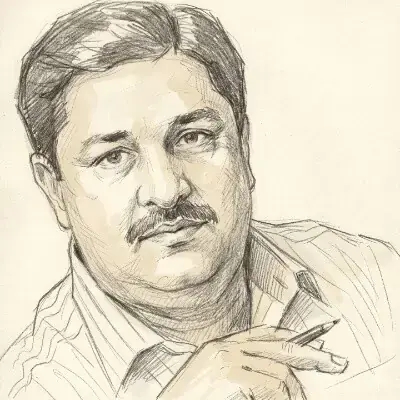
LAHORE: Dr Rukmini Banerji feels more comfortable in Lahore than in Chennai.
Programmes director of Pratham, a non-government organisation working to provide quality education to the underprivileged children of India, Dr Banerji even finds Lahore more beautiful than Paris.
“Given a choice between Paris and Lahore, I will always want to visit Lahore. We have so much in common and it is so easy to communicate,” she told Dawn in an interview.
She was in Lahore last week for a two-day international conference, Quality-Inequality Quandary – Transacting Learning Relevance and Teacher Education in South Asia. It was her third visit to Pakistan.
Dr Banerji pointed to the heritage which was common to Lahore and Delhi, and added that people in India’s south and Pakistan’s north might not have the same reciprocal feelings since they did not come in contact with each other – at least not frequently enough.
She said the brief chapter before 65 years should have been removed from people’s memory. Calling for raising the volume of people’s cross-border movement, she said, extensive people-to-people meetings would help remove misunderstandings.
She said she was happy the Annual Status of Education Report (ASER) surveys in India had begun creating dents as different, positive things were happening at various levels. Several Indian district governments started developing elementary education annual plans that would eventually pave the way for state-level plans.
“ASER India and ASER Pakistan are separate but closely linked entities,” she said.
A little over two years after ASER’s arrival, the Indian government announced a two per cent budget for elementary education for learning enhancement in different districts.
“It was a big change …an opportunity for the districts to utilise funds for education,” she said.
Her organisation decided to go big from the beginning and sought to assess learning outcomes in all districts across the country. The surveys were done by the volunteer who did get some funding for commuting etc.
ASER, Dr Banerji continued, does not want to impose itself on the decision-makers. “If someone does not find ASER data good enough, they can collect their own data. And if the people or the government is able to do so, that is very good.”
There is an example where the Gujarat government did not like ASER at all. Seeking to assess the students’ learning outcomes, the Gujarat government developed a programme which required every government official including senior officers to spend three days annually in schools and assess students’ learning outcomes. She said that each government officer as well as the chief minister himself spent one full day in one school. They spent all day asking children to read and do arithmetic. As a result, she said, the government had its original evaluation against the routine results.
She said the Gujarat government was now monitoring learning outcomes. “In one go, the Gujarat government inspected some 9,000 schools through its 3,000 officials. In a matter of few years every single one of the 50,000 schools in Gujarat would be inspected. I am not saying they launched this programme due to ASER’s presence. The whole environment is changing.”